

Zulu Warrior vs Scottish Highlander
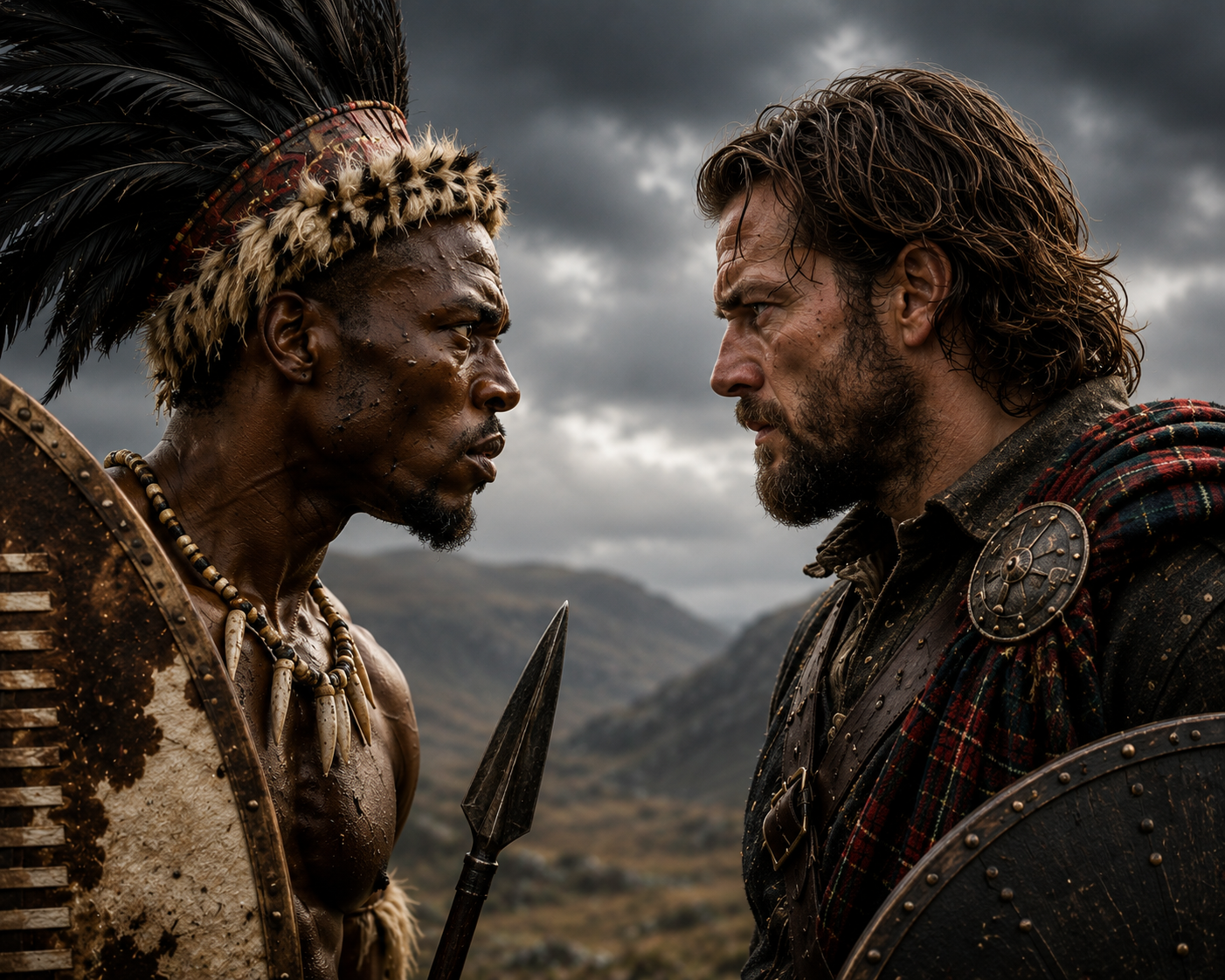
Spear and shield.
Sword and targe.
Zulu warrior vs Scottish Highlander. Two armed opponents. One unfamiliar encounter. Which equipment combination would you back?
Different equipment.
Equal respect.
We select two experienced individuals. Their origins alone do not establish strength, speed, courage or intelligence.
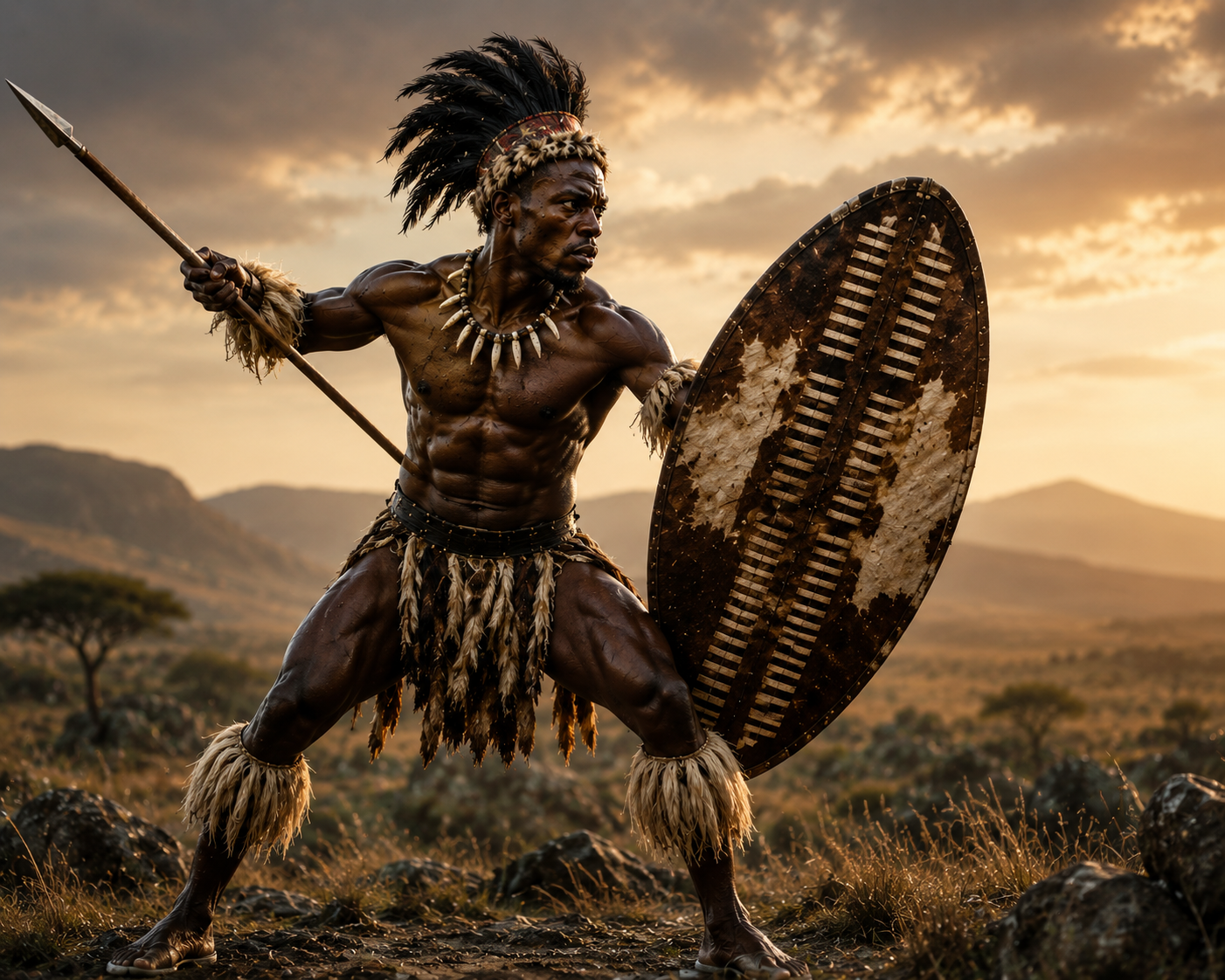 CONTENDER 01 / SOUTHERN AFRICA
Zulu Warrior
An experienced fighter with an iklwa stabbing spear and large hide shield. For this duel, we exclude throwing spears, firearms and other weapons.
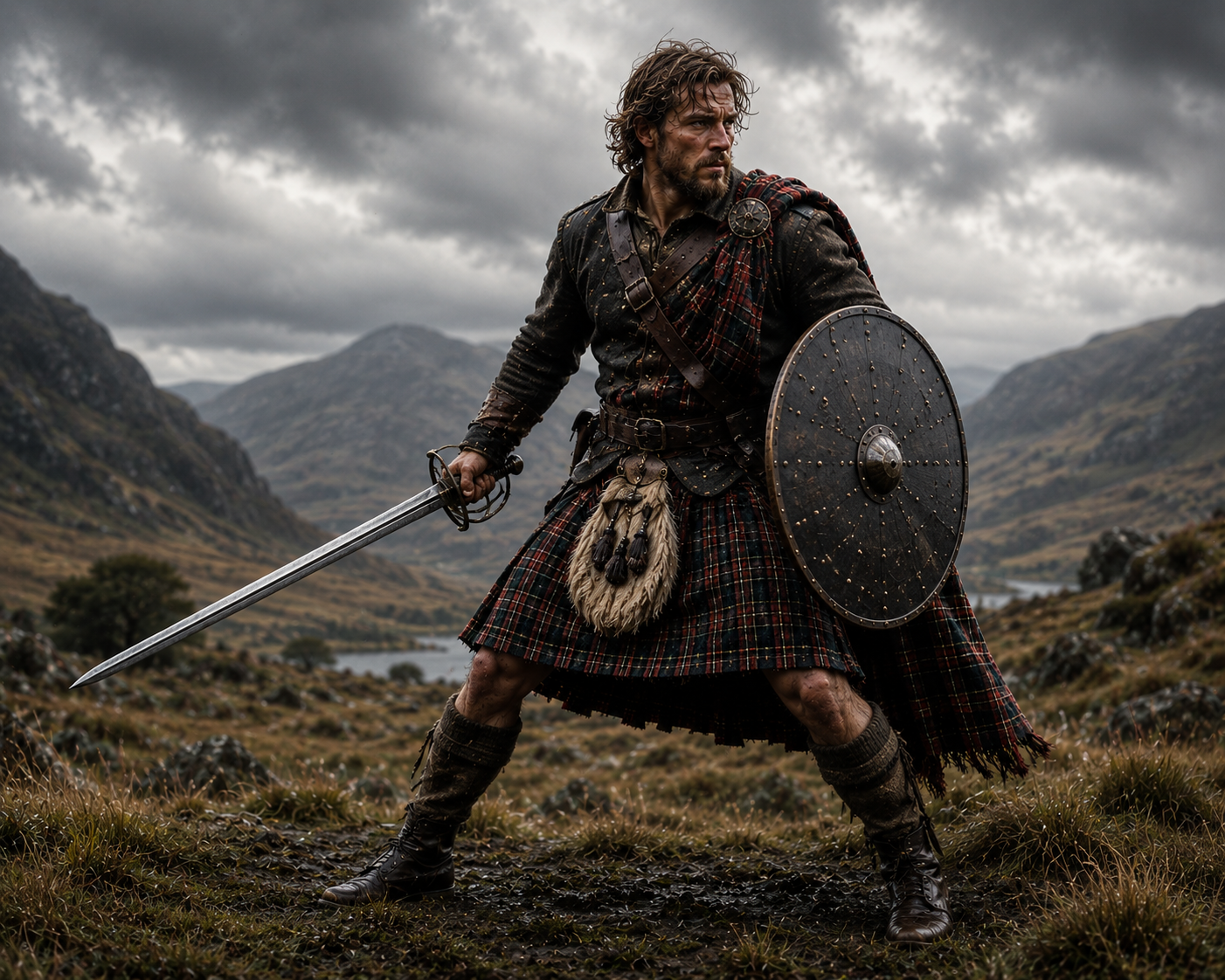 CONTENDER 02 / SCOTLAND
Scottish Highlander
An experienced fighter with a basket-hilt broadsword and targe. No pistol, musket, dirk or body armour is included in this scenario.
These are chosen equipment sets, not universal descriptions of either tradition. Illustrations are fictional and may not match every specified detail.
The tools matter.
The details matter more.
No equipment dimensions are supplied, so neither side receives an automatic reach advantage.
| Factor | Zulu warrior | Highlander |
|---|---|---|
| Weapon | Short stabbing spear. | Basket-hilt broadsword. |
| Shield | Large hide shield selected. | Round targe selected. |
| Body armour | None specified. | None specified. |
| Reach | Depends on selected spear and handling. | Depends on selected sword and handling. |
| Physical ability | Comparable fitness assumed. | Comparable fitness assumed. |
This comparison describes the scenario. It does not establish a measured probability of victory.
Four factors.
No simple scorecard.
Equipment, skill and conditions interact. Winning more categories would not necessarily mean winning the duel.
Reach needs
more than a label.
A broadsword does not automatically outrange every short spear. We would need dimensions and handling assumptions before using reach to justify the result.
Coverage is
only the beginning.
The selected large hide shield offers a different defensive shape from the targe. Coverage, material, movement and the opponent’s weapon all belong in the comparison.
Choose the fighters.
Avoid the shortcuts.
Neither ancestry nor homeland tells us which individual is faster or stronger. This scenario assumes comparable fitness and removes exhaustion before the duel begins.
A battle is
not a duel.
Experience in a military formation does not translate neatly into a ranking for isolated combat. We give both selected fighters relevant experience without inventing a superiority score.
One exchange.
A different ending.
A fictional Highlander-winning sequence. It illustrates an outcome rather than predicting a win rate.
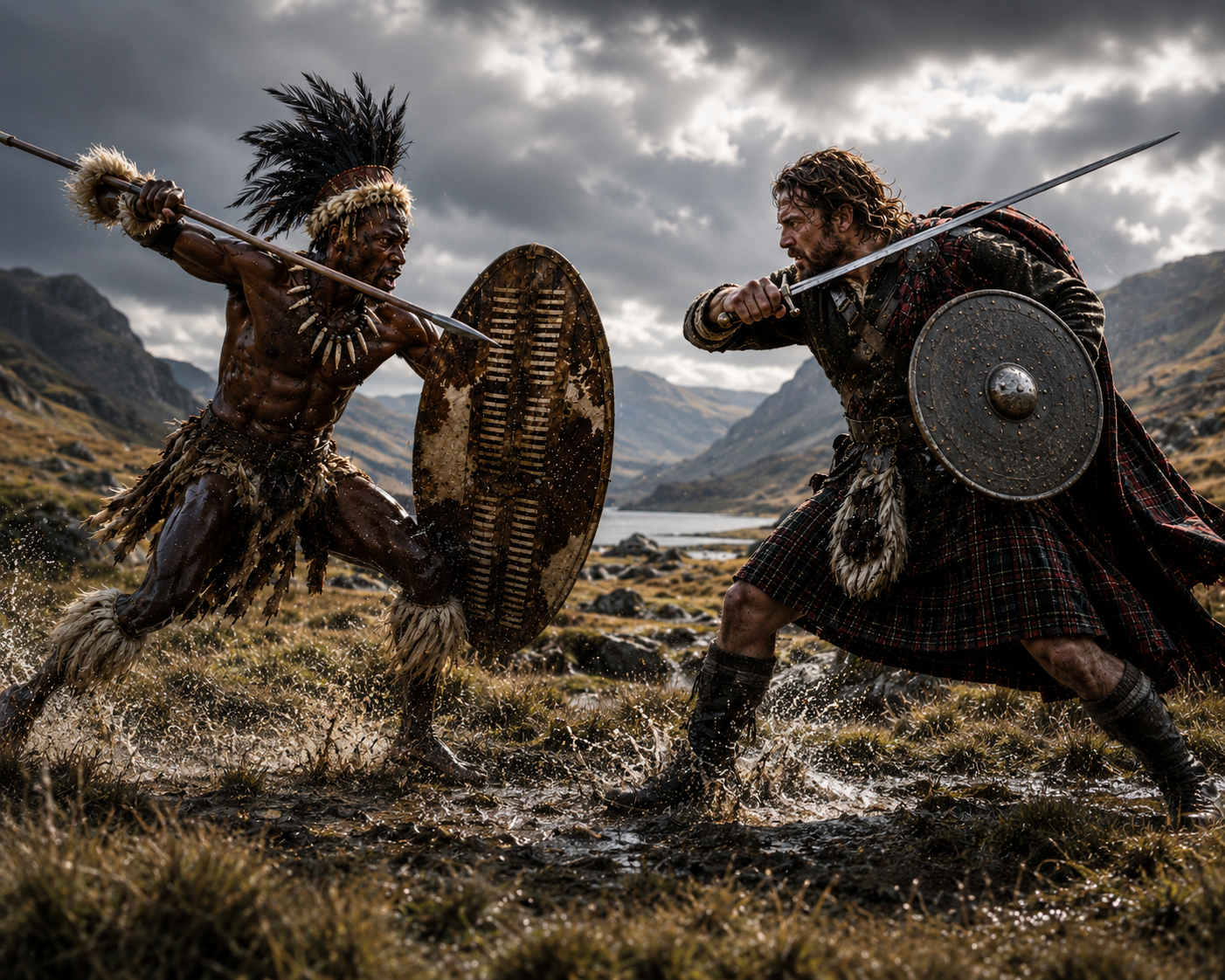
The shields meet.
The rhythm breaks.
Both fighters approach cautiously. The first exchange ends with neither able to establish control. The Zulu warrior presses forward behind his shield; the Highlander changes his angle.
In this imagined version, a brief opening lets the Highlander land the decisive strike. The contest ends with his opponent unable to continue.
Reverse a decision or alter the timing, and the story could favour the Zulu warrior instead.
Our story: Highlander.
The comparison stays open.
The Highlander retains the victory in our fictional encounter. The information supplied does not establish him as the probable winner: there is no specified armour advantage, no measured reach advantage and no reliable comparison of the two individuals.
The original 55%–45% and 60%–40% figures conflicted and had no documented calculation. This version uses one consistent qualitative conclusion.
Could climate change the encounter?
Extreme heat, cold or rain could matter, particularly after prolonged exposure. Any advantage would depend on preparation, clothing, acclimatisation and duration—not nationality alone.
What if we specify exact weapon dimensions?
That would make the reach comparison more useful. It would still need to consider grip, stance, shield position and how each fighter uses the chosen weapon.
What if firearms or throwing weapons are included?
The question changes substantially. Both contenders’ equipment would need to be defined again rather than carrying over this close-combat scenario’s conclusion.
Is this a reconstruction of a real meeting?
No. The fighters are drawn from different selected historical settings and placed together for a thought experiment. We are not claiming an encounter occurred or that an encounter would inevitably lead to violence.
Two traditions.
More than their weapons.
Museum context for the chosen equipment, rather than extra points in the duel.
A fighting system,
not just a spear.
The National Army Museum describes the iklwa and oxhide shield as an effective close-combat combination when used with coordination. Treating the spear in isolation misses that pairing.
A targe has
its own history.
National Museums Scotland holds a targe and backsword associated with Bonnie Prince Charlie. Such objects anchor the historical context; they cannot tell us who wins this imagined duel.
- National Army Museum: Defence of Rorke’s Drift — Zulu shield-and-spear equipment and its use.
- National Museums Scotland: Bonnie Prince Charlie’s targe and backsword — historical objects and context.
These sources support equipment context, not the winner. The narrative, fighters and conditions are editorial scenario choices.
Community Vote
The experts have made their decision. Now it’s your turn. Who wins this historic showdown?
Think we’ve got it wrong? Cast your vote and see how your opinion compares with the rest of the WhoCouldWin community.