

The Challengers
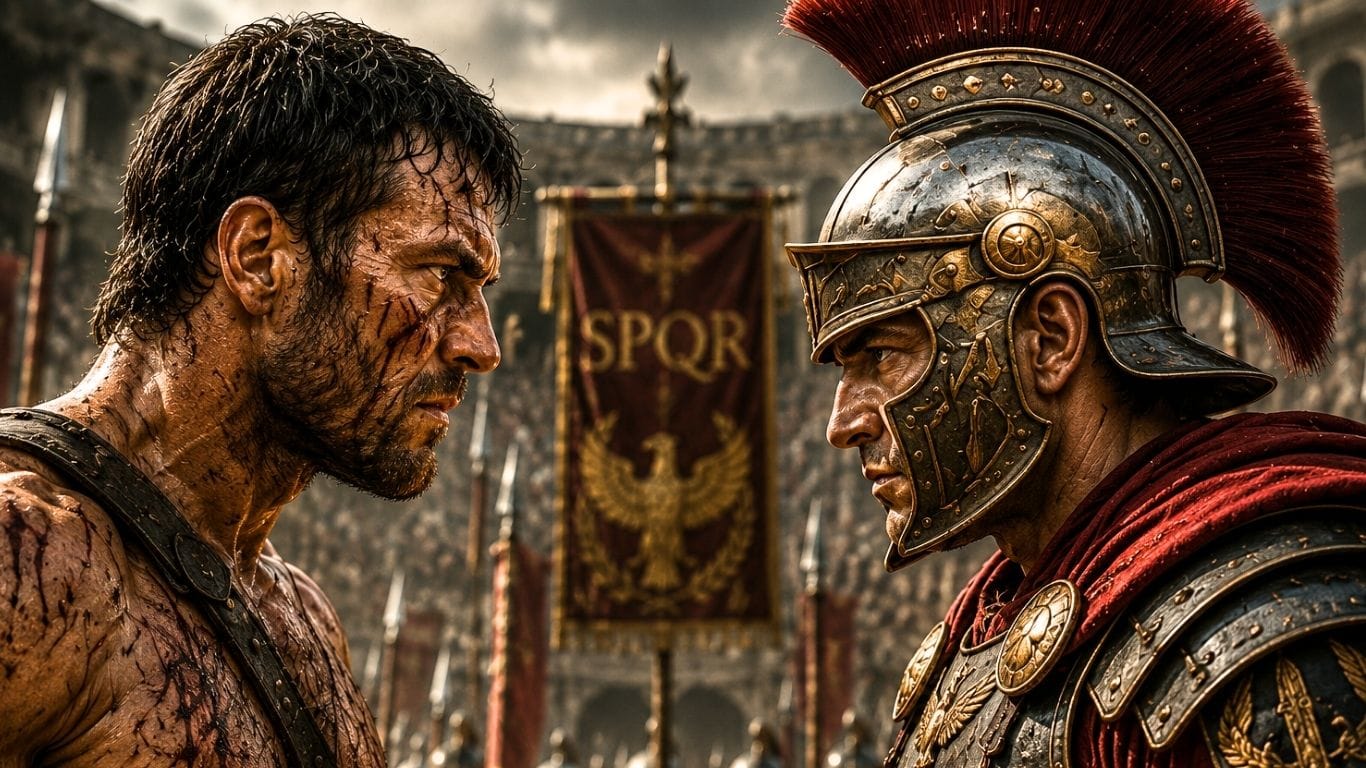
Spartacus
Spartacus was not born a gladiator. Historical sources suggest he was originally a Thracian who may have served as an auxiliary soldier before finding himself enslaved and sold to a gladiatorial school in Capua. What followed would transform him into one of the most famous warriors in history.
Gladiator training was brutal. Fighters trained daily with wooden weapons that were often heavier than the real thing. Endless drills developed speed, endurance, balance and precision. Every movement was repeated thousands of times until it became instinctive.
Contrary to popular belief, gladiators were generally well fed. Archaeological evidence suggests they consumed diets rich in barley, beans and legumes. Their high-calorie diets earned them the nickname “barley men.” Extra body fat may even have helped protect against superficial wounds in the arena.
Spartacus survived repeated life-and-death contests before leading the Third Servile War. Over a period of two years he defeated multiple Roman forces and commanded tens of thousands of followers. Few men in Roman history demonstrated such adaptability under pressure.
Mentally, Spartacus fought with a powerful motivation that few professional soldiers could match. Every battle represented a chance for freedom, survival and defiance against the most powerful empire on earth. His mindset was forged through hardship, suffering and relentless determination.
Praetorian Guard
The Praetorian Guard represented the elite of Rome’s military establishment. Originally formed to protect Roman generals, the Guard evolved into the personal protectors of emperors and the most prestigious soldiers in the empire.
Unlike many ordinary troops, Praetorians received superior pay, privileges and equipment. Selection standards were high and recruits typically came from experienced military backgrounds. Their training focused on discipline, weapon mastery, shield work and maintaining formation under pressure.
The Praetorian’s diet reflected that of a professional Roman soldier. Grain, vegetables, fruit, olive oil and meat formed the foundation of military nutrition. Rome understood that well-fed soldiers performed better on campaign and in combat.
A Praetorian Guard was not simply a palace bodyguard. Many saw active service in military campaigns throughout the empire. They trained with the gladius, pilum and scutum while learning the battlefield discipline that made Roman armies famous.
Mentally, the Praetorian fought from a position of confidence. He represented Roman authority, Roman law and Roman military superiority. Unlike Spartacus, whose motivation came from rebellion, the Praetorian drew strength from duty, discipline and absolute belief in the power of Rome.
Tale of the Tape
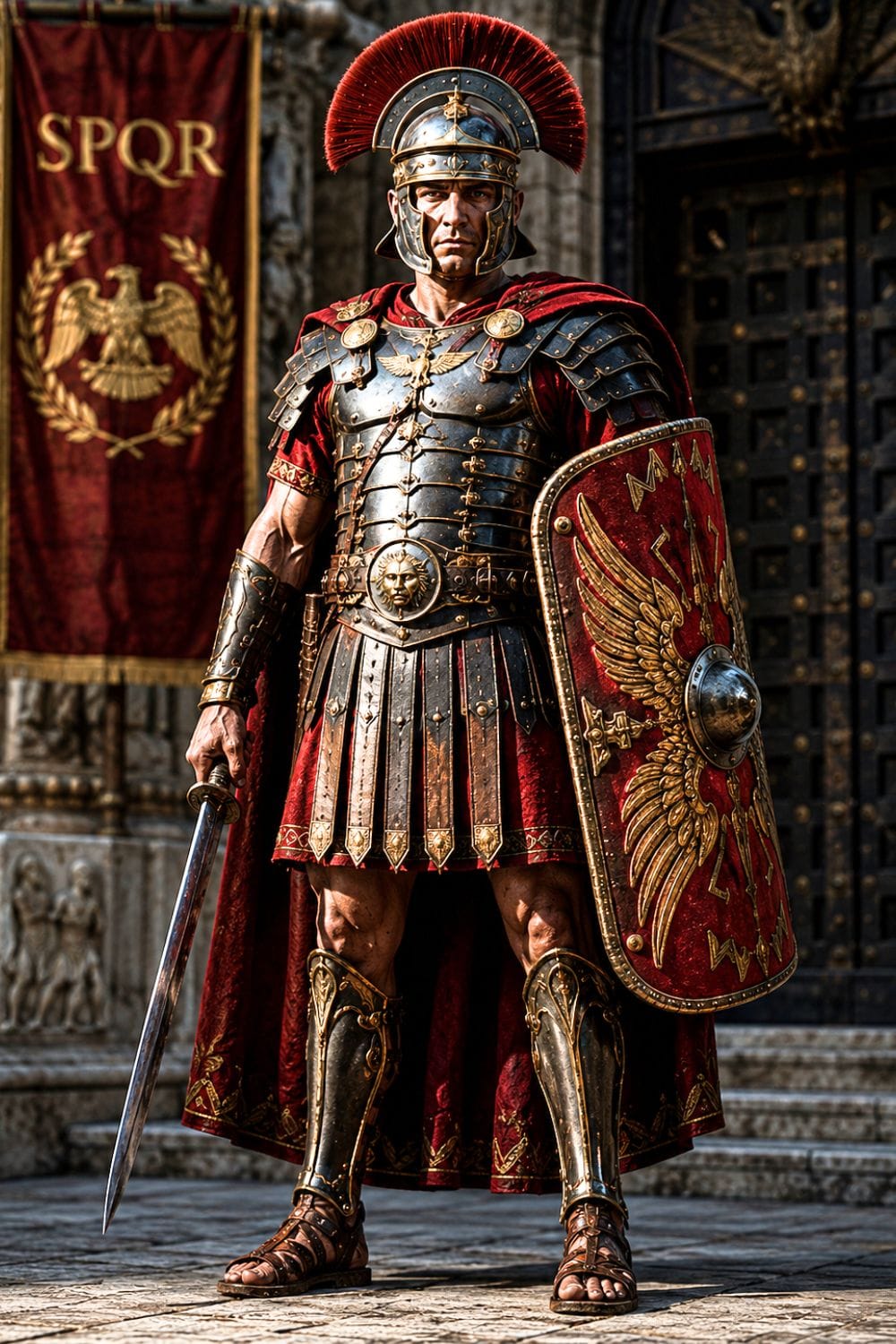
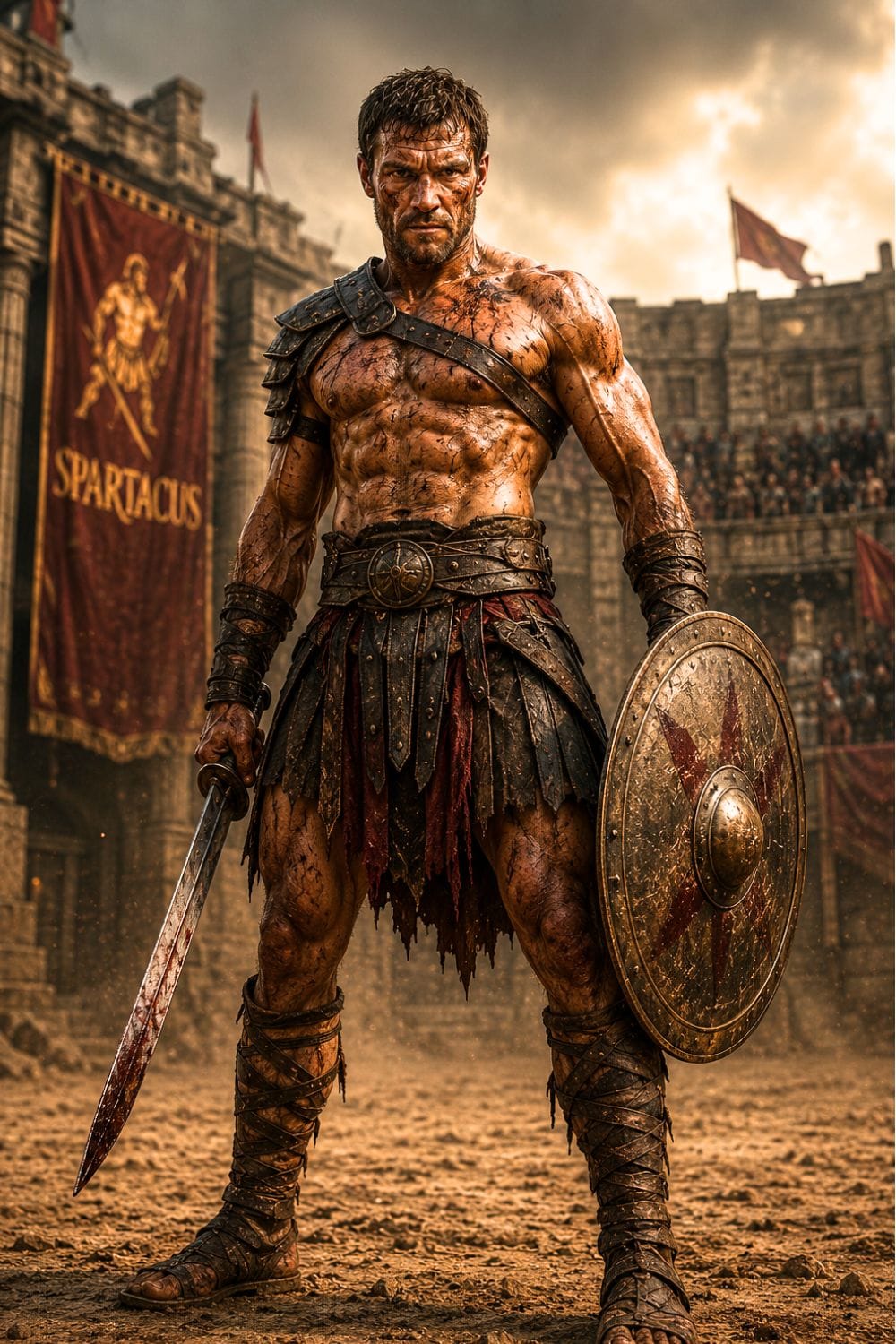
On paper, the Praetorian Guard enters this contest with the advantage in armour, equipment and military discipline. Spartacus, however, brings something far harder to measure. He survived the gladiatorial arena, defeated Roman armies and inspired one of the greatest rebellions in Roman history. This is not simply a contest between two fighters. It is a clash between Rome’s greatest rebel and Rome’s most elite protector.
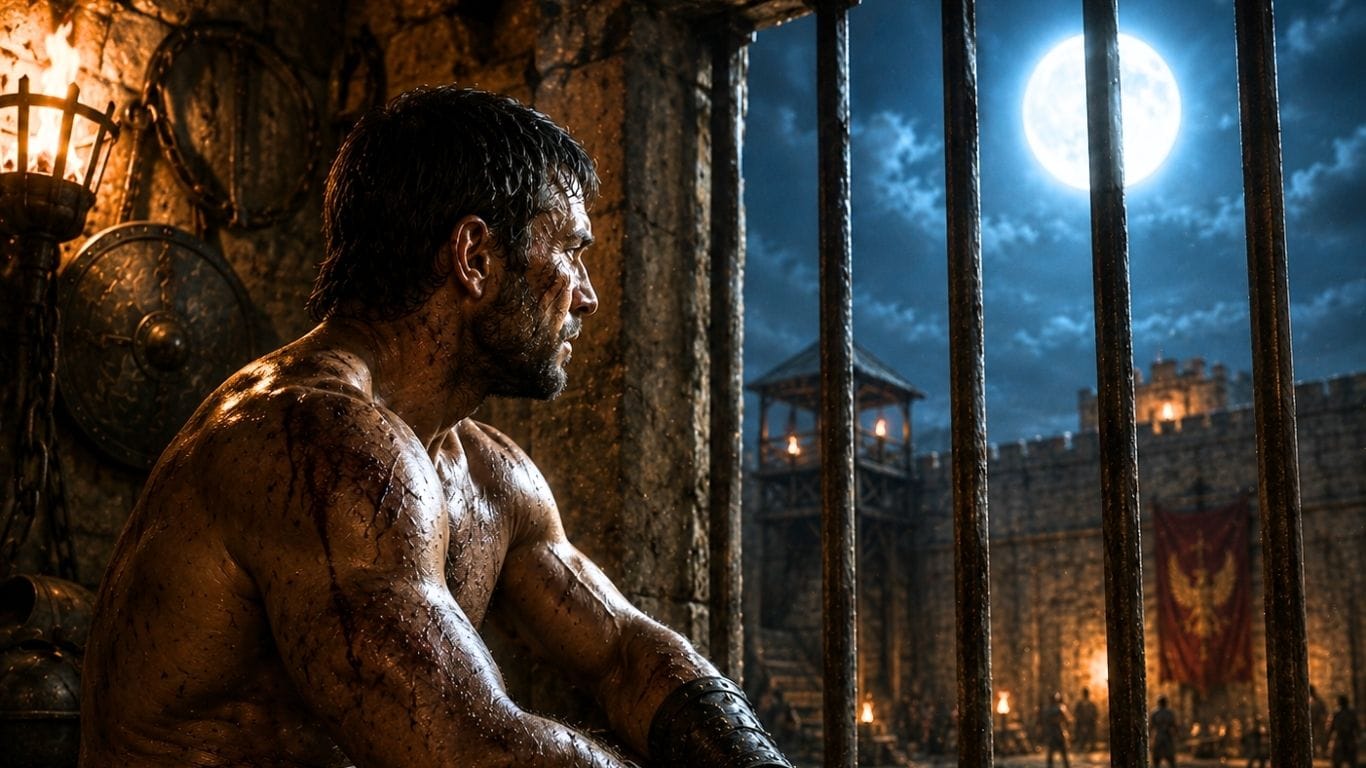
The camp is quiet.
Beyond the flickering torchlight, thousands of Roman soldiers sleep beneath the stars. Somewhere in the darkness lies tomorrow’s opponent — one of Rome’s finest warriors.
Spartacus stands alone outside his quarters. The scars on his body tell the story of a life spent fighting. Slave. Gladiator. Rebel. Commander. Every wound is a reminder of battles survived and enemies overcome.
The Praetorian Guard represents everything Spartacus has spent years fighting against: discipline, authority and the power of Rome itself.
Yet fear is not what fills his thoughts. He has already faced impossible odds. He has already escaped chains. He has already led thousands against the greatest power in the Mediterranean.
This is where the Praetorian Guard gains a clear advantage. Elite Roman bodyguards wore high-quality armour designed for battlefield protection, while Spartacus relied on a mixture of captured equipment and gladiatorial gear. The Praetorian’s superior protection would make him significantly harder to wound.
Spartacus was certainly dangerous, but every strike against a heavily armoured opponent would require precision and timing. In a prolonged duel, the Praetorian’s equipment provides a valuable edge.
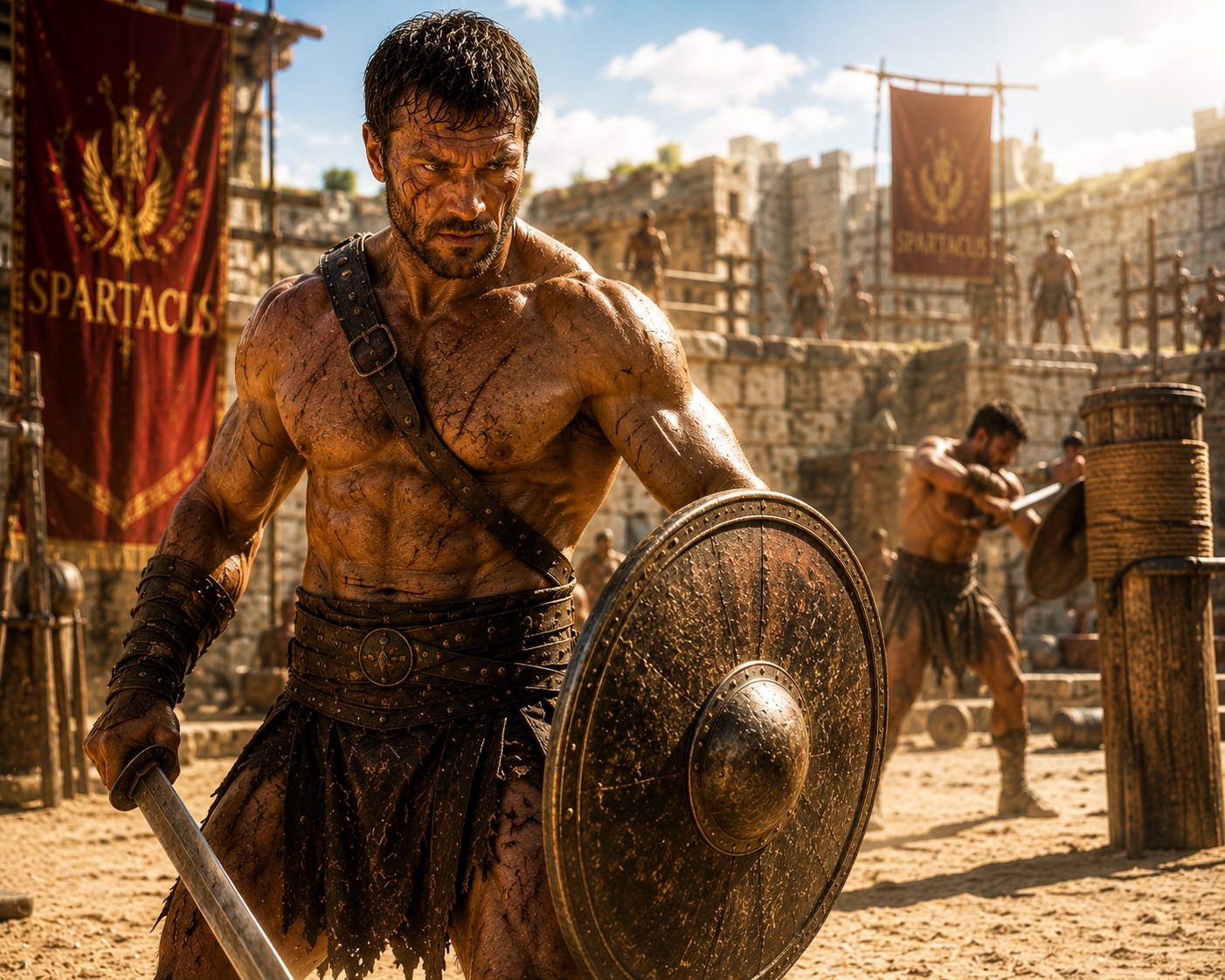
Neither warrior enters this contest poorly armed. Spartacus spent years fighting in gladiatorial arenas where survival depended upon mastering different weapons, adapting to opponents and exploiting weaknesses in seconds. His experience made him unpredictable and exceptionally dangerous in close combat.
The Praetorian Guard, however, carried weapons refined through generations of Roman warfare. The gladius was designed to thrust efficiently around a shield, while the large scutum provided both protection and offensive opportunities. Every element of the Praetorian’s equipment worked together as part of a proven military system.
Spartacus likely possessed greater creativity and improvisation, but the Praetorian enters the duel with a more complete and efficient battlefield toolkit. It is a narrow margin, yet an important one.
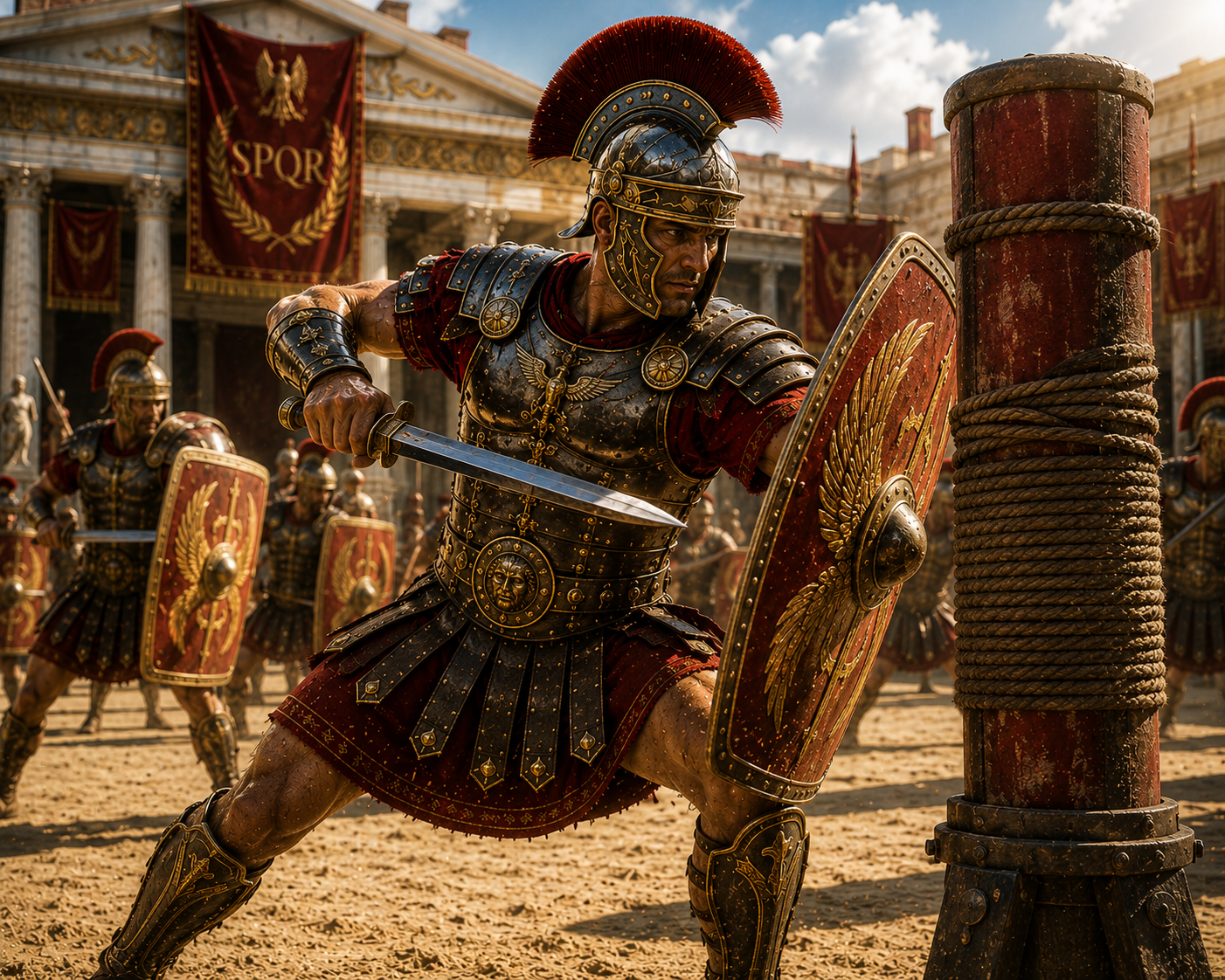
This round is perhaps the most difficult to judge. Spartacus was not merely a gladiator; he was one of the finest fighters ever produced by Rome’s brutal arena system. Gladiators trained relentlessly, learning how to exploit weaknesses, manage distance and survive under immense pressure. Every contest could be their last.
The Praetorian Guard followed a different path. Drawn from Rome’s most capable soldiers, Praetorians trained extensively with sword, shield and battlefield tactics. Their role demanded discipline, precision and the ability to fight as part of an elite military force. They were not entertainers. They were professional warriors trusted to protect the Emperor himself.
Spartacus likely possessed superior experience in one-on-one combat, while the Praetorian benefited from structured military training and exceptional discipline. Both men stand at the pinnacle of their professions, making it difficult to separate them.
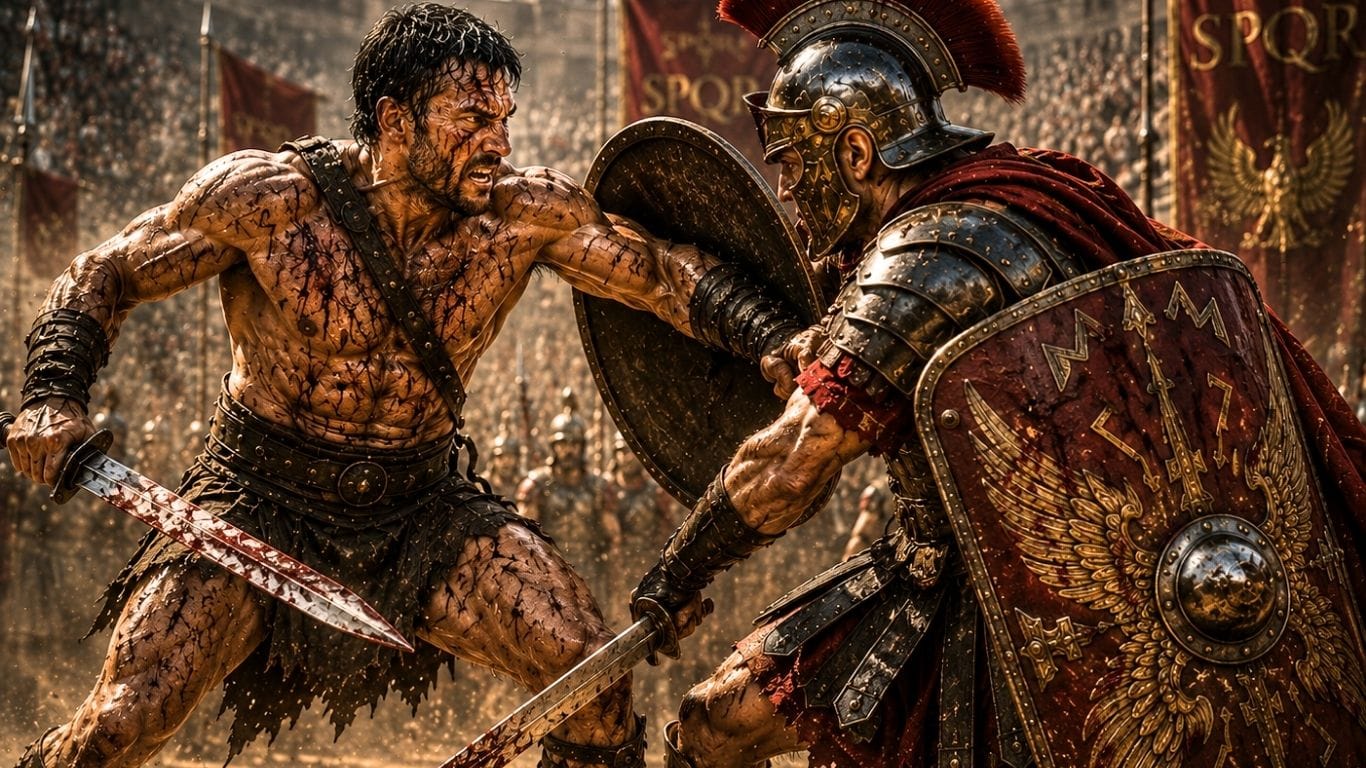
Both fighters possess exceptional physical conditioning, but Spartacus operated in a world where weakness often meant death. Years of gladiatorial training hardened his body, while his leadership of the slave rebellion demanded constant movement, campaigning and survival under extreme conditions.
The Praetorian Guard was undoubtedly tough. Elite Roman soldiers marched long distances, trained rigorously and maintained strict discipline. Yet their lives still benefited from the structure and support of the Roman military system.
Spartacus had no such luxury. He fought, marched and survived while hunted by the most powerful state in the Mediterranean. His ability to endure hardship and continue fighting against overwhelming odds became the foundation of his legend.
If this contest becomes a prolonged war of attrition rather than a quick duel, Spartacus is the man more likely to keep pushing forward after others have reached their limits.
Weapons, armour and training can only take a warrior so far. Eventually every fight reaches a point where determination becomes more important than equipment. This is where Spartacus enters dangerous territory for any opponent.
The Praetorian Guard was fiercely loyal, highly disciplined and willing to die in service to Rome. Their dedication made them some of the most respected soldiers in the Empire. Yet they ultimately fought because duty demanded it.
Spartacus fought for something far more personal. He fought for freedom. Every battle carried the possibility of liberation for himself and the thousands who followed him. Defeat meant slavery, punishment or death. Victory meant hope.
History remembers Spartacus not because he won every battle, but because he refused to accept the role assigned to him. Even when facing impossible odds, he continued to fight. That relentless refusal to surrender became the foundation of his legend.
When two elite warriors are evenly matched physically, the fighter with the stronger personal motivation often finds something extra when the contest reaches its darkest moment. Spartacus built his entire life around that principle.
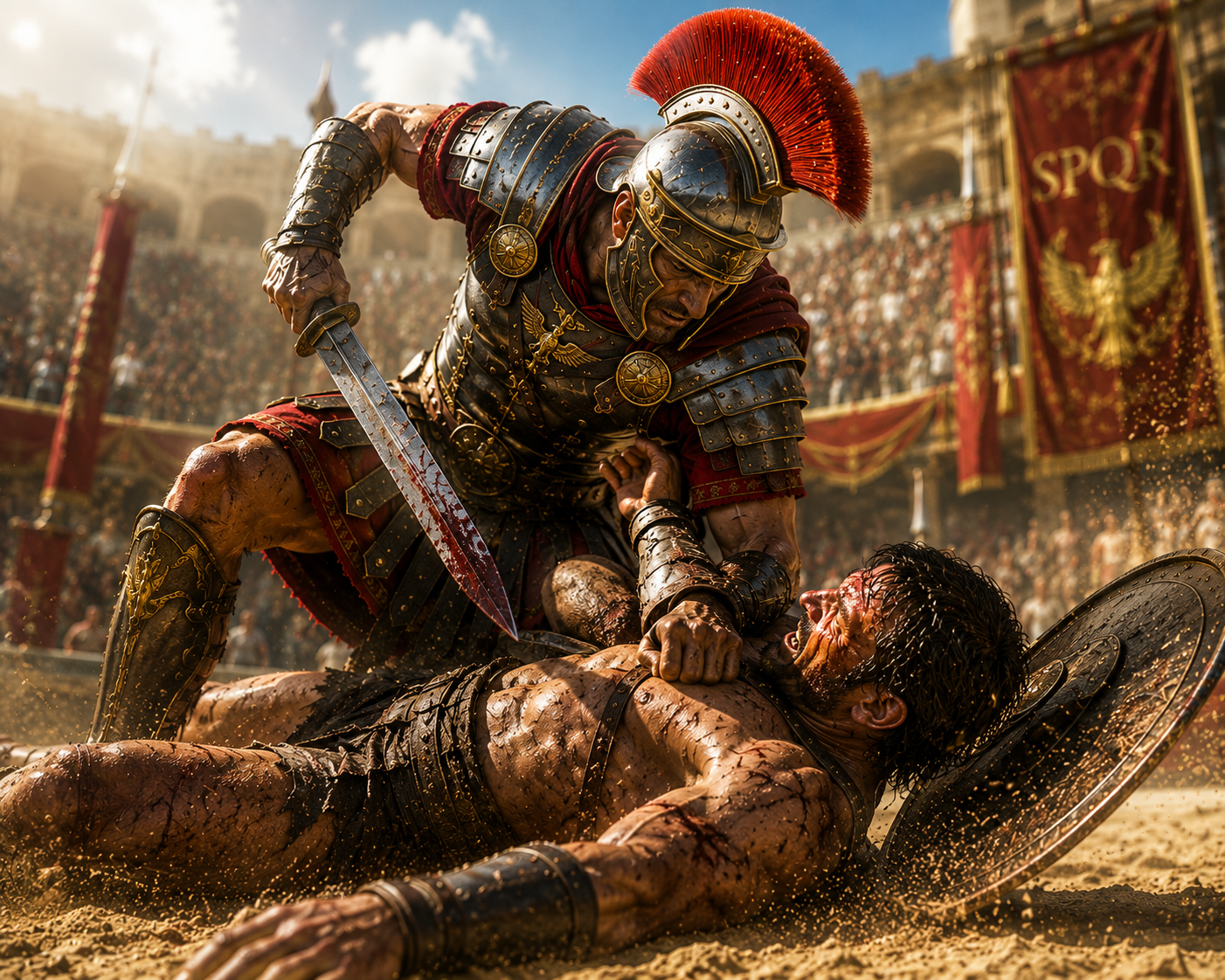
The crowd roars as the two warriors step forward beneath the blazing Mediterranean sun.
The Praetorian Guard advances first. Shield raised. Gladius ready. Every movement is precise and economical, the product of years spent serving amongst Rome’s most elite warriors.
Spartacus remains calm.
The former gladiator studies his opponent carefully, refusing to be drawn into an early mistake. He has survived arenas, battlefields and entire Roman armies. One man, no matter how skilled, will not intimidate him.
Steel crashes against steel.
The Praetorian immediately begins to exploit his advantages. Superior armour absorbs several blows while his shield repeatedly forces Spartacus onto the defensive. For a moment it appears that Rome’s elite protector has complete control of the contest.
But Spartacus has spent a lifetime adapting to impossible situations.
As the duel continues, he begins to identify tiny flaws in the Praetorian’s rhythm. His attacks become less predictable. His footwork becomes more aggressive. Slowly but surely, the balance of the fight begins to shift.
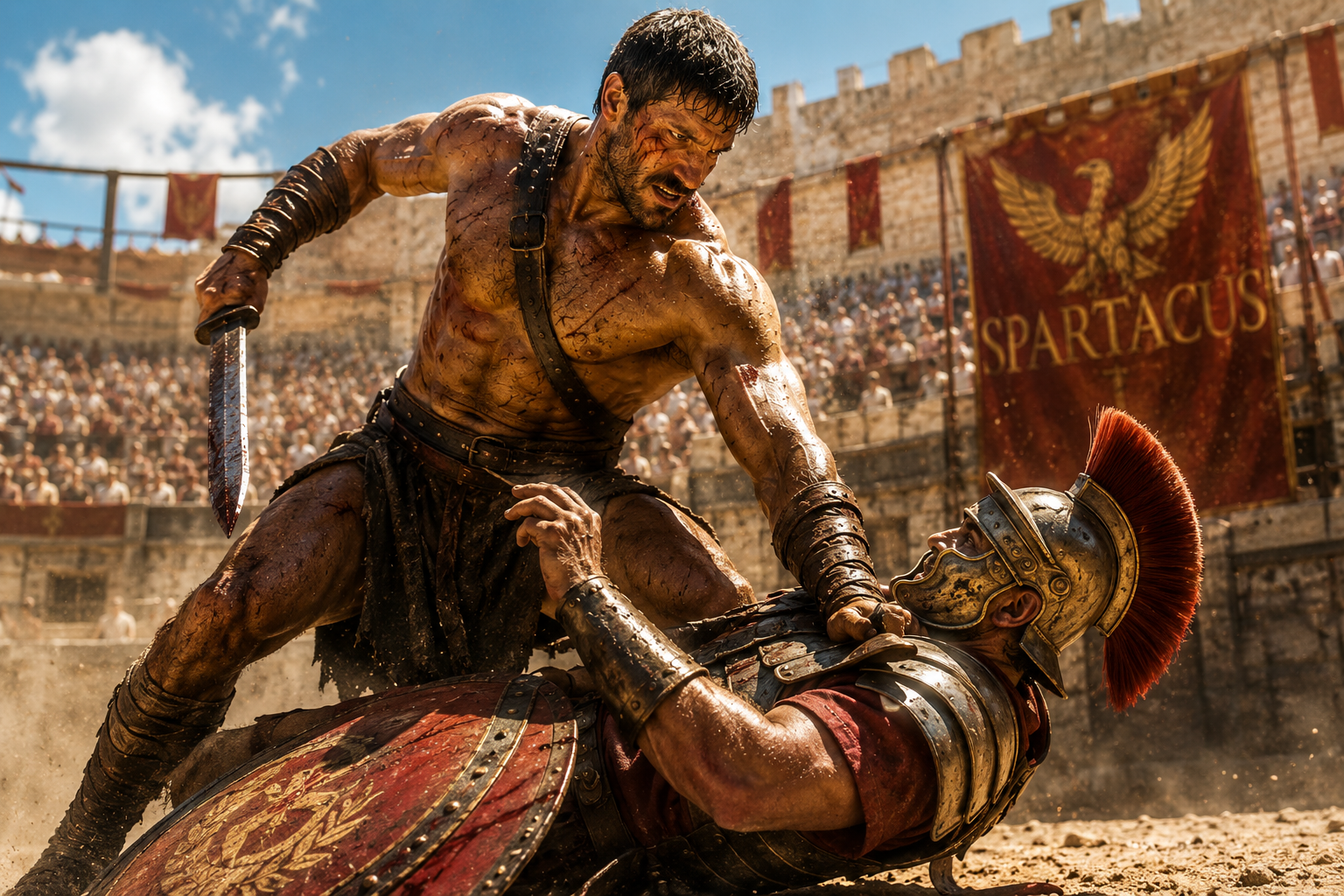
The crowd senses the change immediately.
The Praetorian remains dangerous, but the fight is no longer unfolding on his terms. Spartacus forces him into a faster, more chaotic exchange where instinct matters just as much as training.
The Roman blocks one strike, then another. A third attack follows from an unexpected angle.
Suddenly, Spartacus slips inside the shield.
The Praetorian reacts a fraction too late.
A decisive blow lands.
The Roman staggers backwards as the arena falls silent. For the first time in the duel, Rome’s champion looks vulnerable.
Spartacus presses forward relentlessly.
One final exchange follows.
Moments later, the contest is over.
Winner
Spartacus — Extremely Narrow Victory
Spartacus
Spartacus escaped from a gladiator school near Capua with only around 70 fellow gladiators. Within two years, his rebellion had grown into an army numbering tens of thousands and repeatedly defeated Roman forces sent to destroy it. Rome had never faced a slave uprising on such a scale.
Former Roman Soldier
Ancient sources suggest Spartacus may have served in the Roman military before becoming enslaved and trained as a gladiator. This may explain his remarkable ability to organise, train and lead an effective fighting force against Rome itself.
Sold The Roman Empire
In AD 193, members of the Praetorian Guard effectively auctioned the imperial throne to the highest bidder after the assassination of Emperor Pertinax. It remains one of the most shocking political scandals in Roman history.
Kingmakers Of Rome
The Praetorian Guard became so powerful that they occasionally decided who ruled Rome. Several emperors owed their rise to Praetorian support, while others lost their thrones because the Guard turned against them.
Historical Irony
The real Spartacus and the Praetorian Guard never truly met in their prime forms. Spartacus died in 71 BC, while the Praetorian Guard reached its greatest power during the Imperial era that followed. This battle is therefore a clash between two legends from different chapters of Roman history: Rome’s greatest rebel versus Rome’s ultimate protectors.
Our simulation gave Spartacus a razor-thin victory, but history’s greatest debates are rarely settled by one opinion. Now it’s your turn to decide. Would Rome’s greatest rebel overcome the Empire’s elite protector, or would the Praetorian Guard prove too disciplined and too well equipped?
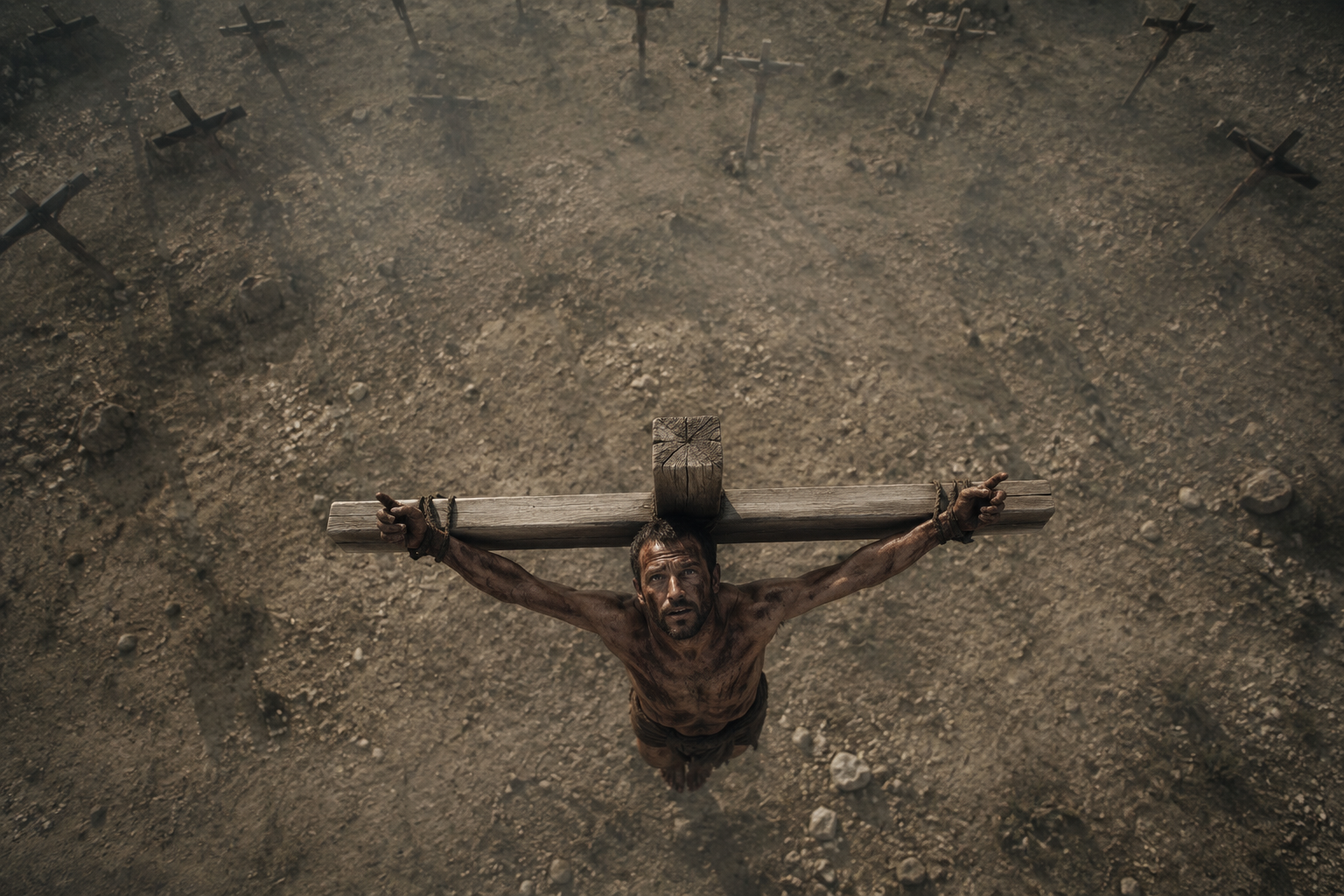
Spartacus was ultimately defeated by Rome in 71 BC.
His body was never conclusively identified, but thousands of his followers were crucified along the Appian Way as a brutal warning to anyone who dared challenge Roman authority.
Yet while Rome crushed the rebellion, it never truly erased what Spartacus represented. He became more than a gladiator, more than a rebel and more than a defeated enemy of the Republic.
He became a symbol of resistance.
That is why this matchup still matters. The Praetorian Guard represents Rome at its most disciplined, protected and powerful. Spartacus represents the one thing Rome could never fully control: the human desire to be free.