
Precision.
Movement.
One opening.
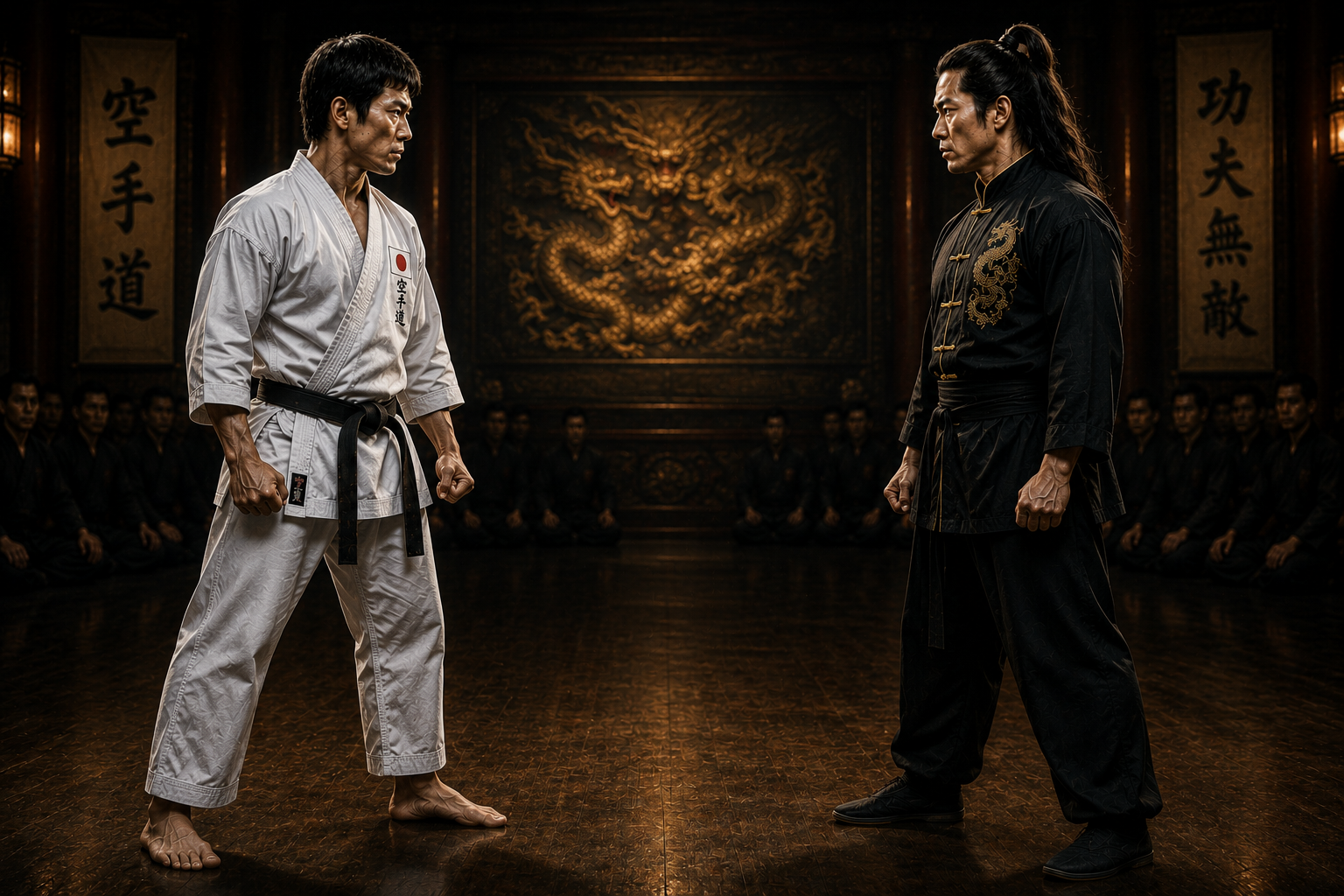
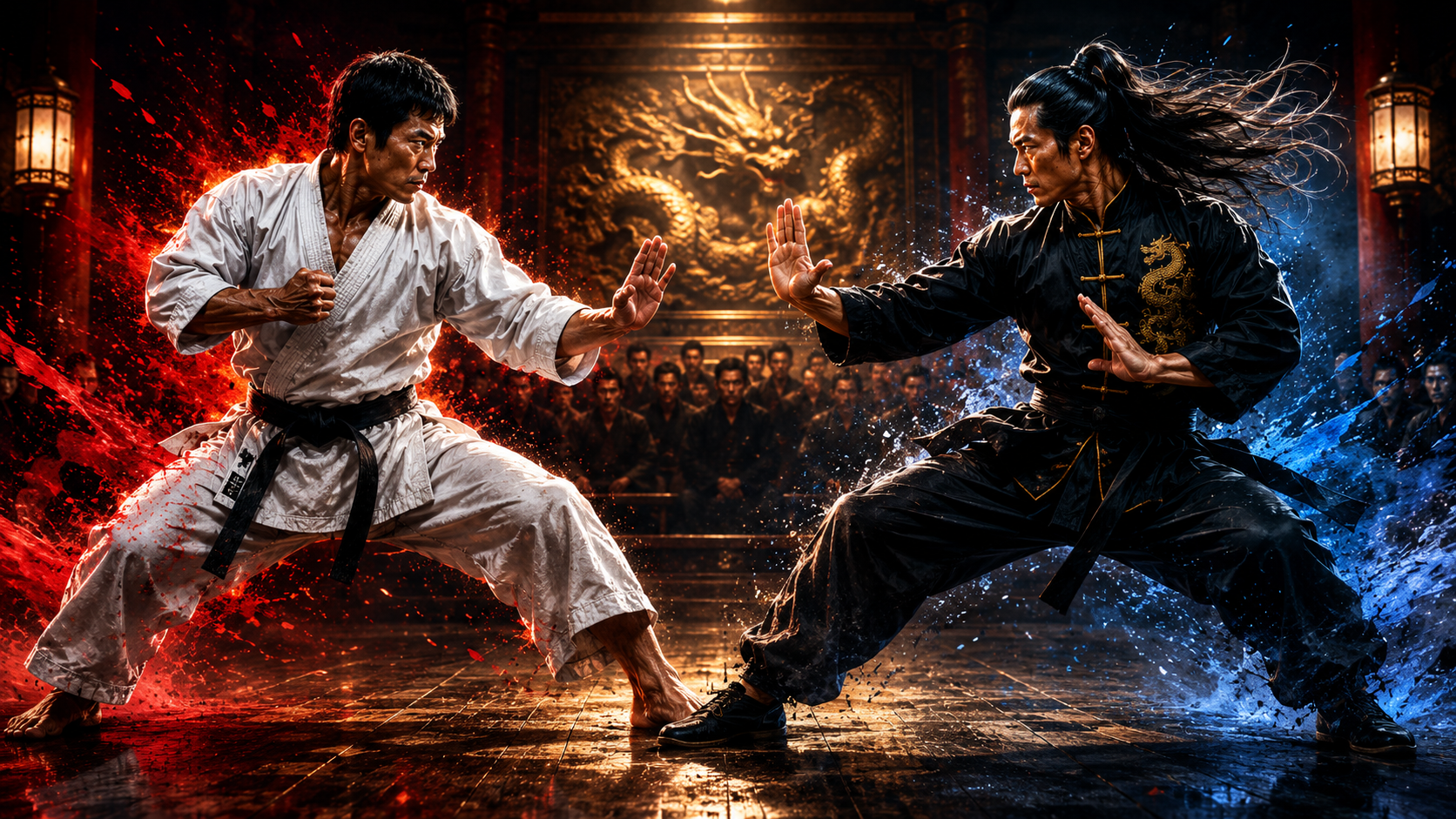
Karate Champion vs Kung Fu Master. Six fictional rounds between two imagined fighters—and a finish decided by the smallest margin.
Two fighters.
One shared challenge.
These are story characters with chosen strengths. They do not represent every school or practitioner of either tradition.
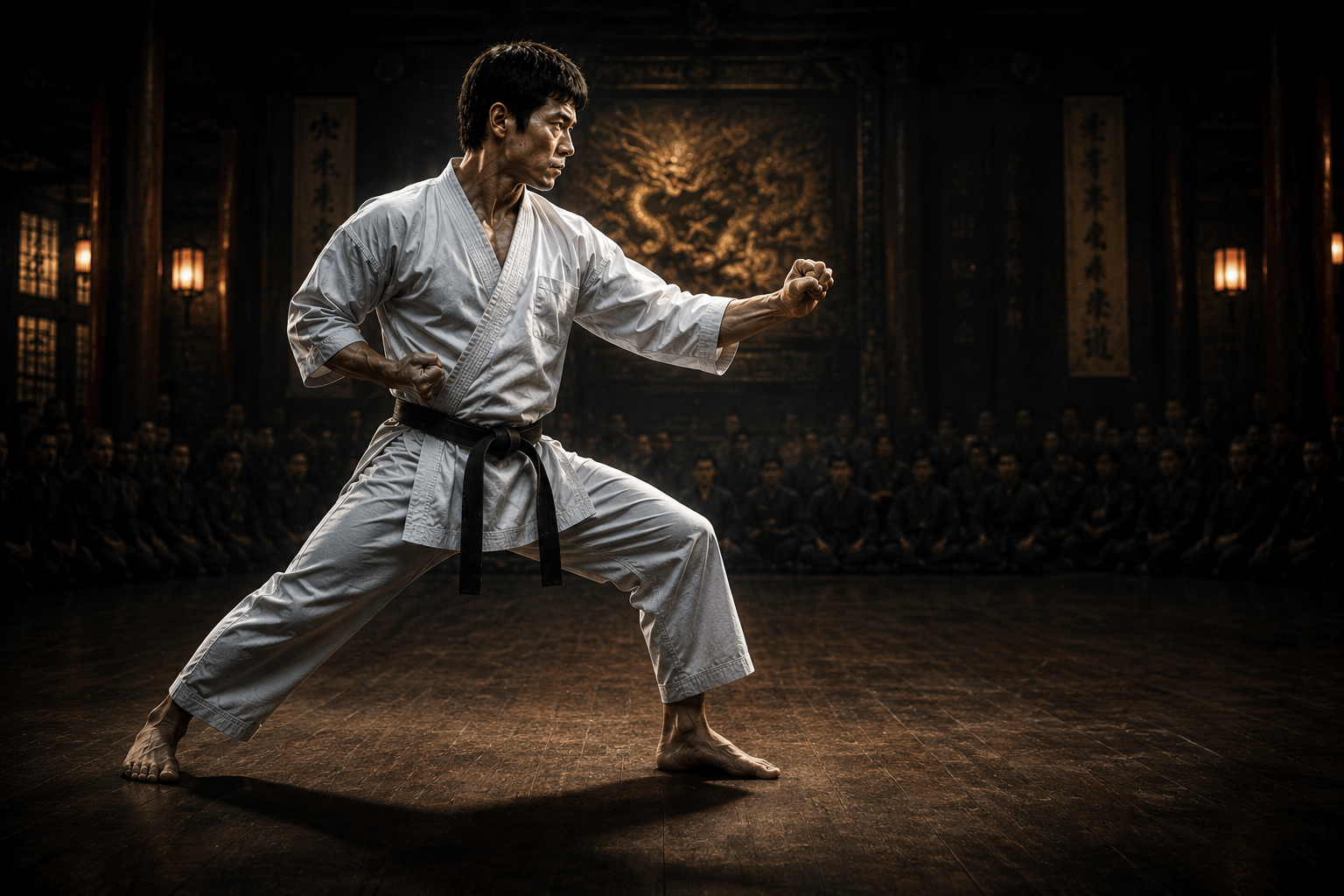 RED CORNER / KARATE CHAMPION
Timing is
his opening.
Our imagined champion favours direct combinations and well-timed counters. His challenge is to recognise an opportunity without becoming predictable himself.
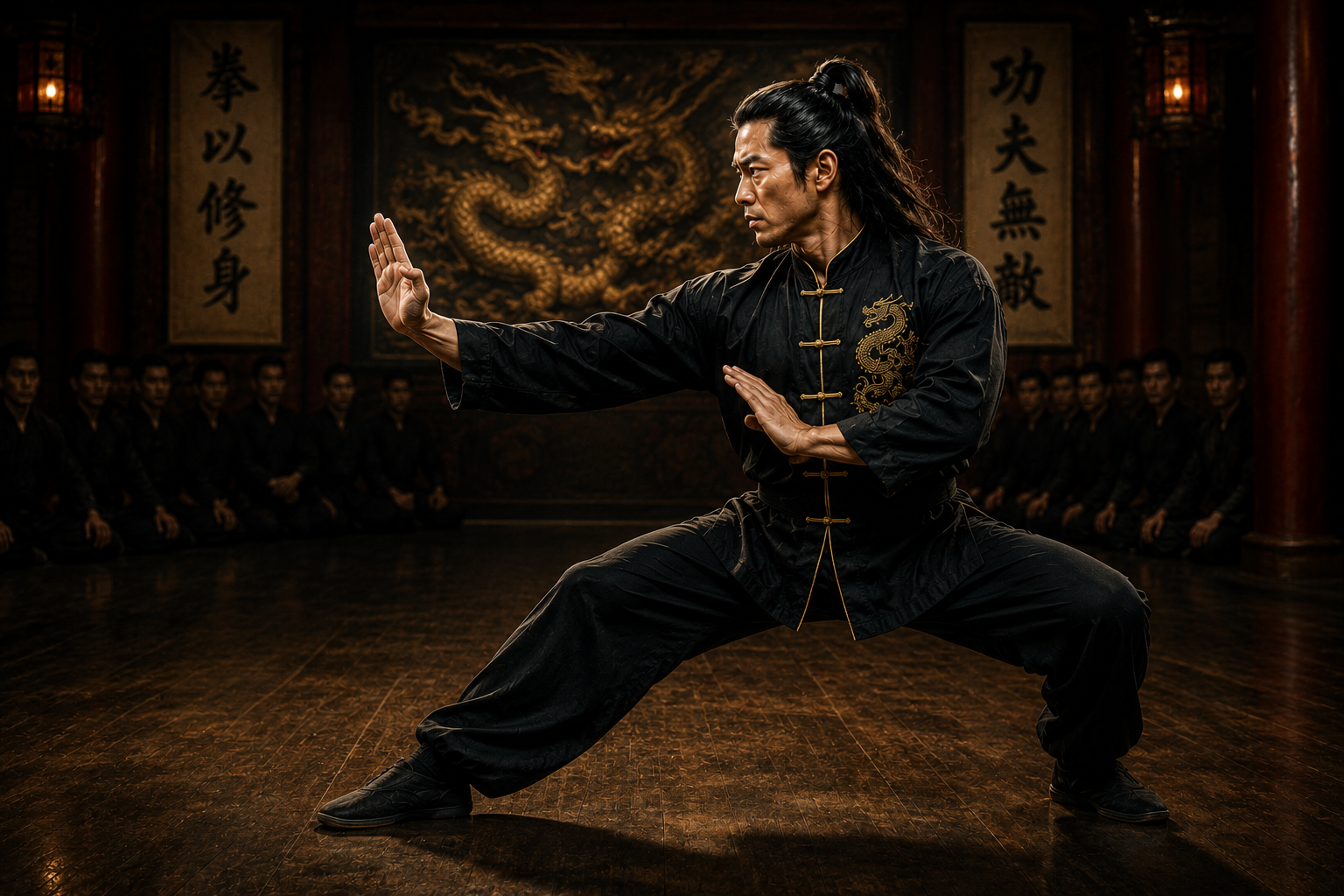 BLUE CORNER / KUNG FU MASTER
Movement is
his question.
Our imagined master varies his angles and combinations. His challenge is to make that variety effective against someone waiting to counter.
An invented exhibition format, not an official Karate or Wushu ruleset. All illustrations and match events are fictional.
Compare the approach.
Skip the invented metrics.
The traits below describe these characters, rather than measured differences between martial arts.
| Story factor | Karate Champion | Kung Fu Master |
|---|---|---|
| Preferred approach | Direct combinations and counters. | Changing angles and varied combinations. |
| Opening sought | A moment of commitment. | A predictable response. |
| Defensive task | Read movement without overreacting. | Avoid becoming exposed while changing attacks. |
| Conditioning | Comparable by scenario assumption. | Comparable by scenario assumption. |
| Measured ranking | None assigned. | None assigned. |
The lead changes.
The tension stays.
Qualitative momentum follows the narrative. It is not live data, a probability or a calculated score.
Feeling each
other out.
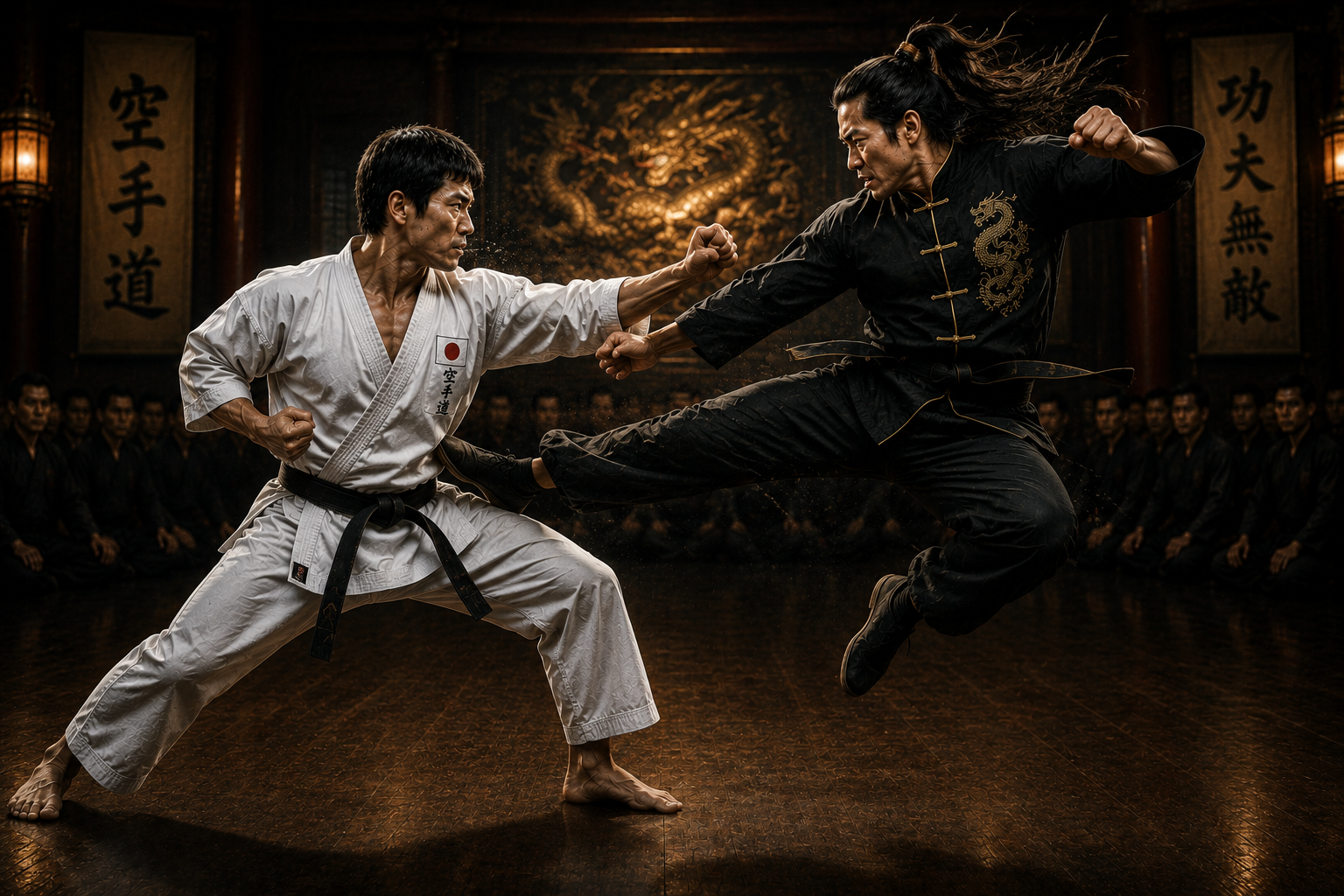
The dojo settles into silence. Both fighters test the distance with small movements and feints. Neither commits long enough to offer an obvious opening.
The first
real exchanges.
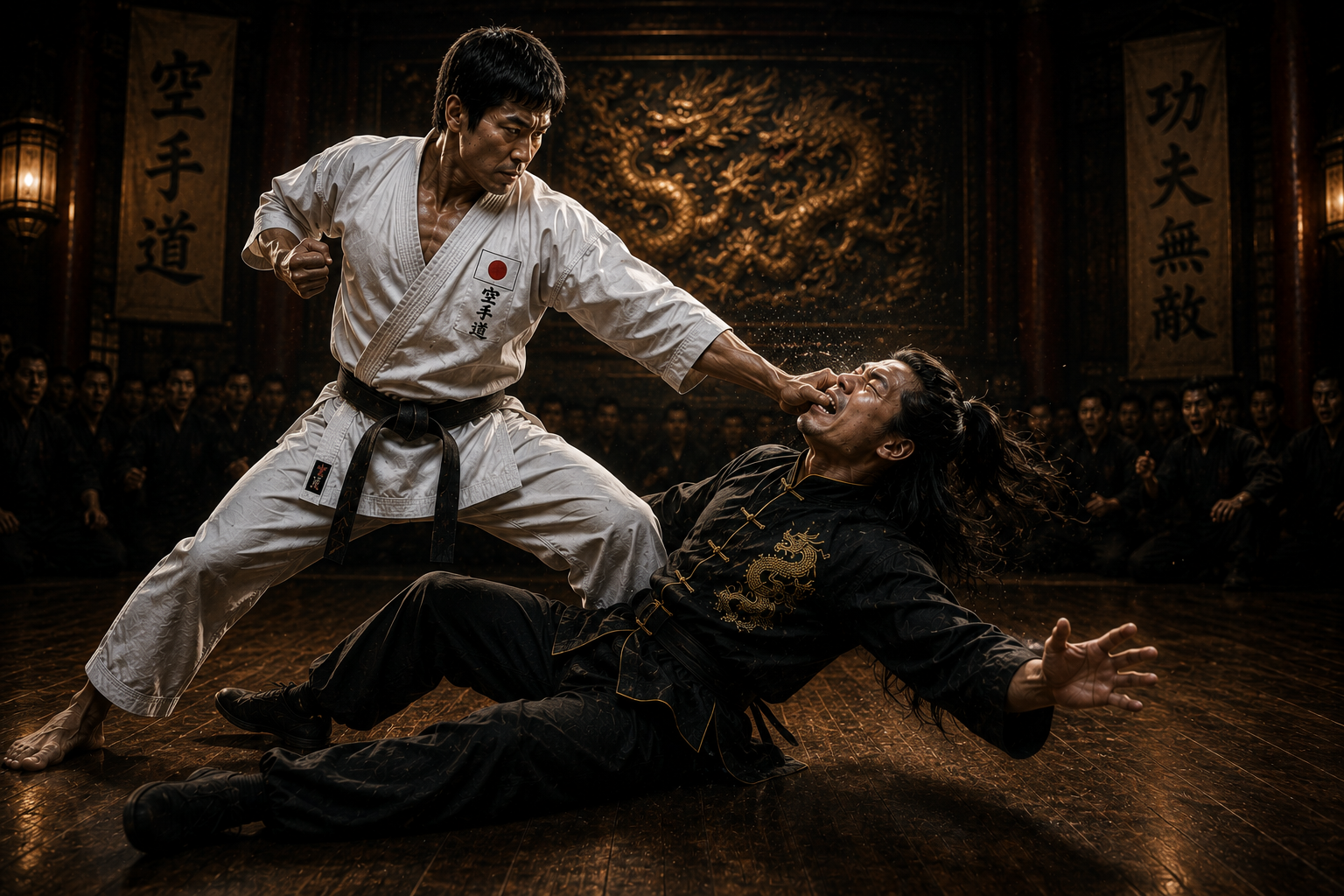
The Karate Champion quickens the pace. The Kung Fu Master answers from a different angle, and the spectators see how little separates a clean score from a missed opportunity.
Karate finds
his rhythm.
A series of well-timed counters gives the Karate Champion his strongest passage. The Kung Fu Master gives ground, then begins changing the pattern that his opponent has learned to read.
The response
changes everything.
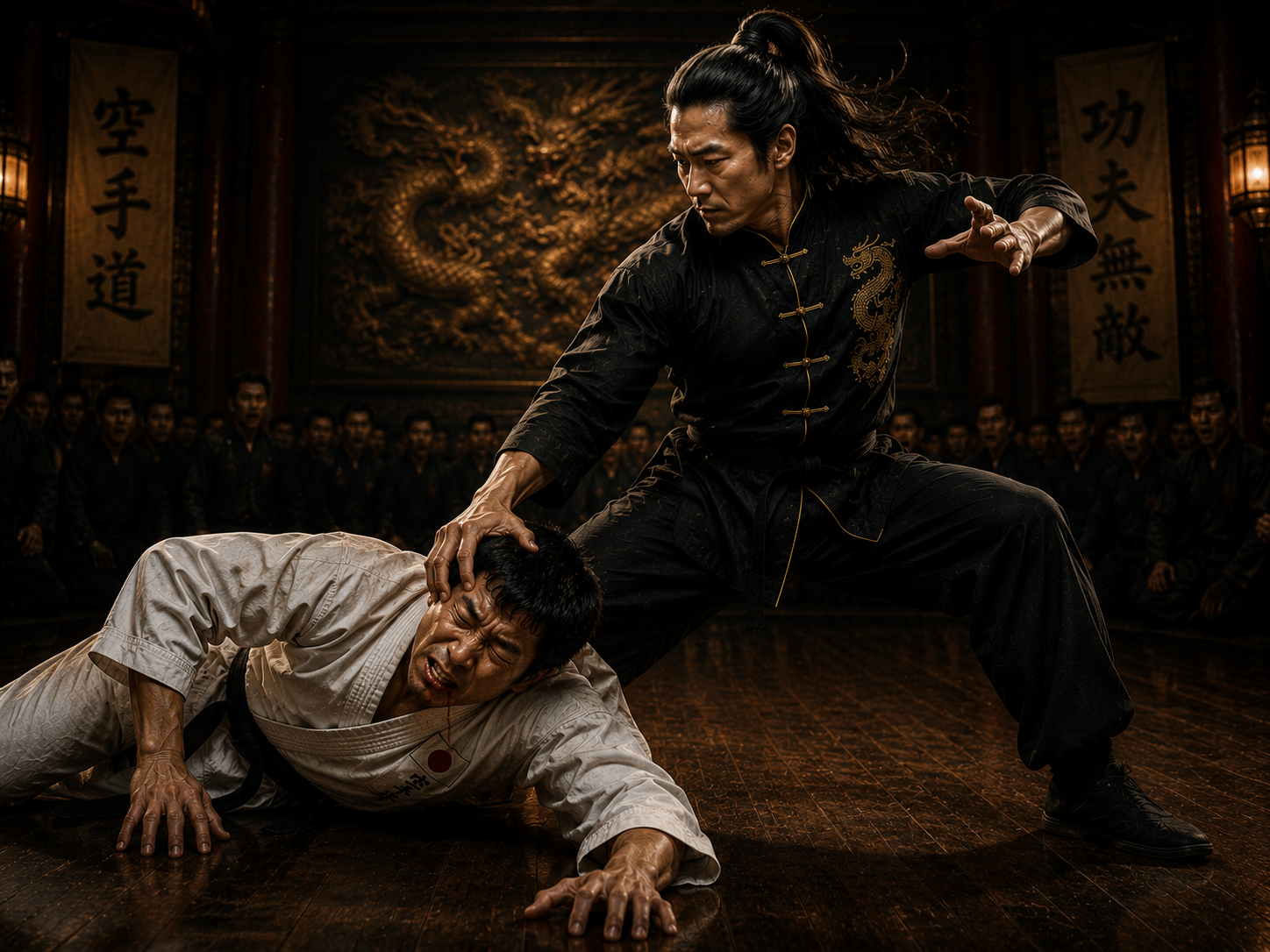
The Kung Fu Master varies the tempo and strings together his best exchanges. The Karate Champion’s earlier rhythm no longer produces the same openings. The contest is open again.
One moment
to remember.
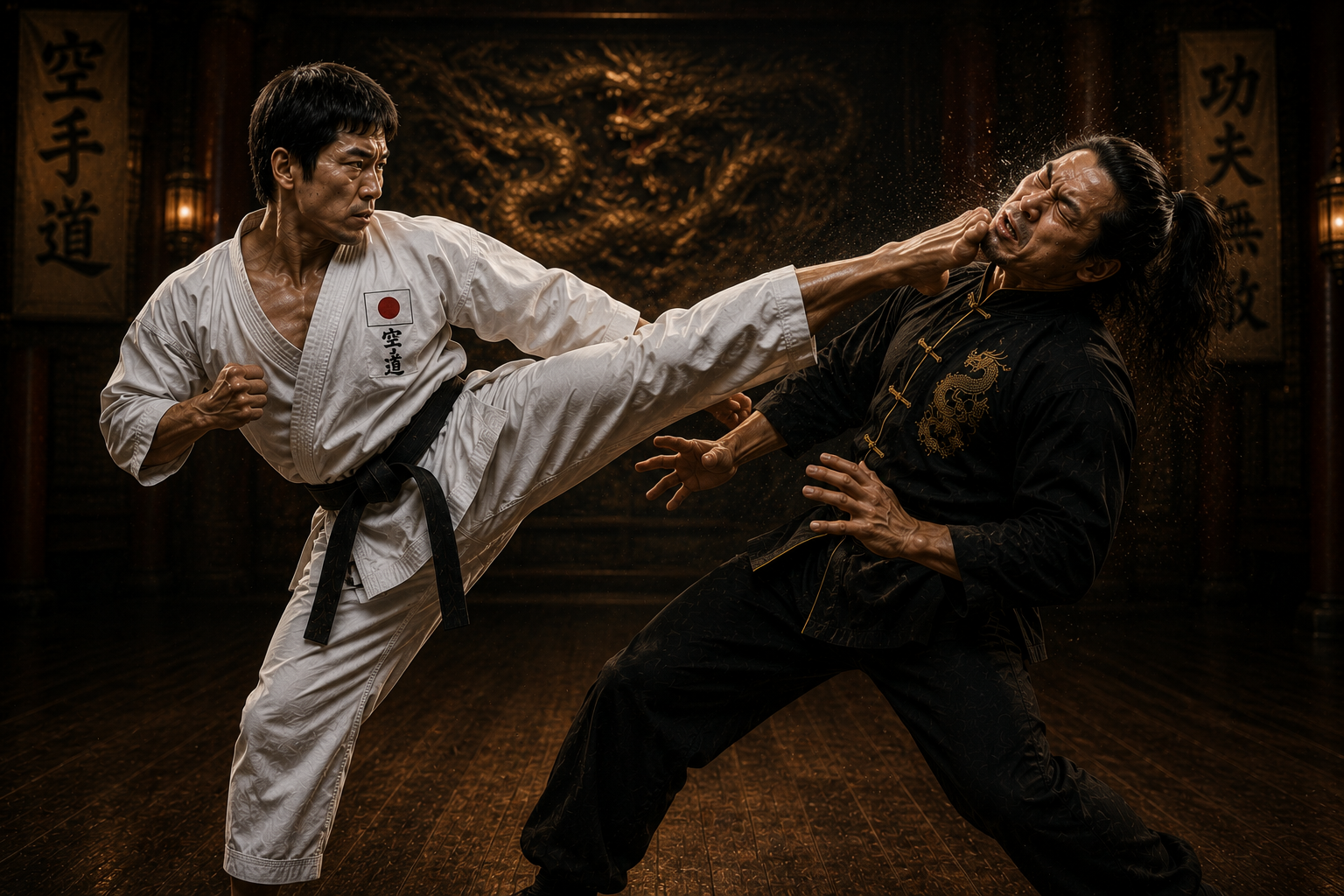
The Karate Champion produces a clean scoring kick in this fictional sequence. It is the round’s standout moment, but it does not end the exhibition. Both return ready for the final round.
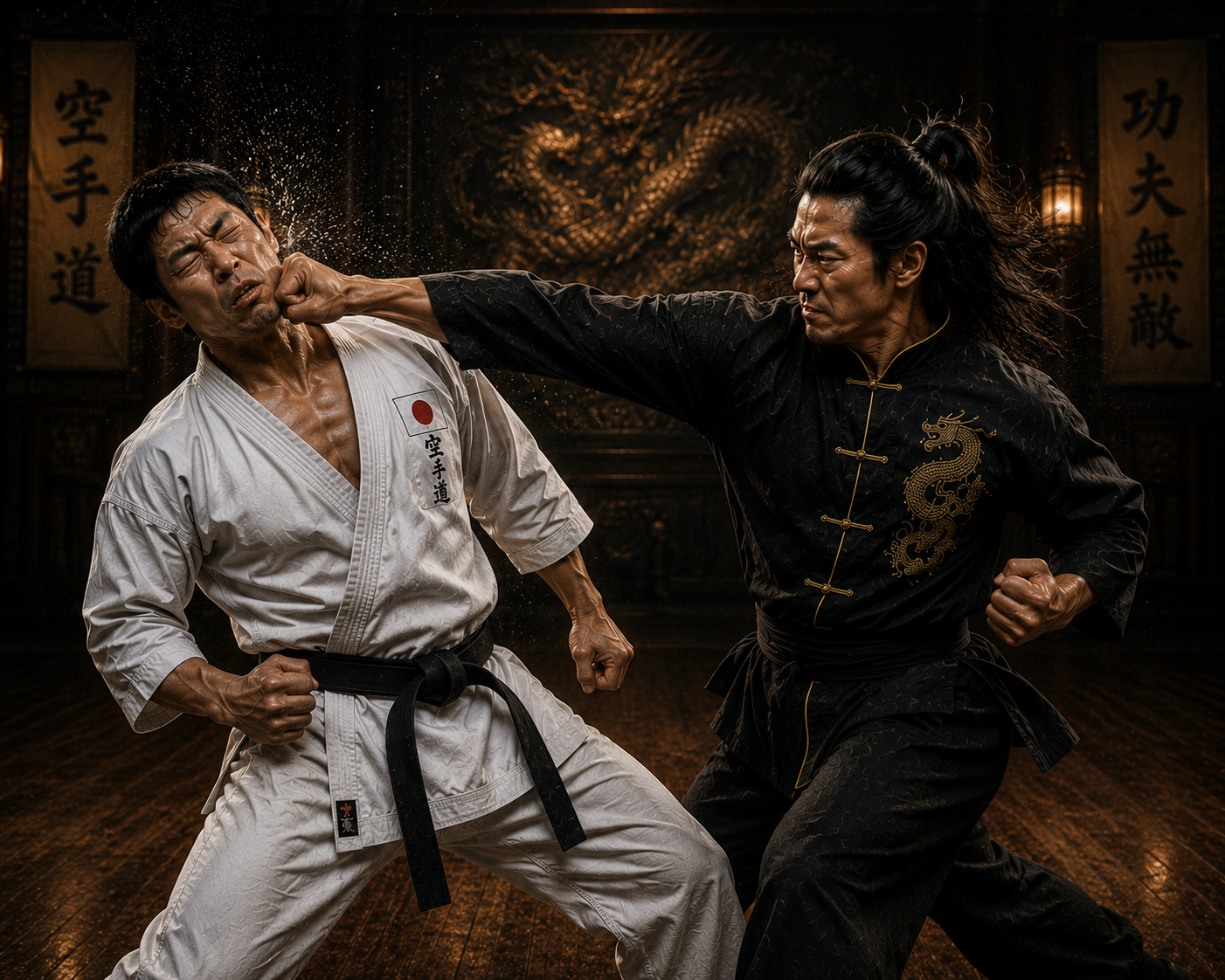
Everything
still to prove.
The Kung Fu Master opens strongly and scores with a punch. The Karate Champion answers later in the final exchange. The bell ends the contest; the judges must weigh the whole performance.
A final counter.
A narrow decision.
One ending resolves the story. No second knockout or conflicting scoreline.
The opening
arrives late.
The Kung Fu Master launches another combination. The Karate Champion finds space for a clean counter. Before either can build on the exchange, the bell sounds.
Both return to their corners. After considering the six rounds, the judges award a narrow decision to the Karate Champion. The final counter becomes the image everyone remembers; the decision reflects the whole contest.
Karate wins this story. The rematch remains unwritten.
Story winner:
Karate Champion.
Our imagined fighter wins a close judges’ decision. This ending does not establish Karate as superior to Kung Fu or predict the outcome between real practitioners. Their training, experience, preparation and agreed rules would need to be considered individually.
Which Karate and Kung Fu styles are represented?
The original premise does not identify specific schools. This version therefore keeps the contenders as fictional characters. A technical comparison would need named disciplines and clearly described training backgrounds.
What if throws and grappling are included?
That changes the rules and the skills being tested. The striking-only story cannot determine the result of a different format.
What if the fighters differ in size or experience?
The assumption of comparable size and fitness would no longer hold. We would need new character profiles before giving an editorial judgement.
Are the ratings and percentages measured?
No numerical ratings or win probabilities are assigned in this version. The six-round sequence is a fictional narrative rather than the output of a validated predictive model.
Who Would Win?
Our AI simulation gave the Karate Champion the narrowest possible victory… 51% to 49%. But AI doesn’t have the final say. Now it’s your turn to settle the debate. Who walks away victorious?
Looking for another battle?
Explore more martial arts, historical warriors, animals and survival matchups on WhoCouldWin.com.
⚔️ Browse More Battles