
Human ingenuity.
Wild power.
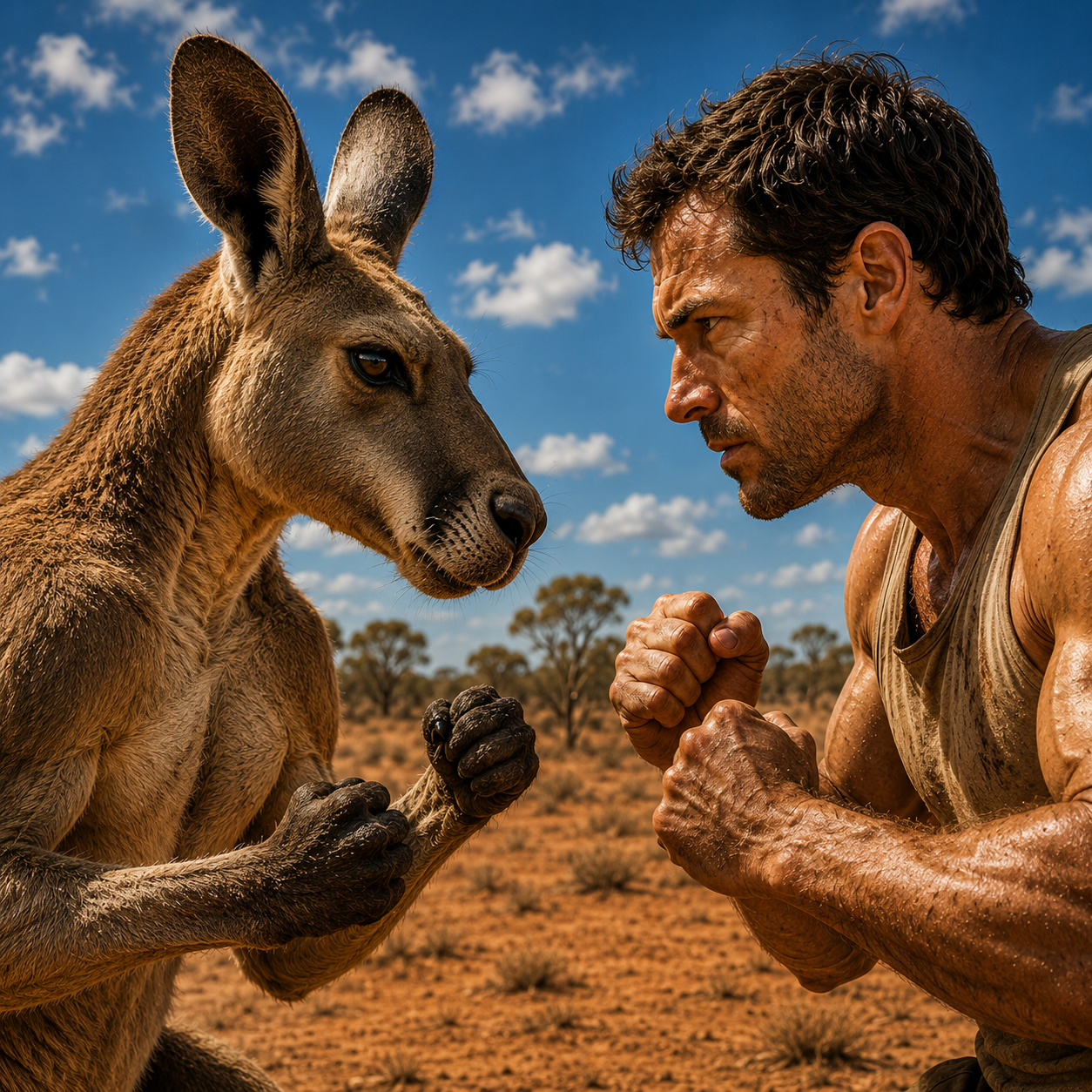
Kangaroo vs Man. A cinematic showdown between an unarmed human and a large male red kangaroo.
Two contenders.
Different strengths.
One imagined individual from each species. Neither represents every possible encounter.
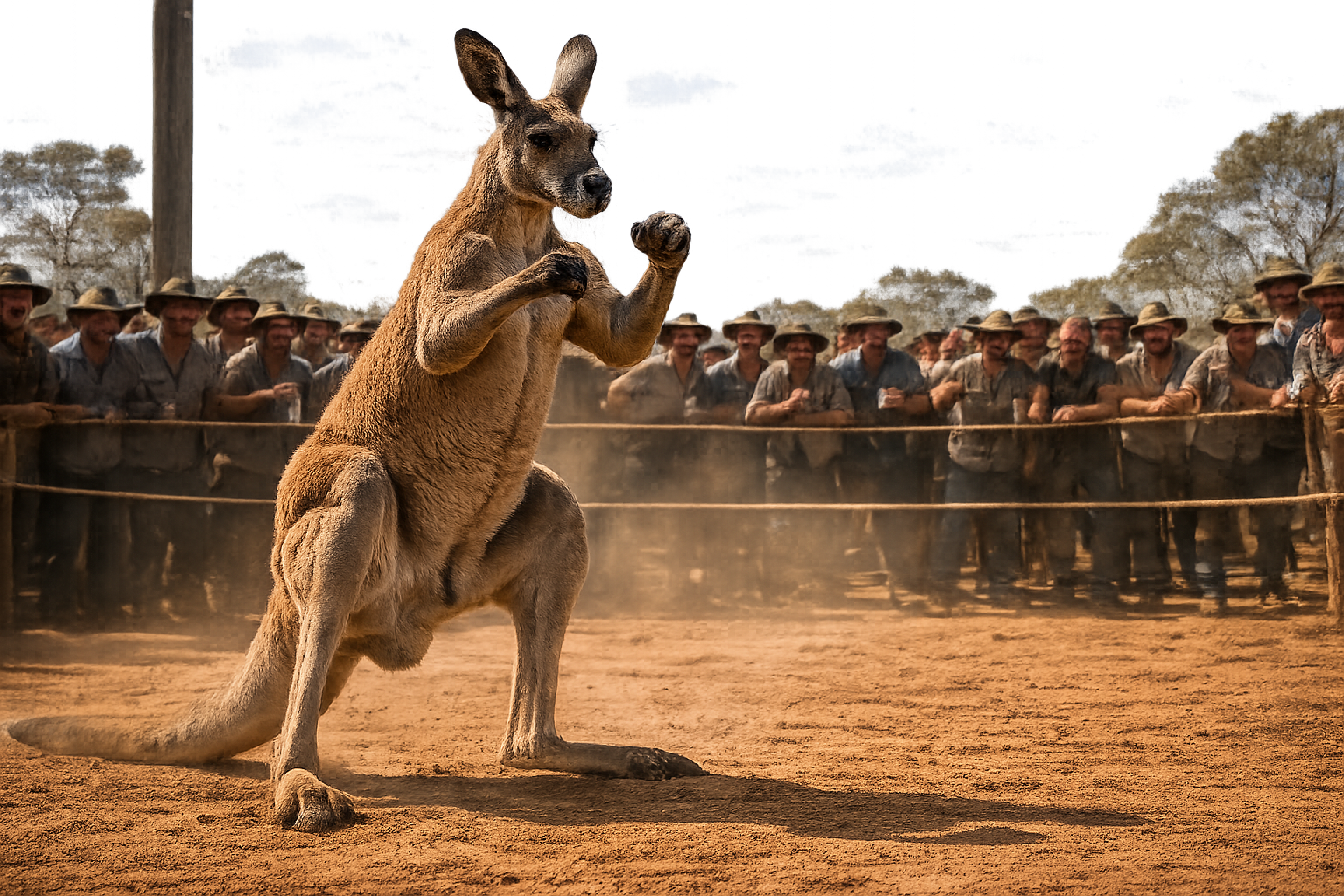 CONTENDER 01 / THE KANGAROO
The Kangaroo
We select a large, healthy adult male red kangaroo. Powerful hind limbs and a muscular tail are central to its movement and balance; close contact can also bring claws and kicks into play.
 CONTENDER 02 / THE MAN
The Man
We select a fit, healthy adult with no weapons and no assumed expertise handling kangaroos. His capacity to think and respond matters, but does not guarantee a physical advantage.
All images are fictional illustrations. Their proportions and poses are not measurements or evidence of a real encounter.
Biology meets
decision-making.
A sprint speed, reputation or attribute tally cannot by itself predict this encounter.
| Factor | Kangaroo | Man |
|---|---|---|
| Physical tools | Hind limbs, forelimbs, claws and tail. | Hands, limbs and flexible movement. |
| Familiarity | Behaviour shaped by its own environment. | No animal-handling expertise assumed. |
| Movement | Specialised hopping and balance. | Different movement and balance demands. |
| Decision-making | Not treated as a predictable machine. | Can reason; success is not guaranteed. |
| Measured fight odds | None established. | None established. |
Four factors.
More than a score.
These panels identify the important questions. They are not points that add up to a scientific result.
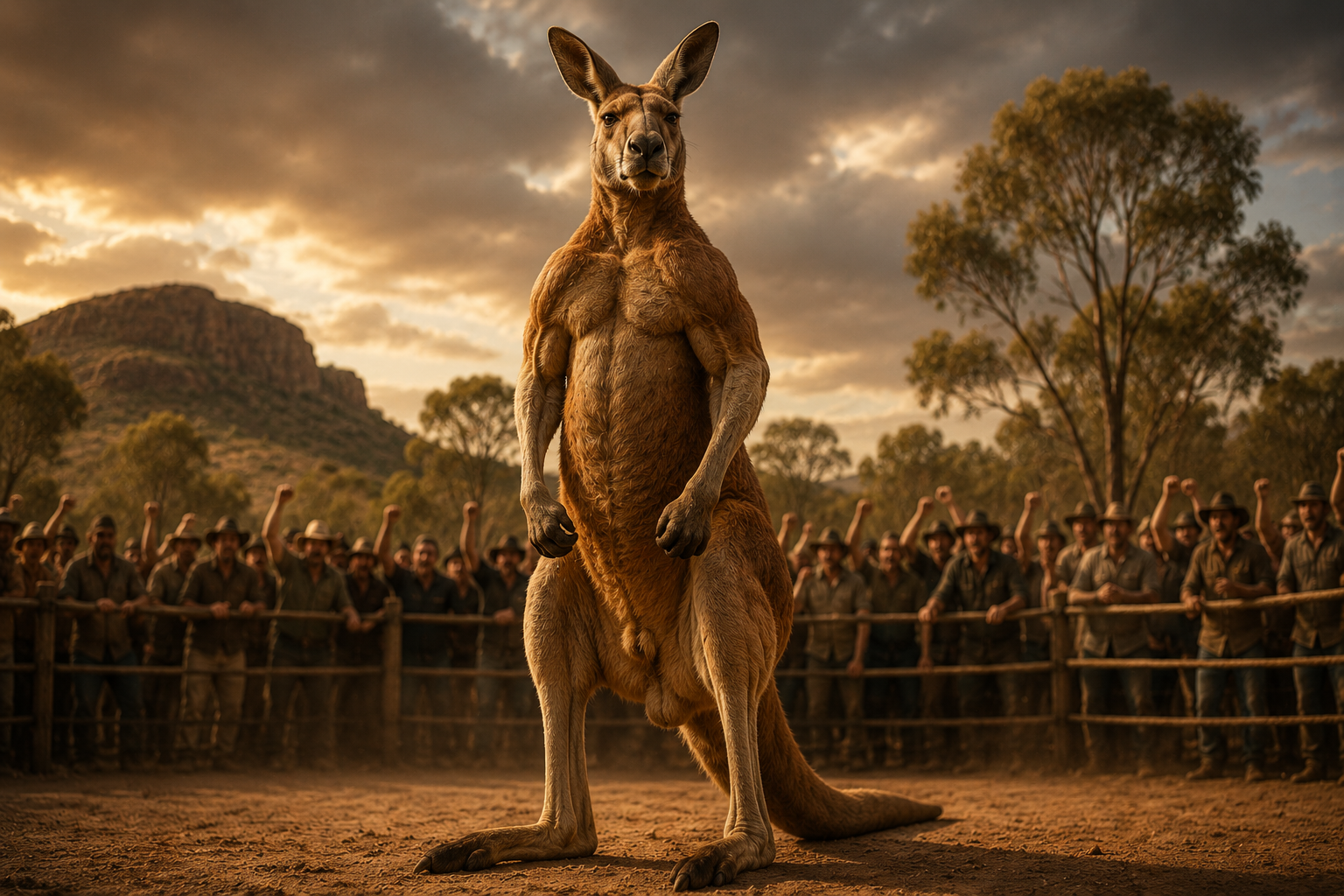
Select the animal.
Then assess the risk.
Red kangaroos vary in size. We choose a large adult male, but do not infer exact weight, strength or fighting ability from the illustration.
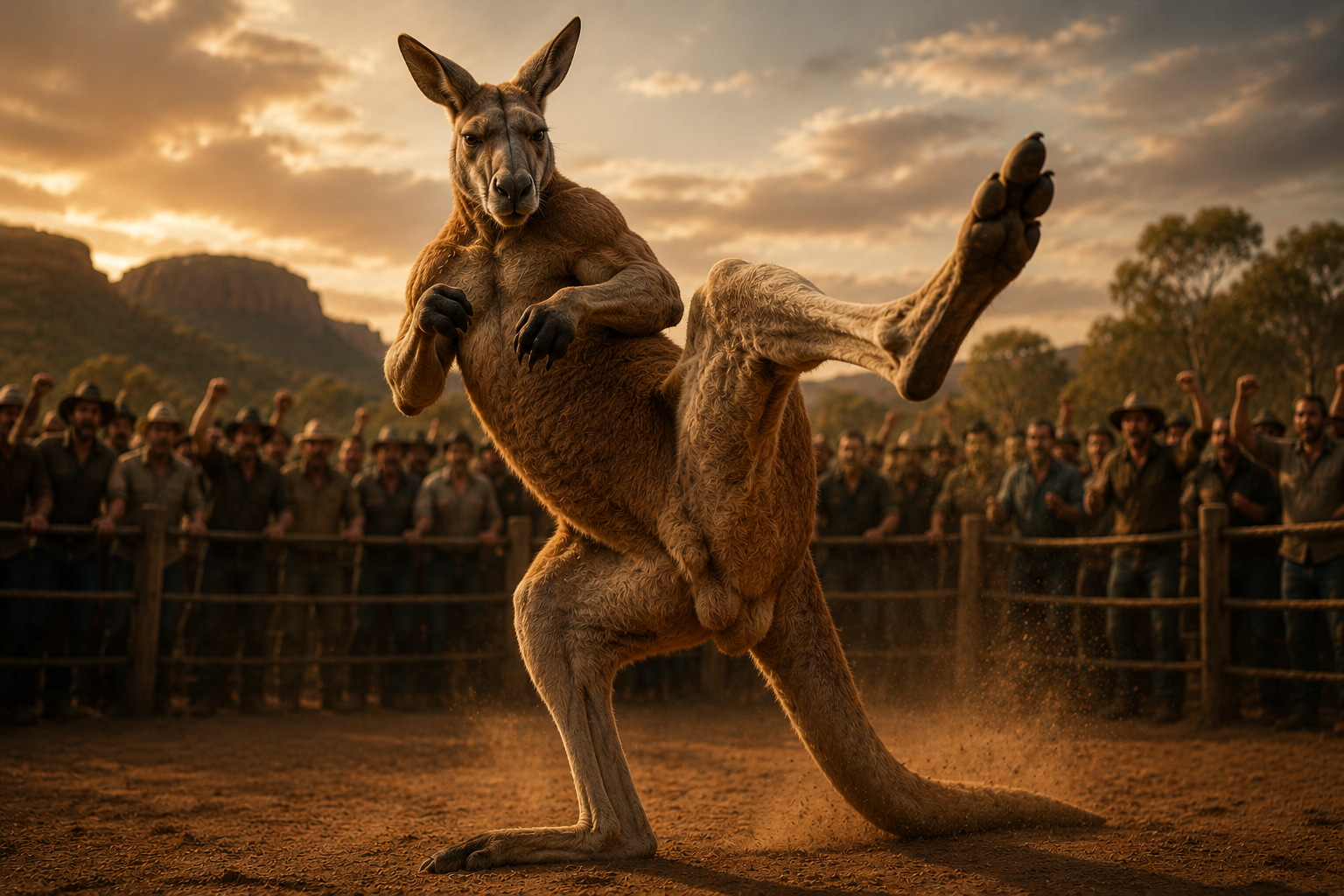
Close contact
changes the stakes.
Kangaroos can kick and scratch. Those capabilities make a close physical confrontation hazardous without requiring exaggerated force estimates or a claim of invincibility.
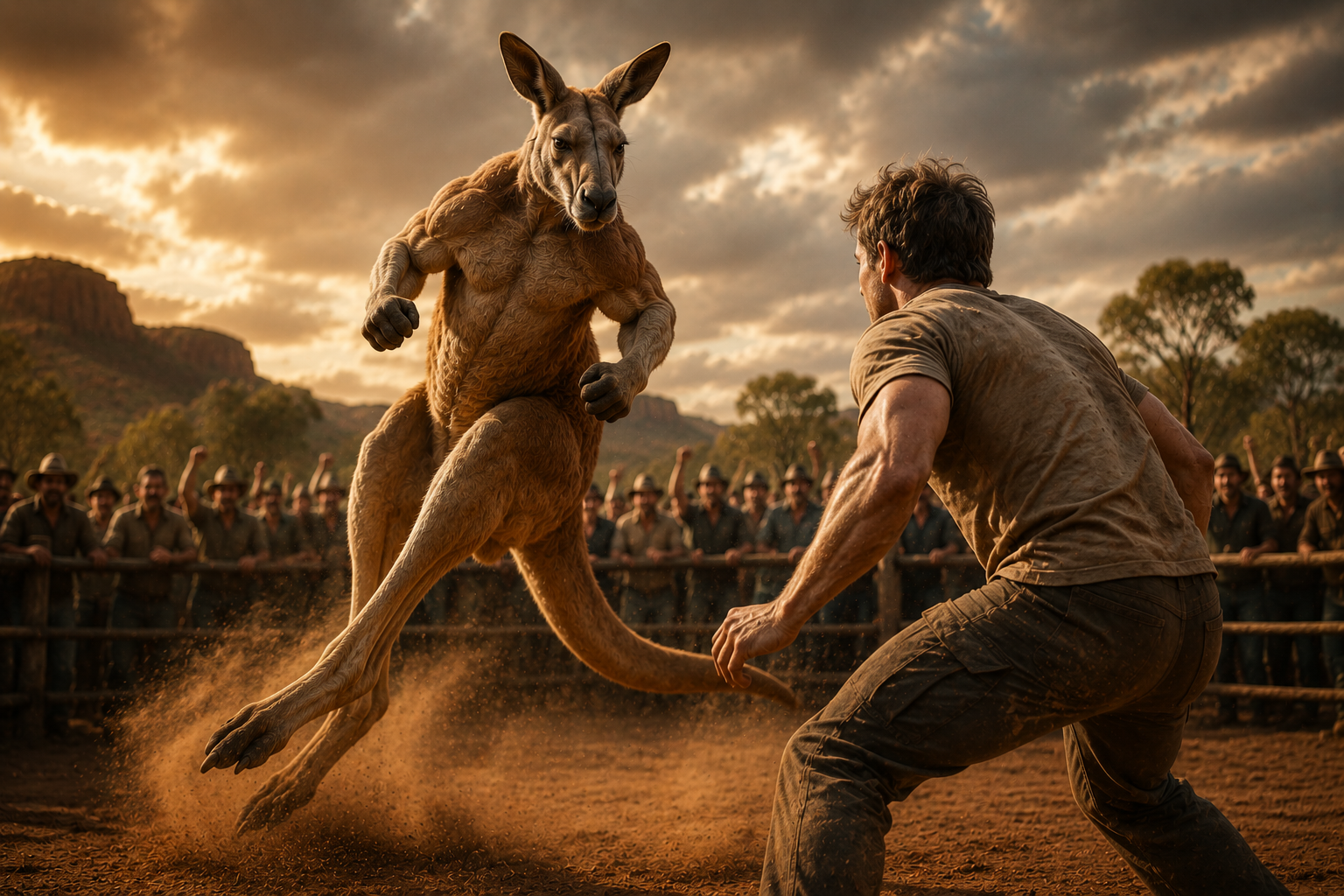
Fast travel is
not a duel statistic.
Hopping speed over open ground does not directly measure reactions, turning ability or performance at close quarters. We keep those questions separate.
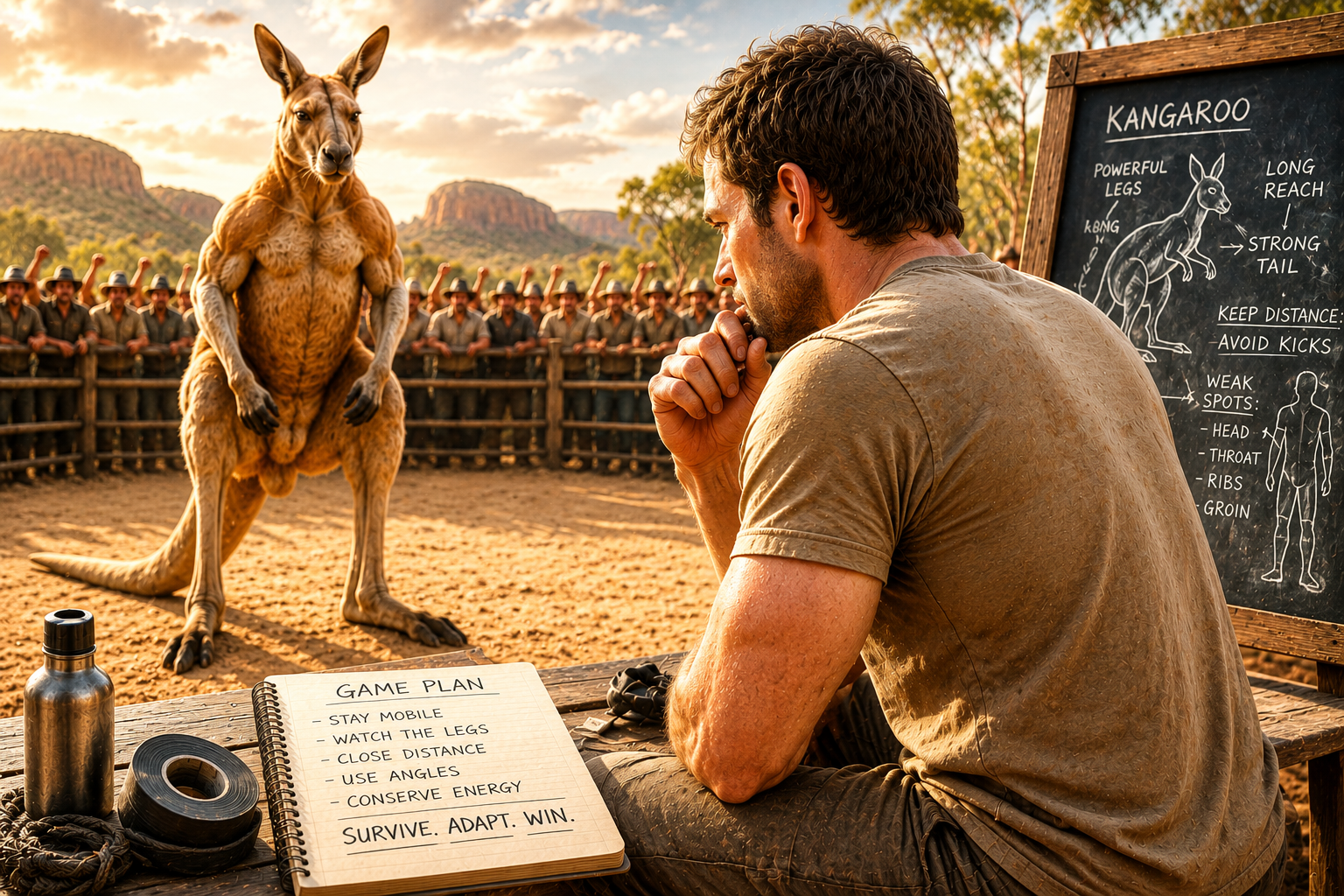
Thinking helps.
It does not guarantee control.
The human can assess and change decisions. It would still be an error to assume the kangaroo cannot learn or alter its behaviour during an encounter.
The moment
the balance changes.
One cinematic sequence, combining the original fifth round and simulation.
The arena
falls quiet.
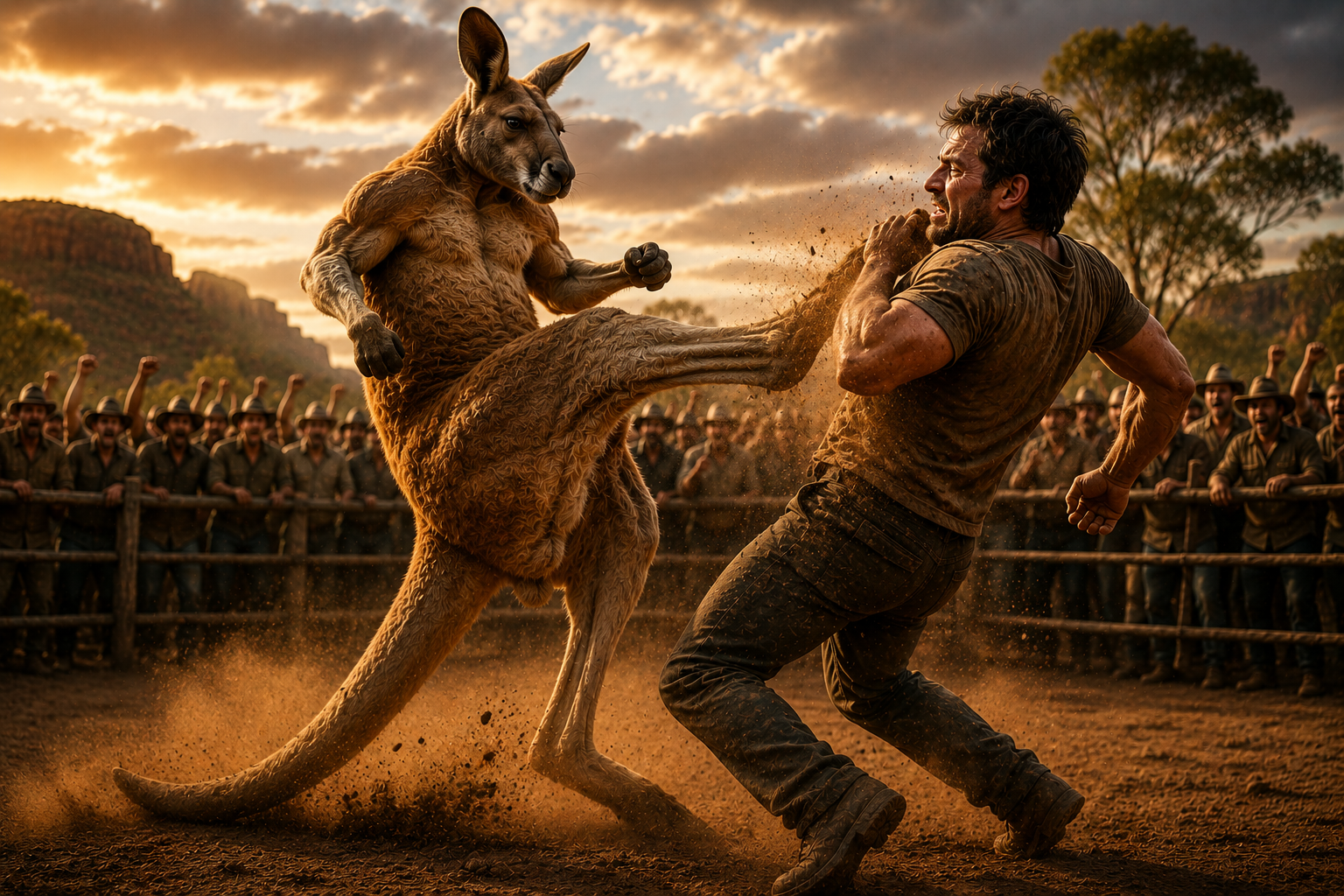
Dust drifts across the ground. The man watches the animal, uncertain how the encounter will unfold. The kangaroo shifts its stance, and the distance closes.
The human’s first reactions keep the story in balance. Then a brief mistake changes the exchange.
One impact.
The contest ends.
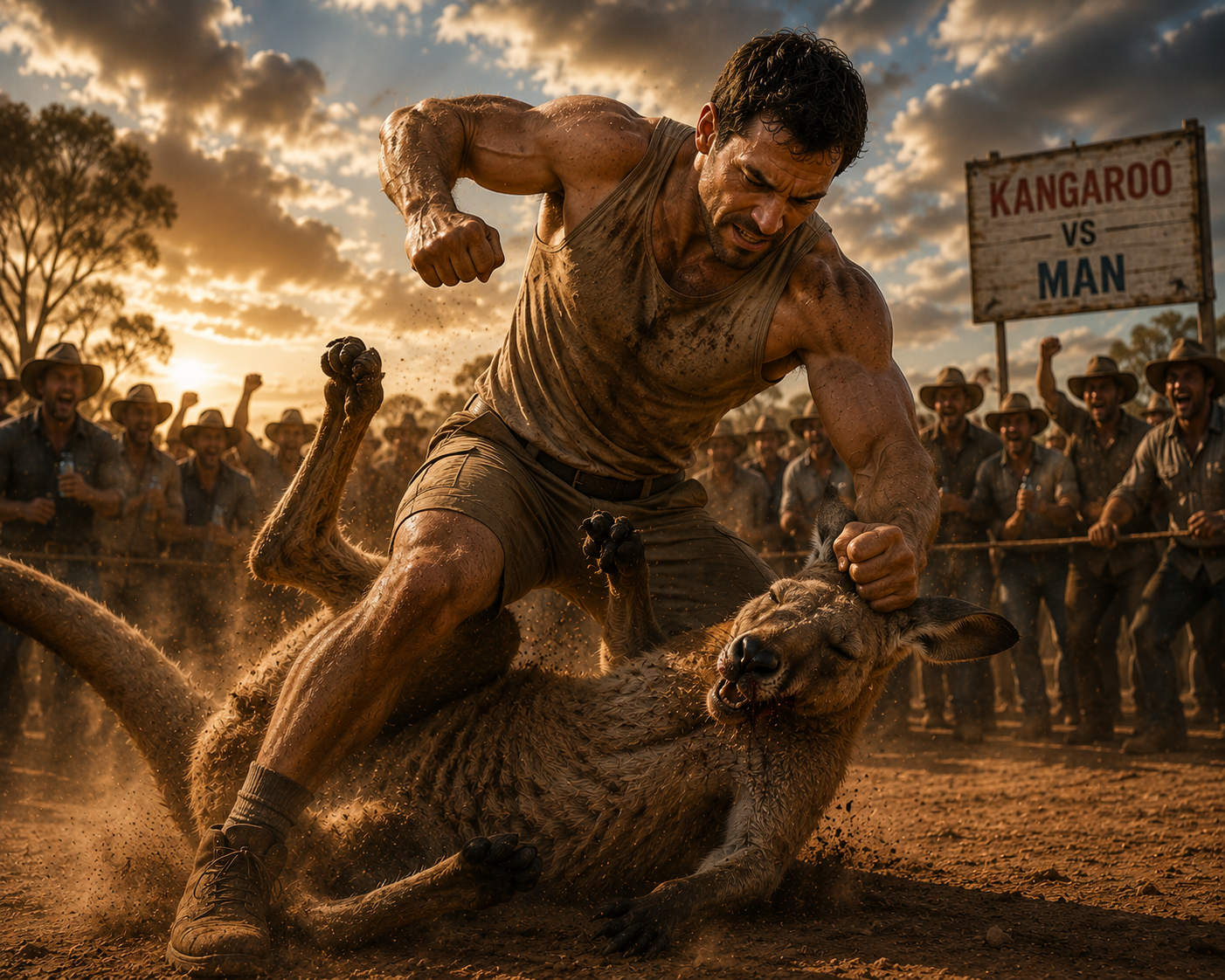
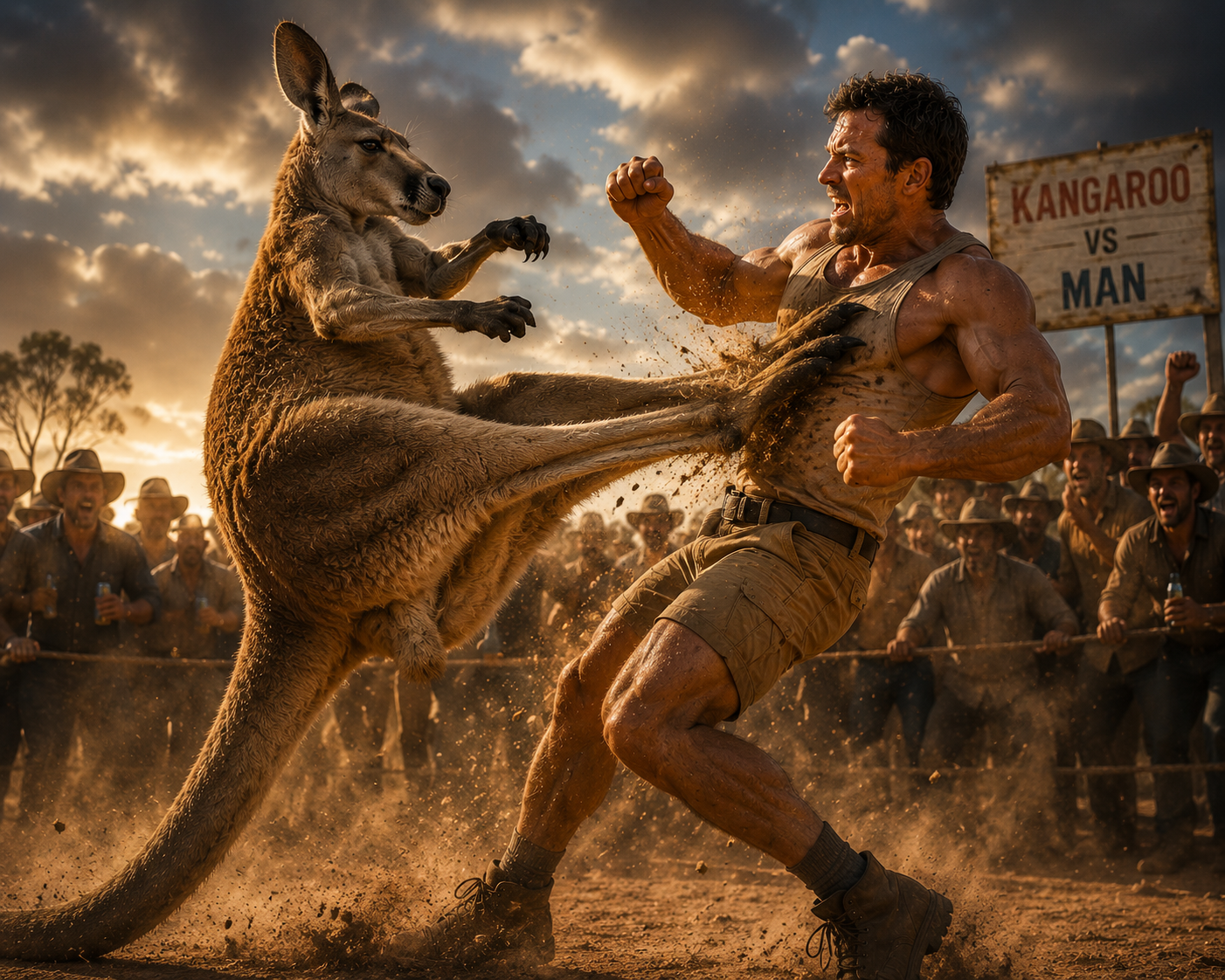
In this imagined version, a kick knocks the man off balance. He cannot continue, and the encounter ends. The kangaroo takes the fictional victory.
The sequence is an invented outcome, not footage or the output of a tested simulation.
Our pick:
The kangaroo.
For the selected close-contact scenario, we favour the large male kangaroo because of the injury risk posed by its physical capabilities against an unarmed person. That is an editorial judgement, with no measured win probability attached.
What if the person can simply leave?
Then avoiding a confrontation becomes a meaningful outcome. The arena story should not be confused with what someone should do around wildlife.
Does the animal’s size change the comparison?
Yes. A different species, sex, age or individual could change the assumptions substantially. “Kangaroo” is not a single fixed size or ability level.
Would martial-arts experience settle the result?
No. Training against people does not establish performance against an unfamiliar animal. It would require a newly defined scenario, not an automatic bonus.
Is this based on staged animal fighting?
No. The images and story are fictional. For real encounters, follow wildlife guidance and avoid provoking or approaching kangaroos.
Respect earned.
Round two: the pub.
A deliberately impossible, light-hearted alternate ending.
No rematch.
Just a round.
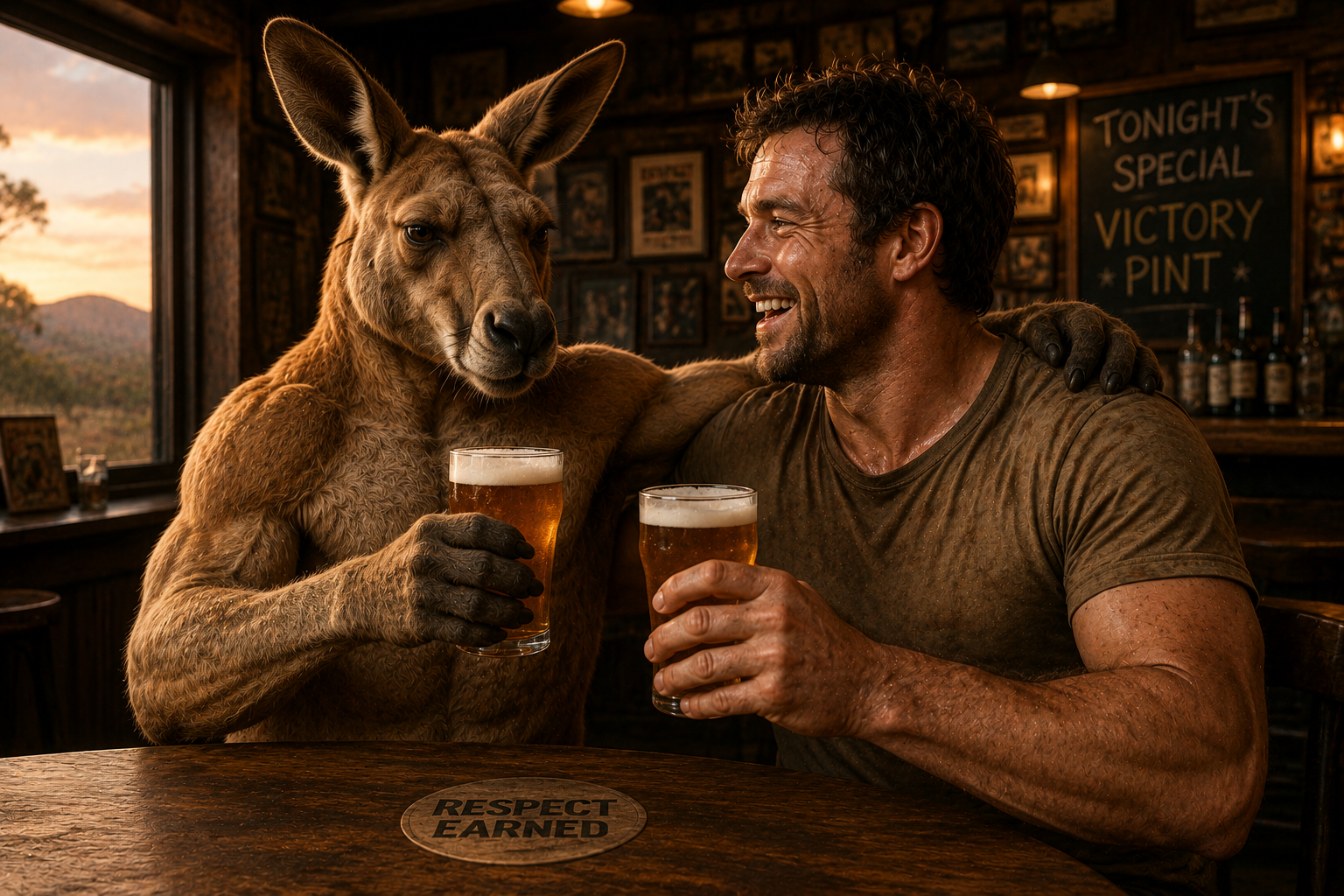
In another world, the dust settles, the rivalry ends and the two contenders find somewhere quieter to discuss the result.
The man insists he was just finding his rhythm. The kangaroo offers no comment. Somehow, the human still gets the bill.
Some battles end with a winner. This one ends with, “Same again?”
The pub scene is fantasy humour, not a depiction of appropriate animal care.
- Animal Diversity Web: Red kangaroo — natural history, movement and physical characteristics.
- Queensland Government: Kangaroos and wallabies — behaviour and guidance for real encounters.
These sources support biological context, not the invented arena sequence or a winning probability.
Who Wins?
The human’s intelligence, adaptability and determination make this far more competitive than many people would expect. A perfectly executed strategy could create opportunities, and a lucky strike is never impossible. However, when we compare size, natural weapons, speed, agility and fighting experience, the kangaroo consistently holds the advantage. Over multiple simulations, the animal’s physical superiority proves decisive far more often than not.
Kangaroos Are Real Fighters
Kangaroos might look strange, funny or even harmless from a distance, but large males are powerful animals built for physical confrontation. In the wild, they fight rivals by grappling, balancing on their tails and launching devastating kicks with their hind legs.
They Use Their Tail Like a Third Leg
During a fight, a kangaroo can lean back on its muscular tail, freeing both hind legs to kick forward. That gives it balance, reach and striking power all at once.
Their Kicks Can Be Dangerous
A large kangaroo’s kick can cause serious injuries. The combination of force, sharp claws and explosive leg strength makes close-range contact extremely risky.
They Have Fought People Before
Real encounters between humans and kangaroos have happened in Australia, usually when someone tries to protect a dog, approaches too closely, or meets a stressed animal.
Real-Life Kangaroo Encounters
One of the most famous cases happened in 2016, when footage showed an Australian man punching a large kangaroo after it grabbed his dog. The incident went viral worldwide and proved how quickly a kangaroo encounter can turn serious.
There have also been reports of kangaroos attacking people, especially when the animals feel threatened or cornered. In one Queensland case, a large kangaroo estimated at around 2 metres tall and 100kg reportedly injured a man badly enough that he needed hospital treatment.
Another unusual danger involves water. Kangaroos have been filmed and reported entering water when chased by dogs, then using their strength to hold the dog at bay. Wildlife experts say this is defensive behaviour, not some evil plan, but it shows just how dangerous a large kangaroo can become when pressured.
Who Wins This Fight?
The analysis is complete. The rounds have been scored. The experts have had their say. Now it’s your turn to decide — does the kangaroo’s raw power prove too much, or can human intelligence and determination find a way to win?