

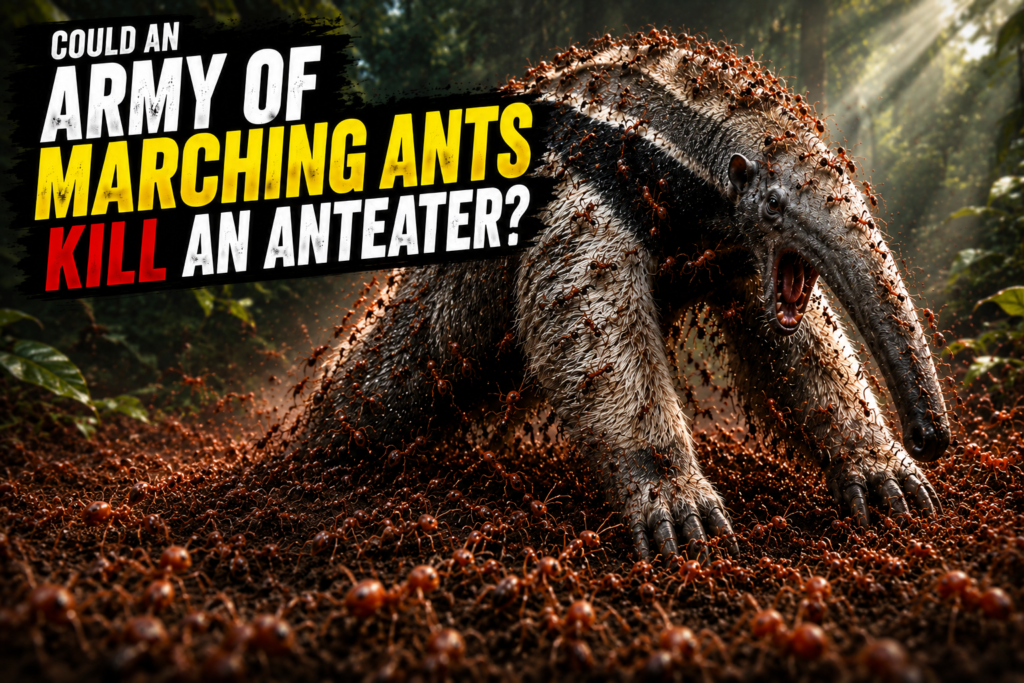
The Challengers
One side relies on size, strength and natural weapons. The other depends on numbers, coordination and relentless pressure. Which strategy prevails when nature’s specialist ant hunter faces an unstoppable living swarm?
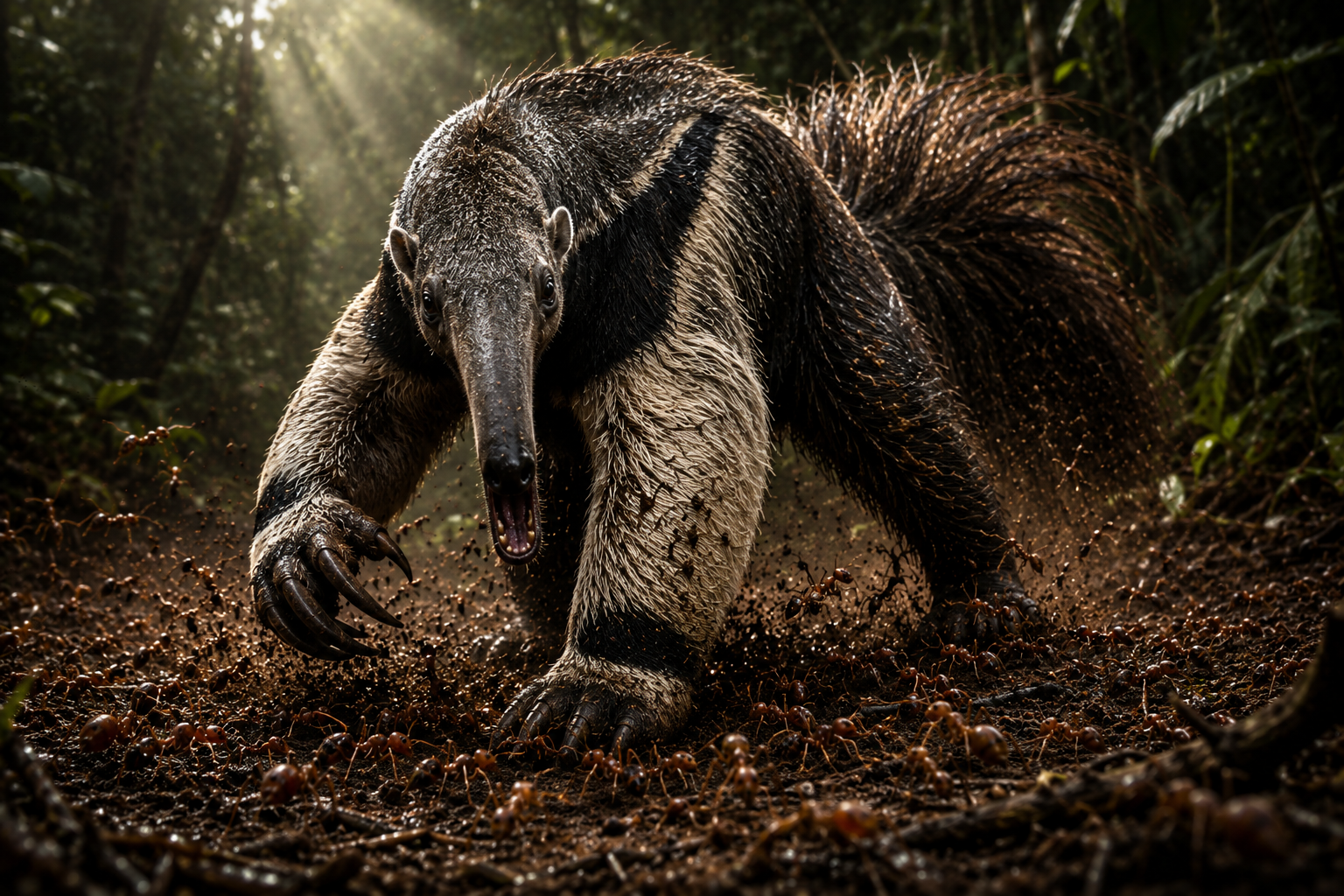
The Anteater
Built low, powerful and protected by thick fur, the giant anteater is one of nature’s most specialised predators. Armed with razor-sharp claws capable of tearing open termite mounds and defending against larger threats, it possesses a clear advantage in size, strength and durability. In a direct confrontation, few insects could challenge it.
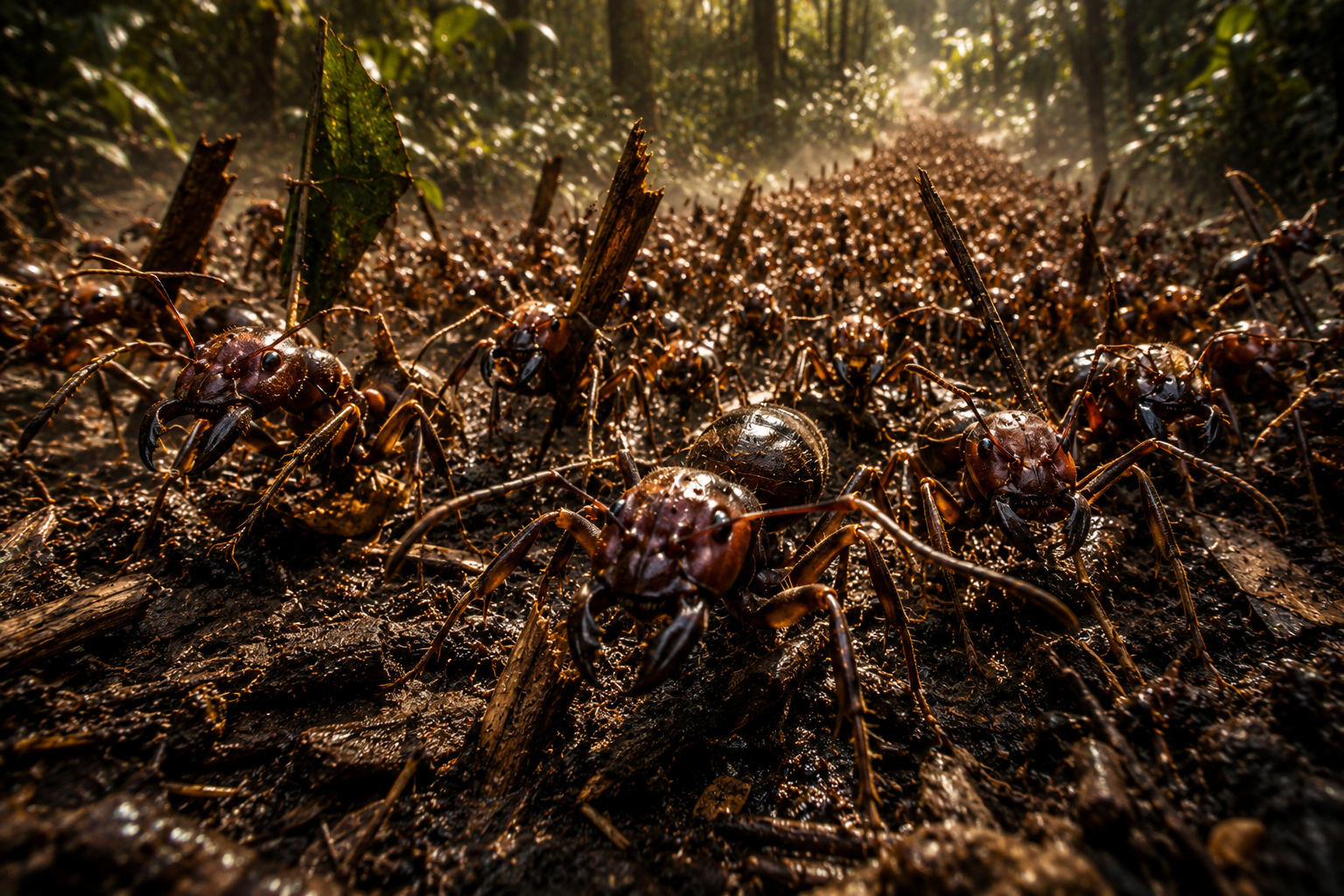
The Marching Ants
Individually insignificant, collectively terrifying. Army ants move as a coordinated living wave capable of overwhelming prey through sheer numbers, persistence and exhaustion. They never stop, never retreat and never tire. What they lack in strength, they replace with relentless pressure.
Tale Of The Tape
Power versus numbers. Natural weapons versus relentless persistence.
Advantage
Advantage
Advantage
Advantage
Advantage
Advantage
Advantage
The Encounter
Deep within the rainforest, a giant anteater searches for food. Ahead lies not a single colony but an entire army of marching ants moving like a living river across the jungle floor.
Millions advance together. Every branch, leaf and patch of earth appears alive. The anteater has encountered one of nature’s most organised armies.
Advantage: DrawClaws Of Destruction
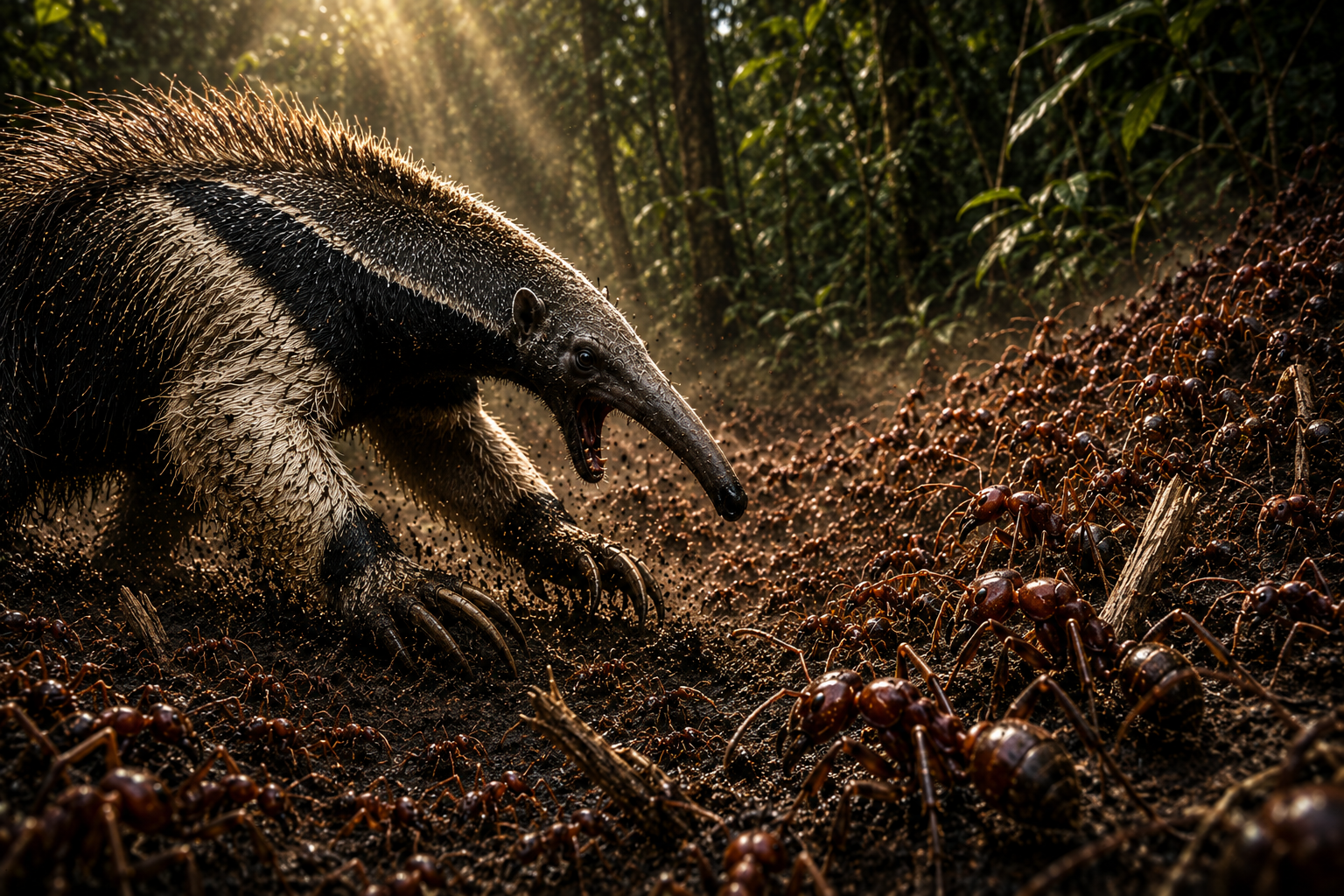
At first the battle appears completely one-sided. The anteater tears through the swarm with claws powerful enough to rip apart termite mounds.
Thousands of ants are killed instantly. Entire sections of the formation are scattered. The anteater’s thick fur and powerful limbs allow it to push through the swarm with ease.
Advantage: AnteaterThe Swarm Responds
The ants do not retreat. They do not panic. They simply keep coming.
Legs. Face. Eyes. Nose. Every exposed area becomes a target. The anteater can kill thousands with every strike, but millions remain behind them.
What begins as an inconvenience slowly becomes a serious problem. The ants are no longer trying to overpower the anteater. They are trying to overwhelm it.
Advantage: Army AntsDeath By A Thousand Bites
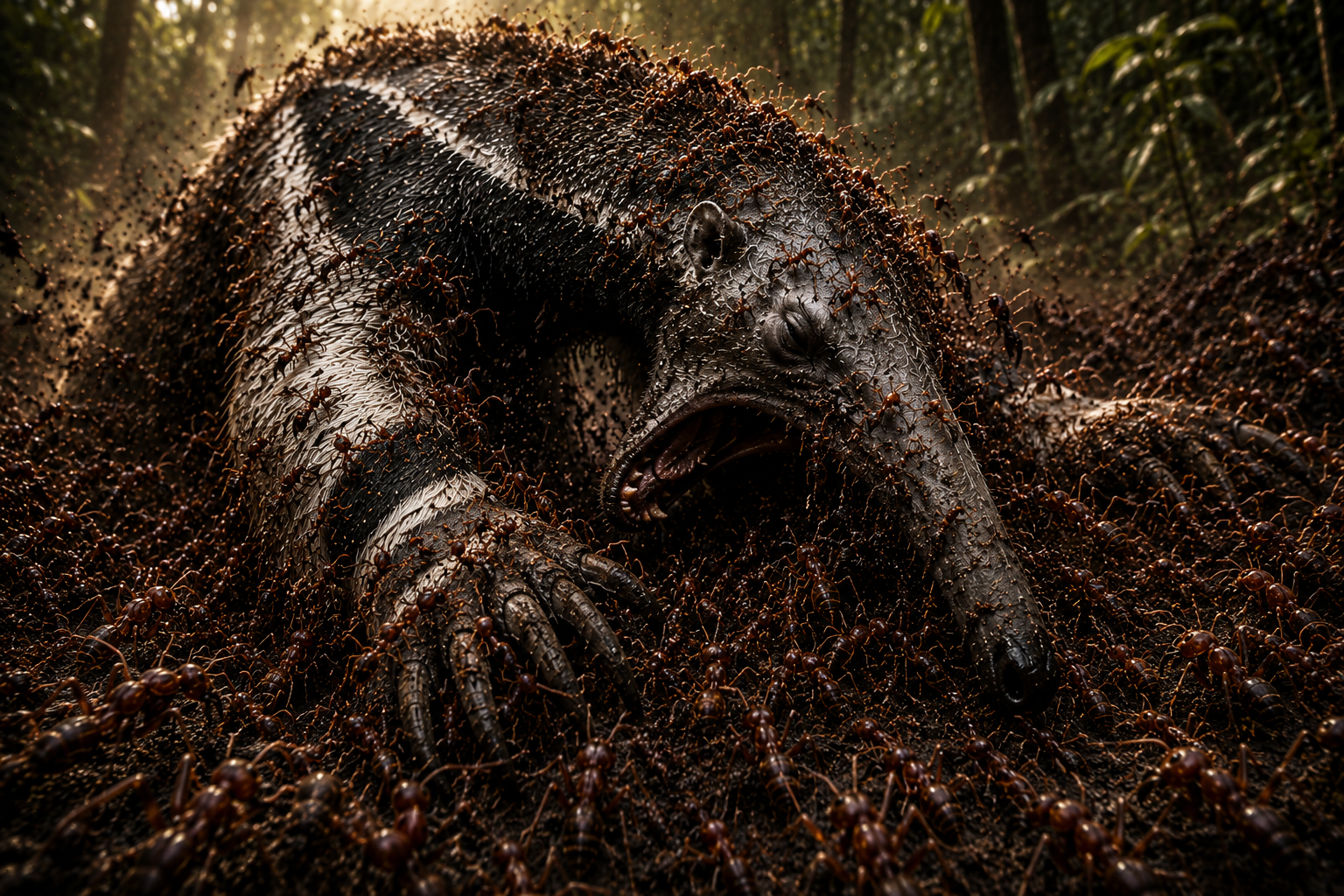
The anteater’s greatest strength becomes its greatest weakness. It cannot eliminate the entire swarm.
Pain builds. Stress increases. Energy drains away. Every second spent fighting allows more ants to climb aboard.
The ants are not stronger. They are simply more numerous than the anteater can realistically deal with.
Advantage: Army AntsThe Verdict
This battle depends on one crucial question:
Can the anteater leave?
If the anteater has room to move, retreat or simply walk away from the swarm, it wins comfortably. Its size, fur and claws make it far too powerful for the ants to stop outright.
If it becomes trapped, cornered or forced to remain inside the swarm for an extended period, the balance shifts dramatically.
The ants do not need a knockout blow. They simply need time.
Official WhoCouldWin Verdict
Why The Anteater Wins
- Massive size advantage
- Powerful claws
- Thick protective fur
- Natural predator of insects
How The Ants Could Win
- Overwhelming numbers
- Relentless attacks
- Never stop advancing
- Dangerous if escape becomes impossible
Official WhoCouldWin Verdict
Why The Anteater Wins
- Massive size advantage
- Thick fur provides natural protection
- Powerful claws capable of devastating attacks
- Can simply walk away from the swarm
- Specialised insect hunter evolved for this exact environment
- Far greater mobility than its opponents
How The Marching Ants Could Win
- The anteater becomes trapped or immobilised
- An injury prevents escape
- The swarm reaches sensitive areas such as the eyes and nose
- The attack continues for an extended period
- Exhaustion eventually overwhelms the anteater
Final Thought
At first glance this appears to be a classic battle of strength versus numbers. Yet the reality is far less balanced. The giant anteater evolved specifically to hunt insects and possesses the size, claws, fur and mobility needed to survive encounters with even enormous colonies.
The marching ants remain one of nature’s most extraordinary collective predators, capable of overwhelming countless smaller animals through relentless pressure and sheer numbers. However, they face one problem they cannot easily solve:
The anteater can leave.
As long as the anteater remains healthy and mobile, it is overwhelmingly likely to survive. The swarm’s best chance comes only if circumstances prevent escape. In an open rainforest encounter, the anteater remains the clear favourite.
Questions Readers Ask
The battle may be over, but there are still plenty of fascinating questions about anteaters, army ants and how these remarkable creatures behave in the wild.
Has An Army Ant Swarm Ever Killed A Large Mammal?
The stories are legendary.
Travellers’ tales, jungle folklore and countless documentaries have described army ants as unstoppable waves that can strip animals to the bone in minutes.
The reality is more nuanced.
Army ants are unquestionably among the most effective collective hunters on Earth. A single colony can contain hundreds of thousands, and sometimes millions, of individuals working together as a living superorganism. Researchers have documented army ant raids overwhelming insects, spiders, worms, reptiles, nestlings and other small animals caught in their path.
There are also reports of army ants killing tethered livestock, trapped animals and creatures unable to escape. However, documented cases involving healthy large mammals are extremely rare. Most experts consider stories of army ants routinely killing adult cattle, horses or humans to be exaggerated or dependent on the victim already being immobilised, injured or otherwise unable to flee.
One reason is simple: movement.
A healthy large mammal can usually walk, run or relocate long before the swarm can inflict life-threatening damage. Army ants are devastating against creatures that cannot escape. Against large mobile animals, they are far less effective.
This is why the anteater remains the favourite in our battle.
Despite being covered in ants, it retains something that most of the swarm’s victims do not:
The ability to leave.
Historical Reality
- Army ant swarms have been observed killing large worms, insects, reptiles and other small prey.
- Colonies can consume enormous numbers of prey animals during raids.
- Reports of human deaths are exceptionally rare and generally involve unusual circumstances rather than healthy adults being overwhelmed in open terrain.
- Most large mammals simply move away from advancing swarms.
WhoCouldWin Verdict
Army ants are one of nature’s most terrifying collective predators.
But their greatest victories usually come against creatures that cannot escape.
What’s Your Verdict?
We’ve delivered our verdict, but now it’s your turn. Would the giant anteater simply walk away from the swarm, or could millions of marching ants eventually bring down one of nature’s greatest insect hunters?
Did You Know?
Both of these challengers possess extraordinary abilities that make them some of nature’s most fascinating specialists.