

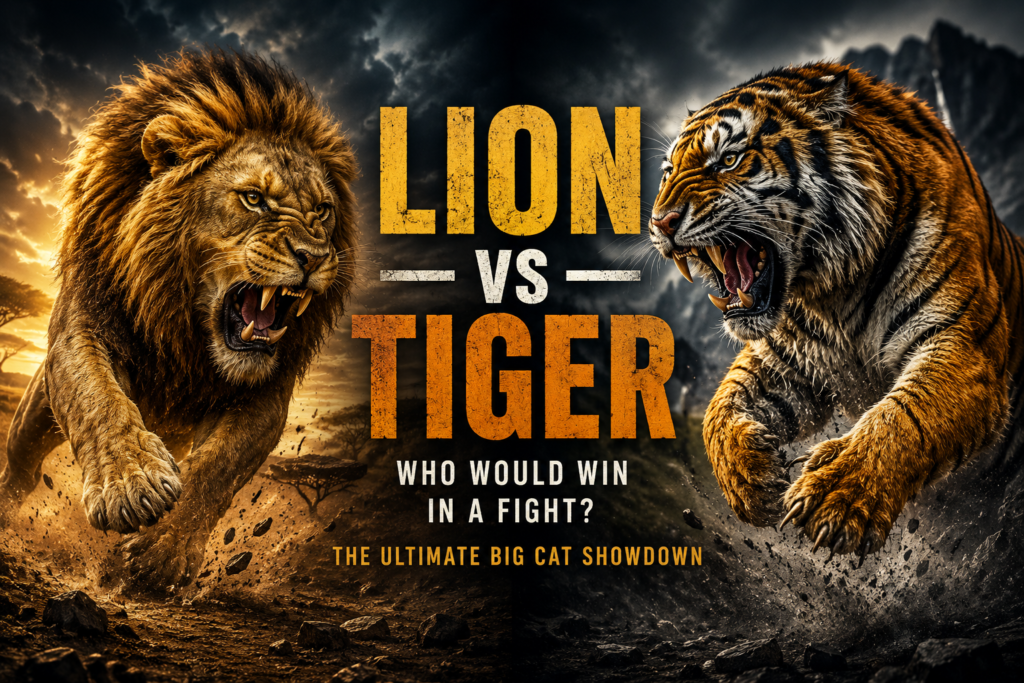
The Challengers
One rules the African savanna. The other stalks the forests of Asia. Both sit at the very top of the food chain. For centuries people have debated which of these apex predators would prevail in a one-on-one encounter.
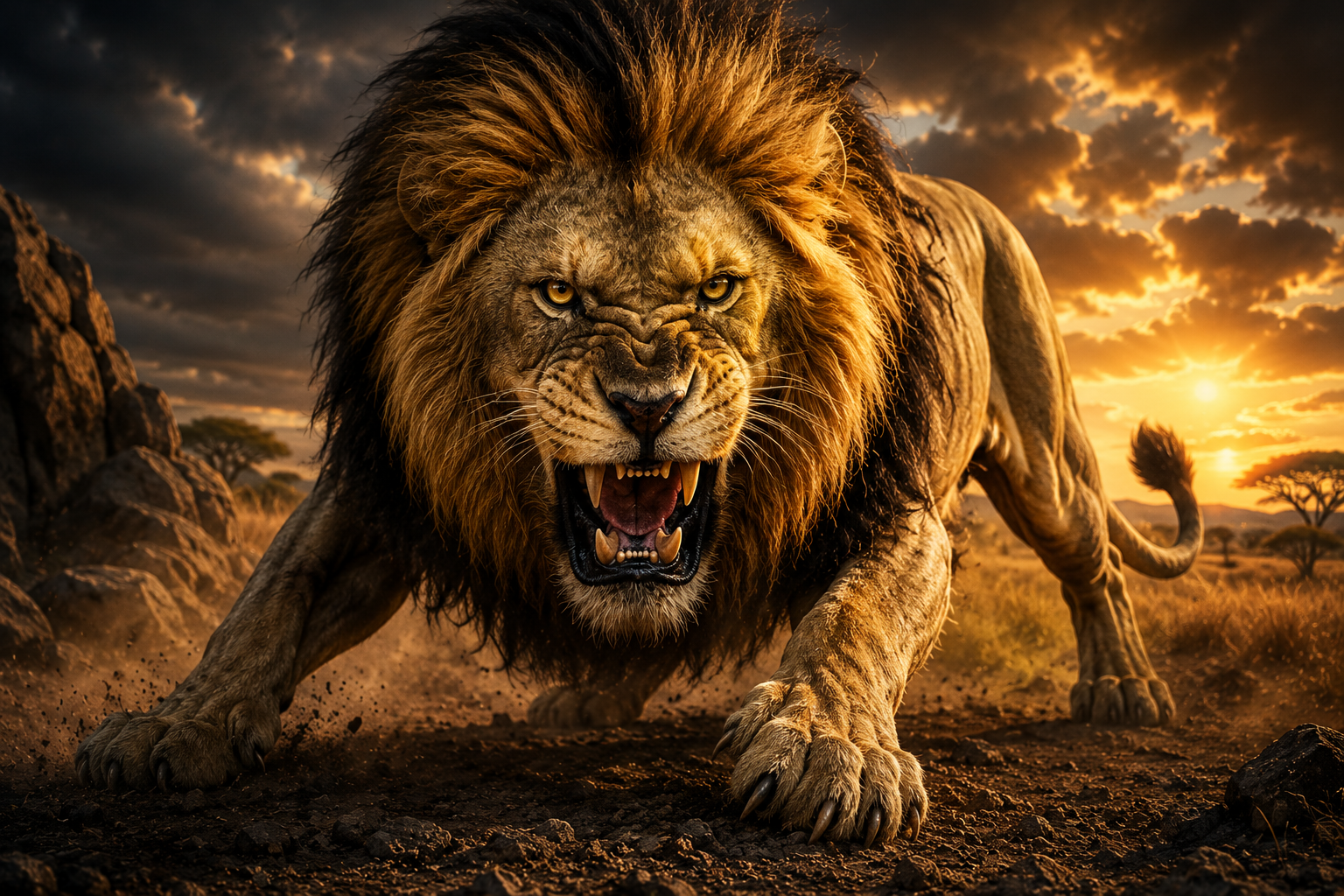
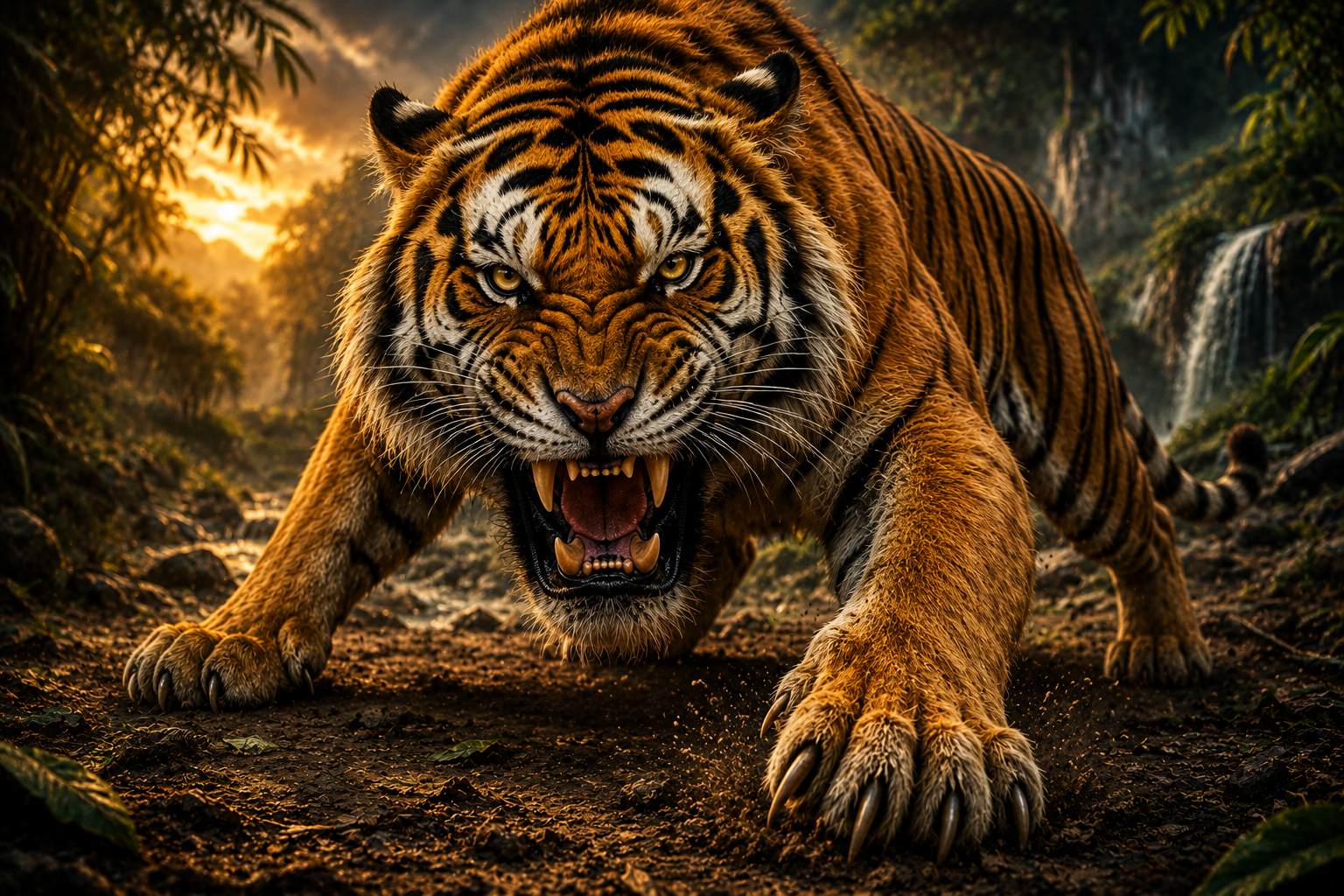
This is not simply a clash between two animals. It is a battle between two legends. The lion brings generations of combat experience against rival males, while the tiger arrives with greater size, power and the instincts of a solitary hunter. Only one can leave the battlefield victorious.
Tale of the Tape
Before the battle begins, let’s compare the two challengers across the attributes that matter most in a fight for survival.
The lion enters the contest with one major advantage: experience fighting other large predators. Male lions regularly battle rivals for territory, mates and survival. The tiger, however, is usually larger, heavier and more powerful. As the world’s largest cat, it combines brute strength with the lethal efficiency of a solitary hunter. On paper, the tiger holds a slight edge, but this is one of the closest animal matchups in the natural world.
The African night is quiet.
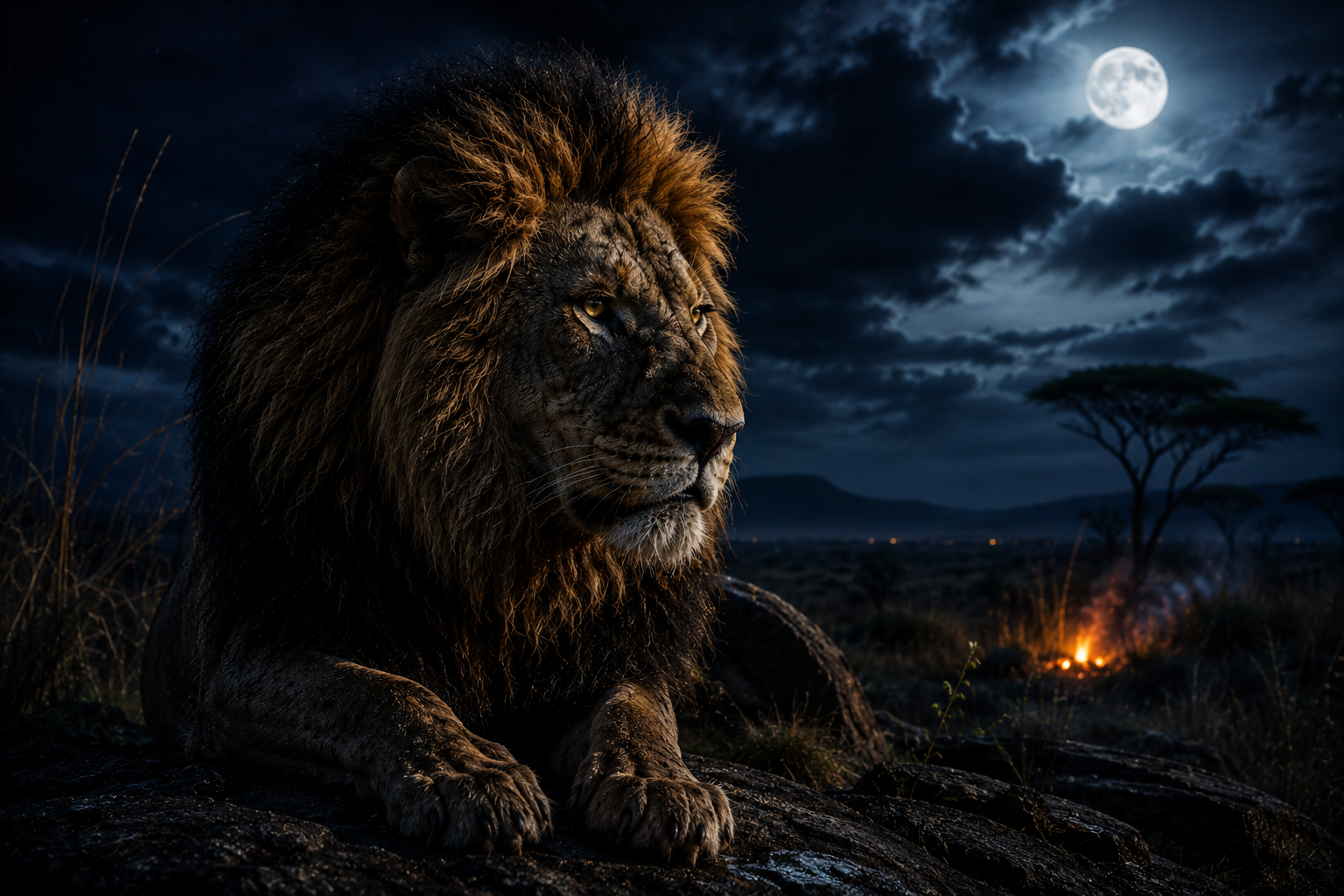
Beneath a sky filled with stars, the lion stands alone upon a rocky outcrop overlooking the savanna. The wind carries distant scents across the grasslands, but tonight there is something different in the air.
For generations, lions have ruled these lands through strength, courage and dominance. Rival males have challenged him before. Hyenas have tested his resolve. Every scar tells the story of battles fought and survived.
Tomorrow will be different.
Somewhere beyond the horizon waits an opponent unlike any he has ever faced. Larger. More solitary. Built for a life where every hunt, every victory and every failure belongs to one animal alone.
The lion does not know the name tiger.
But instinct tells him that a worthy challenger is coming.
Tomorrow, the King of the Savanna meets the Ghost of the Jungle.
Battle Simulation
Both predators enter the battlefield at the peak of their powers. There are no distractions, no escape routes and no outside factors. One lion. One tiger. One winner.
The Standoff
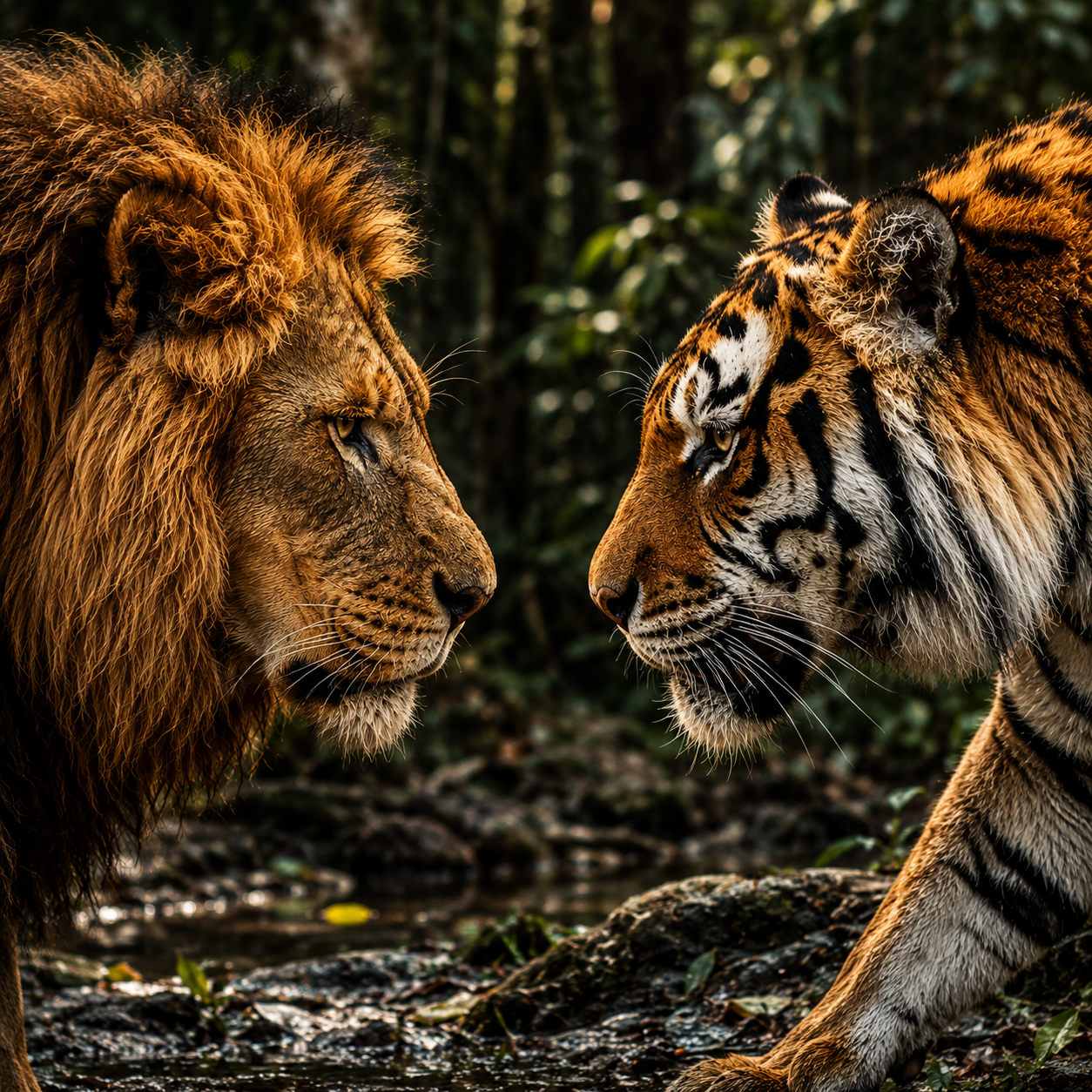
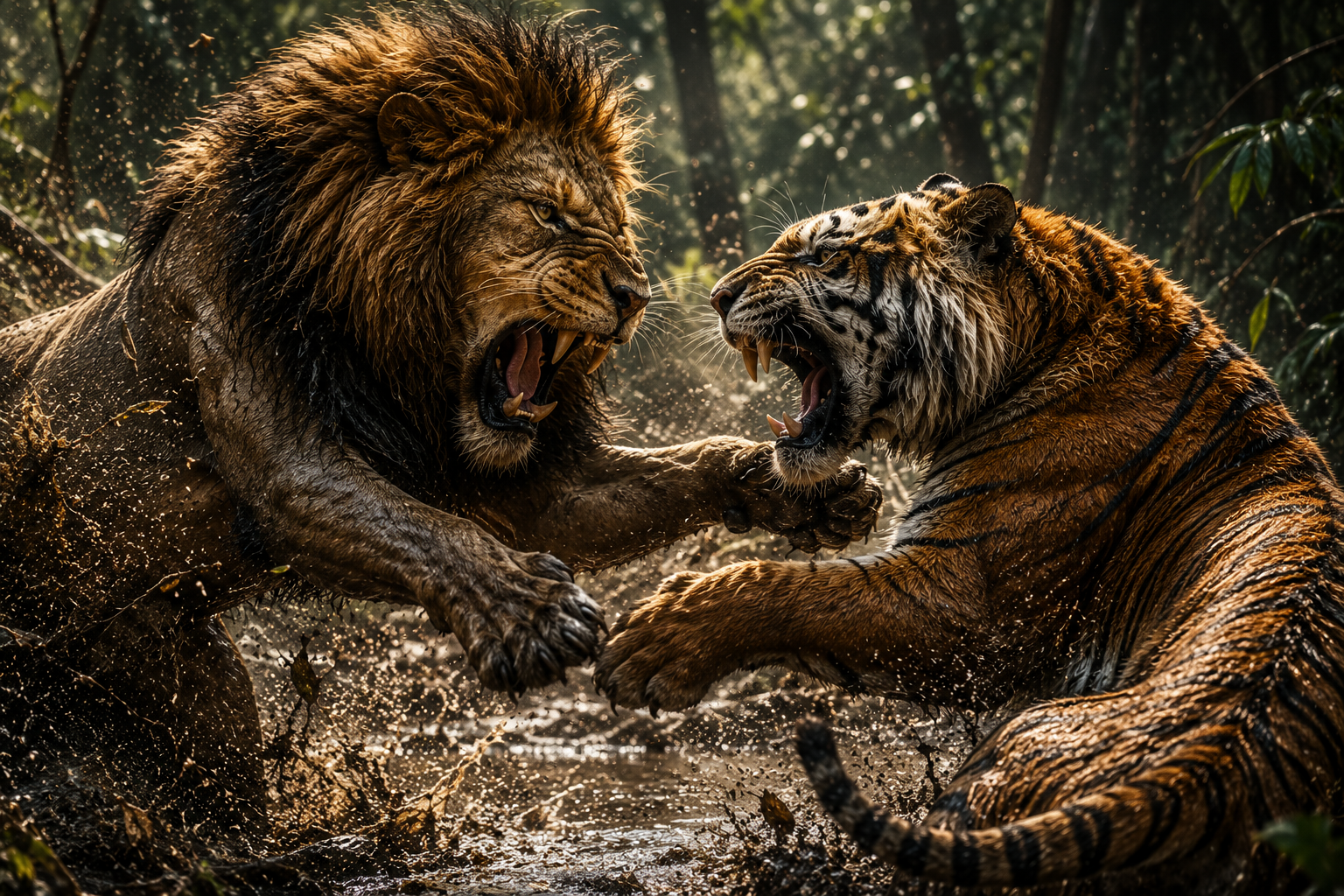
The lion and tiger circle cautiously. Neither animal rushes forward. Both understand they are facing an opponent capable of ending the fight with a single mistake. Muscles tense. Eyes lock. The jungle falls silent.
The Clash
The lion strikes first. Both predators explode into action as claws slash through the air and jaws snap at exposed flesh. The lion’s experience in direct combat becomes immediately apparent, forcing the tiger into a fierce exchange of power and aggression.
Momentum Shifts
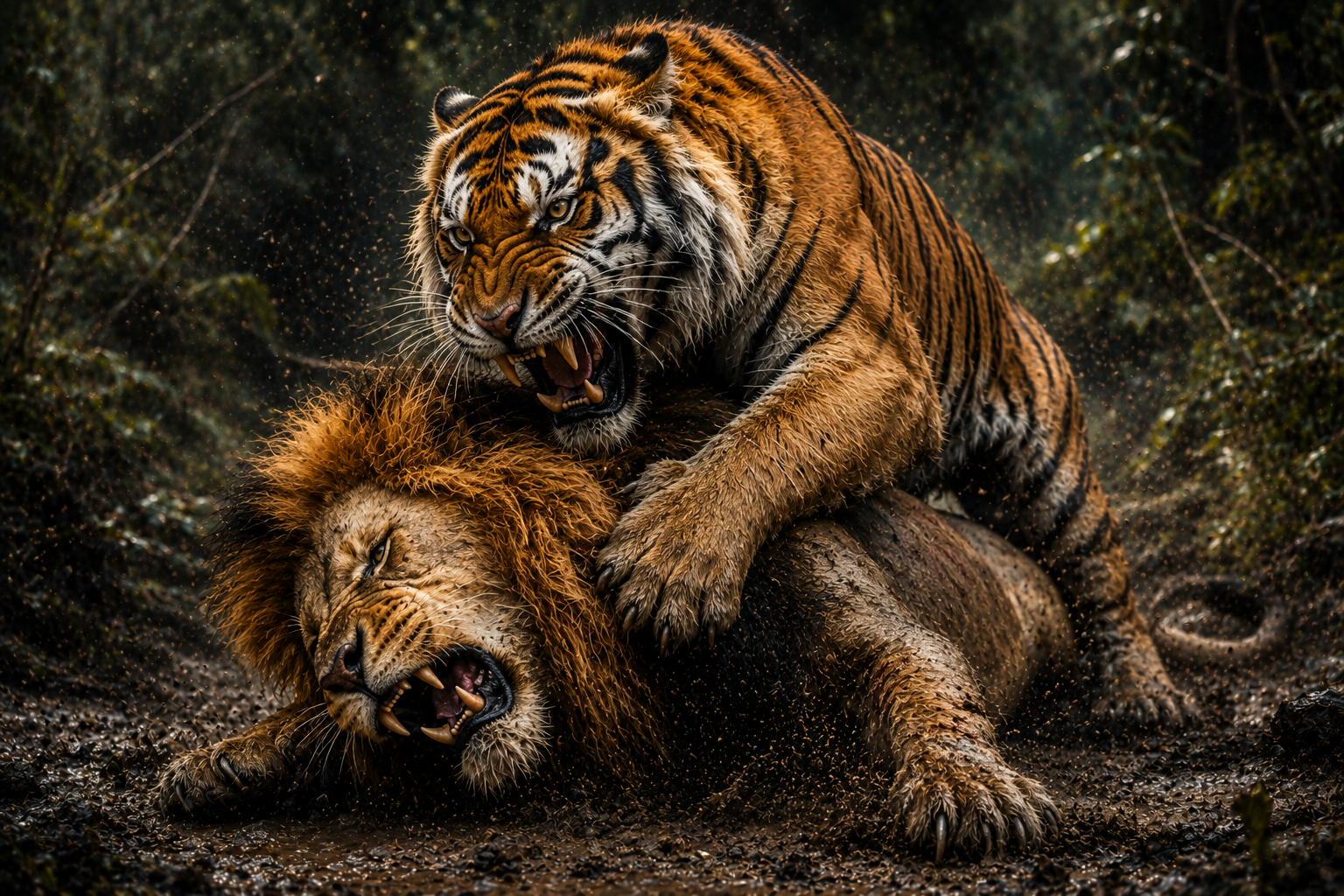
As the battle continues, the tiger’s superior size and strength begin to tell. A powerful strike forces the lion onto the defensive. The tiger presses the advantage relentlessly, using its weight and raw power to gradually take control of the encounter.
Simulation Result: Tiger Wins
The lion fights with extraordinary courage and would undoubtedly win many encounters. However, over a large number of hypothetical battles, the tiger’s greater size, physical strength and solitary hunting experience provide the narrow edge. It is one of the closest animal matchups imaginable, but on this day the world’s largest cat leaves the battlefield victorious.
After comparing size, strength, weapons, hunting ability, combat experience and mindset, the result remains incredibly close. But one challenger leaves with the narrowest of advantages.
The lion is one of the most formidable predators on Earth. Its courage, resilience and experience fighting rival males make it a terrifying opponent in any confrontation. Few animals are better equipped for direct combat.
The tiger, however, possesses a combination of attributes that are difficult to ignore. It is generally larger, heavier and stronger. More importantly, it survives entirely through its own abilities, relying on stealth, power and precision to bring down dangerous prey without assistance.
While the lion would certainly win many encounters, the tiger’s advantages come in the areas most likely to determine the outcome of a one-on-one fight. Over a large number of hypothetical battles, those advantages begin to add up.
The lion may wear the crown.
But on this day, the tiger takes the throne.
One rules the grasslands of Africa. The other stalks the forests of Asia. But would these legendary predators ever cross paths outside of our imagination?
In the modern wild, the answer is simple: almost certainly not.
Lions are native to Africa, while wild tigers are found across parts of Asia. Thousands of miles separate their natural habitats, making encounters between the two effectively impossible in today’s world.
However, this was not always the case.
Thousands of years ago, Asiatic lions roamed across parts of the Middle East and India. During certain periods of history, their ranges may have come surprisingly close to those of wild tigers.
Even then, direct encounters would likely have been extremely rare. Both species occupied different territories and hunting grounds, avoiding unnecessary risks whenever possible.
Did You Know?
A small population of Asiatic lions still survives today in India’s Gir Forest. This makes India the only country on Earth where both lions and tigers exist within the same nation, although they remain separated by hundreds of miles and do not share territory.
The lion and tiger may never meet in the wild.
Which is why the debate continues to this day.
When two apex predators come face to face, something fascinating happens. The battle may begin long before the first claw is thrown.
The short answer is yes.
However, animals do not experience fear in quite the same way humans do. A lion would not stand there worrying about the future or imagining possible outcomes. Instead, it would instantly assess risk.
The moment a lion encountered a fully grown tiger, it would recognise that it was facing another apex predator. Similar size. Similar weapons. Similar ability to inflict fatal injuries.
That recognition would trigger caution.
The lion would understand that a fight could result in serious injury or death, even if it ultimately won the encounter. In the wild, a broken leg, damaged eye or infected wound can be a death sentence.
What Would Actually Happen?
A real encounter would probably begin with staring, growling and intimidation displays. Both animals would attempt to assess the other while avoiding unnecessary risk. Bluff charges, defensive posturing and circling behaviour would be far more likely than an immediate all-out attack.
Interestingly, the tiger would likely be doing exactly the same thing. Neither animal would view the other as prey. Both would recognise they were facing a dangerous opponent capable of killing them.
That is why this matchup fascinates wildlife experts and animal lovers alike. It is not predator versus prey. It is predator versus predator.
The moment they locked eyes, both animals would know the stakes.
Our analysis gave the tiger a narrow victory, but this debate has raged for generations and there is still no universal agreement.
The lion brings courage, combat experience and the confidence of a ruler that has defended its territory against countless challengers.
The tiger arrives with superior size, immense strength and the instincts of a predator that survives entirely on its own abilities.
The King of the Savanna or the Ghost of the Jungle?
Who gets your vote?