

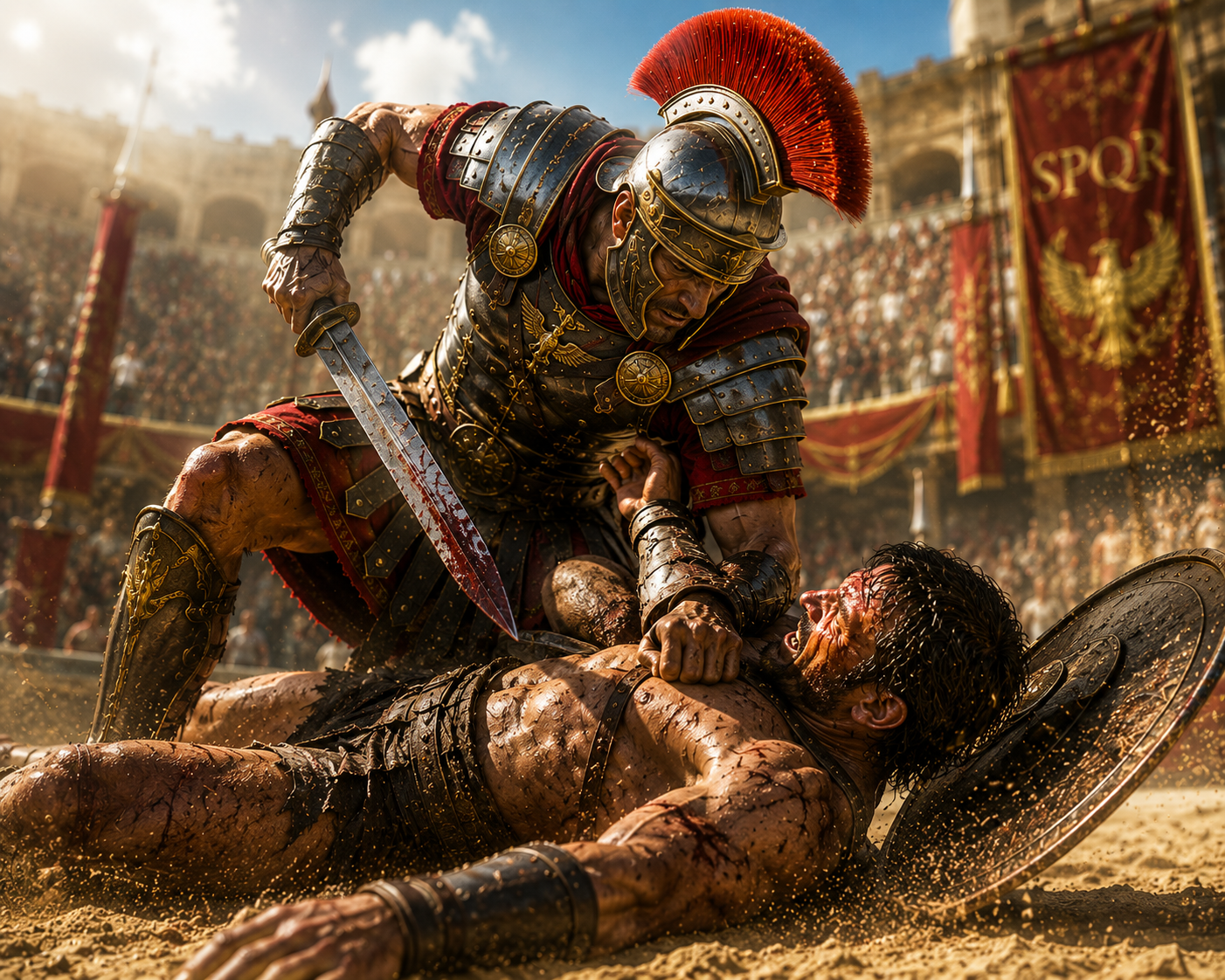
Rome’s rebel.
Rome’s protector.
Spartacus vs a Praetorian guardsman. One imagined duel between two very different chapters of Roman history.
A man of legend.
A soldier of the empire.
One is a named historical figure. The other is a selected fictional individual—not the entire Praetorian Guard.
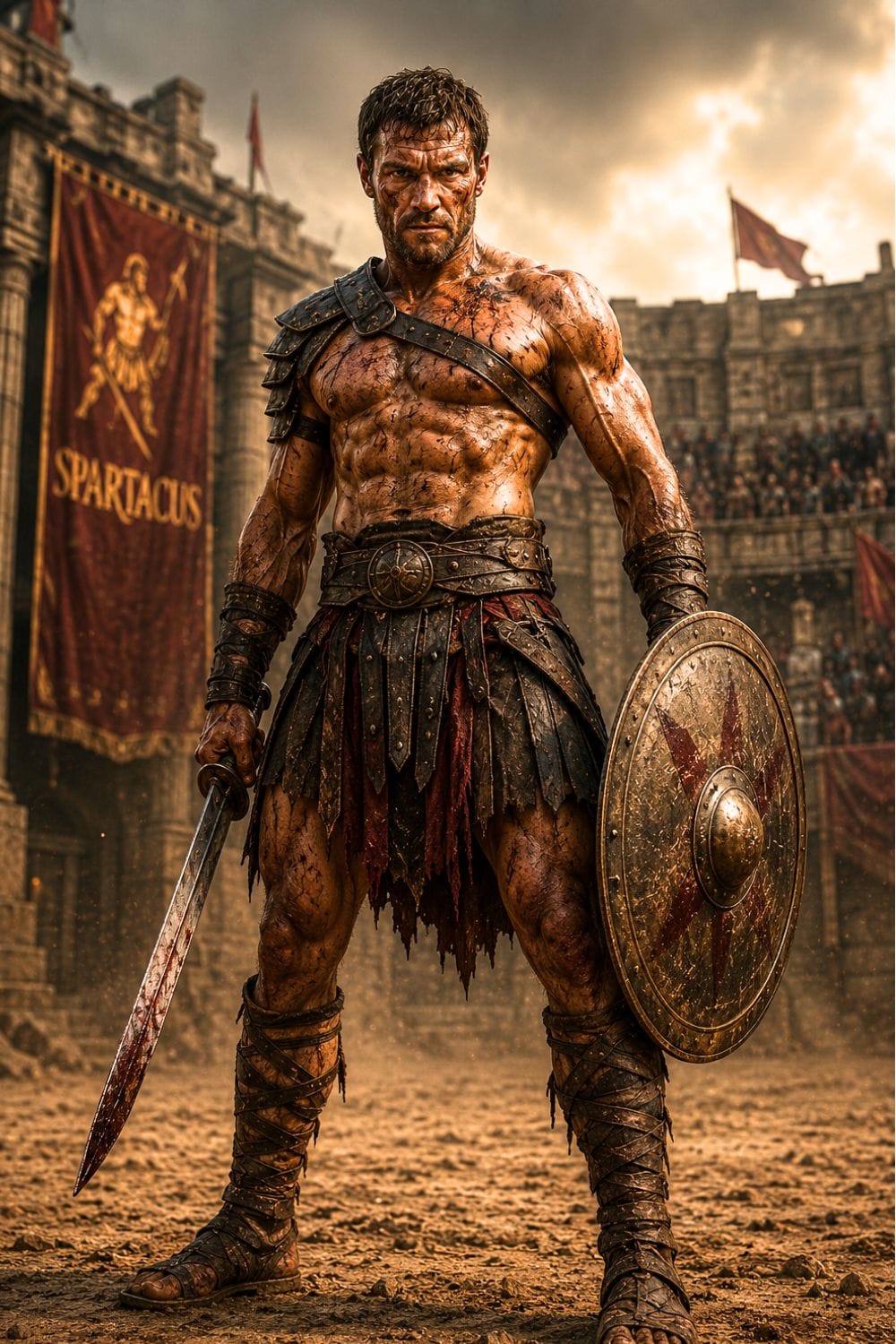 CONTENDER 01 / THE REBEL
Spartacus
Ancient accounts describe a Thracian gladiator who escaped from Capua and led the revolt of 73–71 BC. His leadership is recorded; a detailed record of his individual duelling ability is not.
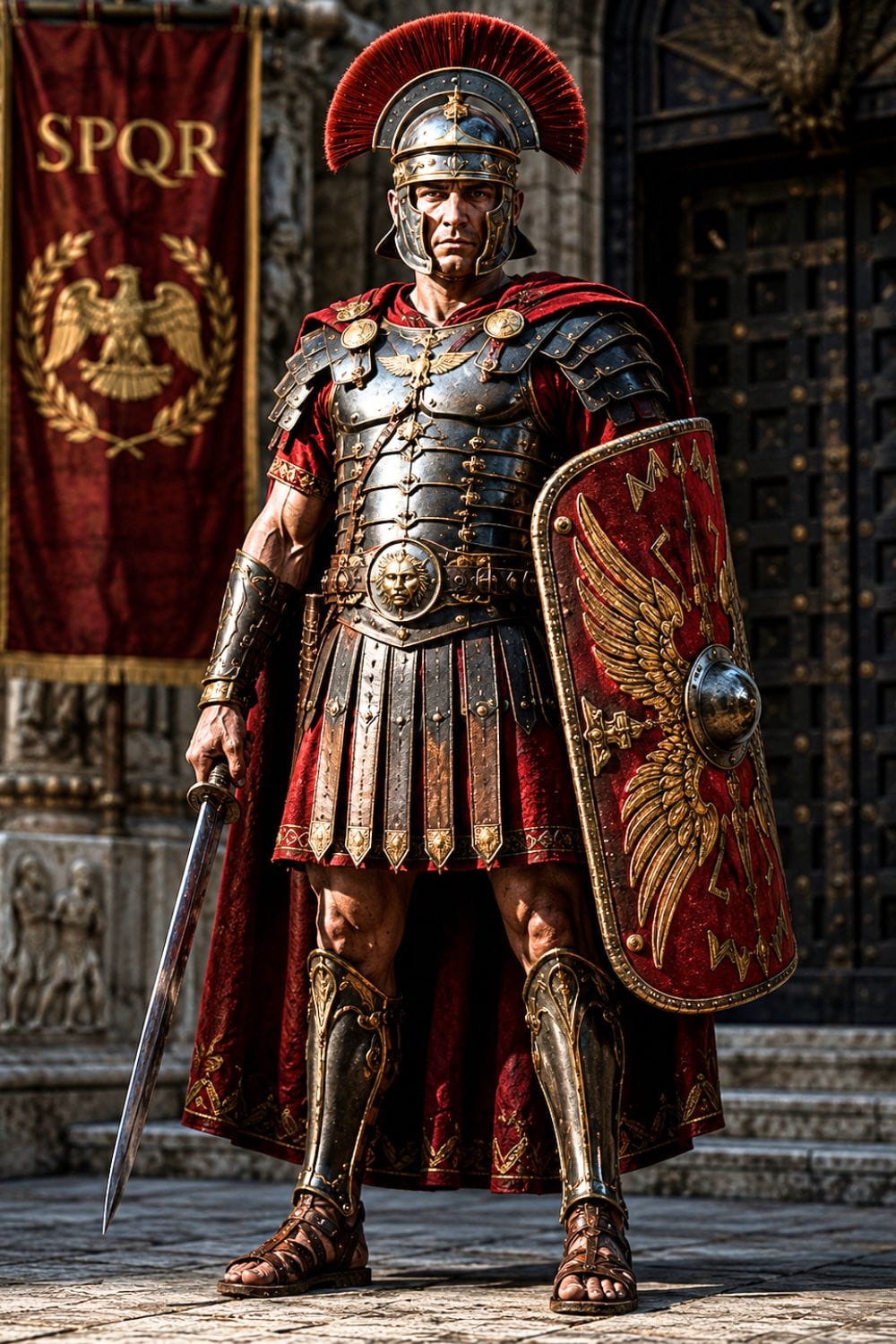 CONTENDER 02 / THE GUARDSMAN
The Praetorian
A fictional experienced guardsman drawn from the imperial institution associated with Augustus and his successors. Rank alone cannot establish how well this individual fights.
Portraits are fictional illustrations. Equipment and fitness below are choices made for this matchup, not verified possessions or measurements of Spartacus.
Equipment we choose.
Abilities we cannot measure.
We avoid converting reputation, hardship or motivation into invented numerical ratings.
| Factor | Spartacus | Praetorian |
|---|---|---|
| Historical basis | Named gladiator and revolt leader. | Fictional member of a historical institution. |
| Selected weapons | Sword and shield. | Gladius and shield. |
| Selected protection | Helmet; limited torso coverage. | Helmet and mail shirt. |
| Individual skill | Not reliably quantifiable. | Experienced by scenario assumption. |
| Motivation | Personal freedom in this fictional story. | Duty and survival in this fictional story. |
The later imperial opponent is intentionally displaced in time. This is not a reconstruction of an actual encounter.
One more battle
against Rome.
An imagined interlude. These thoughts and surroundings are invented for the story.
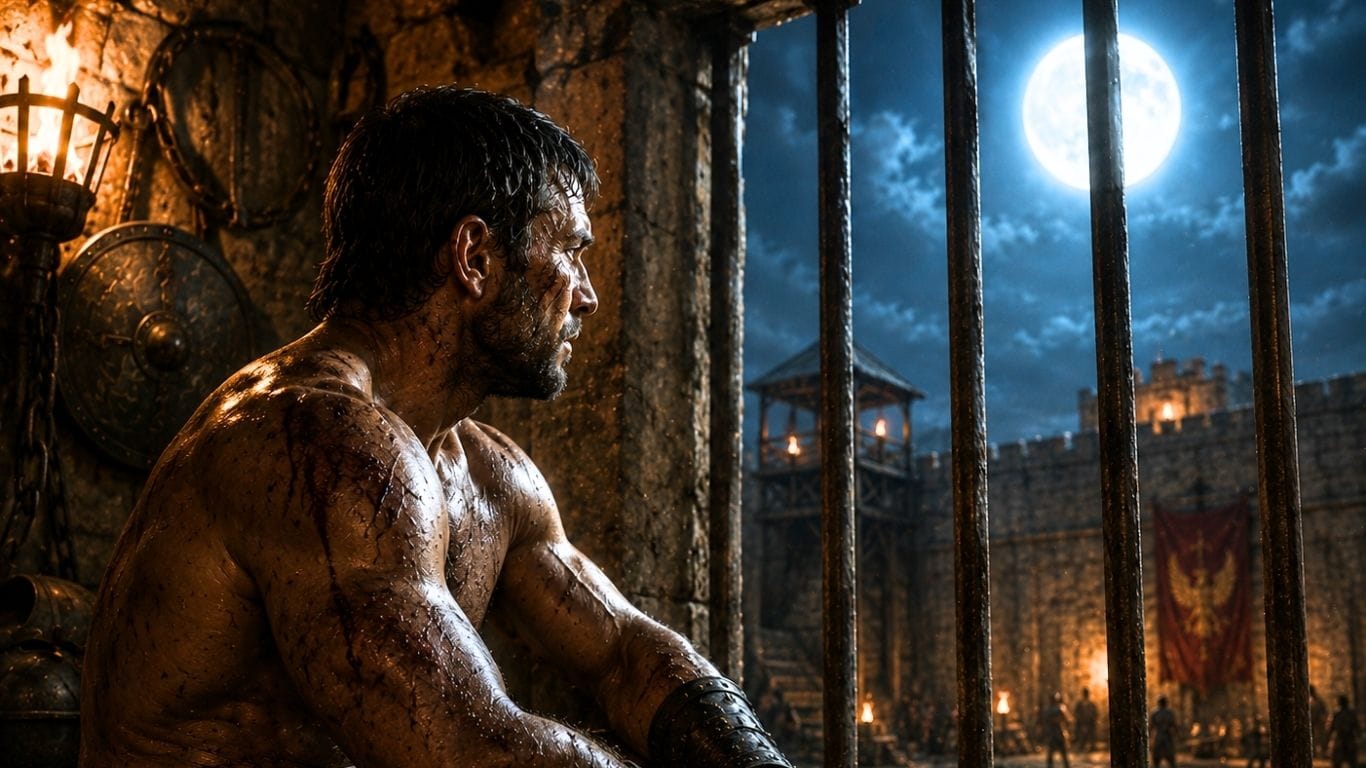
The camp falls quiet.
Beyond the torchlight, tomorrow’s opponent is only a silhouette in his imagination. Spartacus checks his equipment, then looks towards the darkness. In this story, freedom has brought him another fight.
One opponent. One opening. One more chance.
Five factors.
No guaranteed champion.
The comparison identifies advantages and unknowns; it does not calculate a fight result.
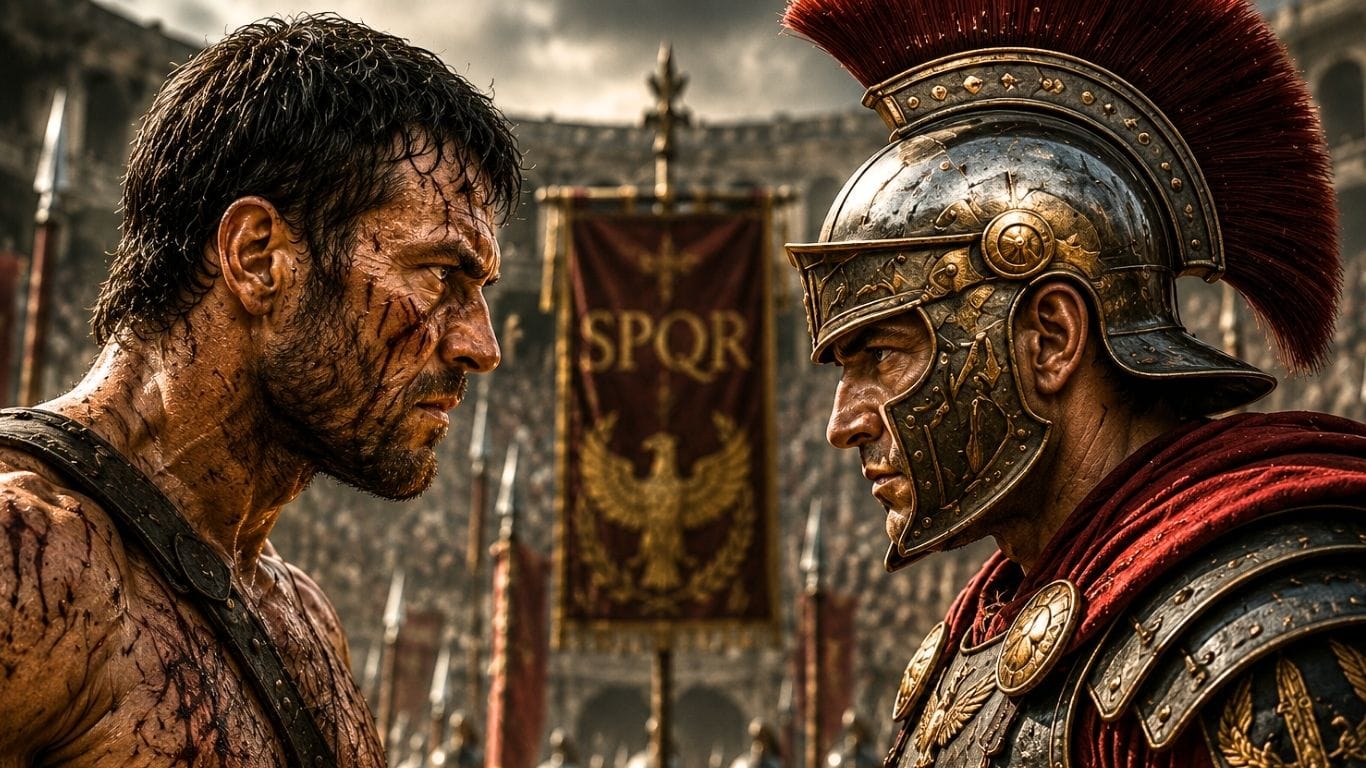
Protection changes
the problem.
The guardsman has greater torso coverage in our chosen setup. That gives him a plausible equipment advantage, but it does not make his opponent harmless.
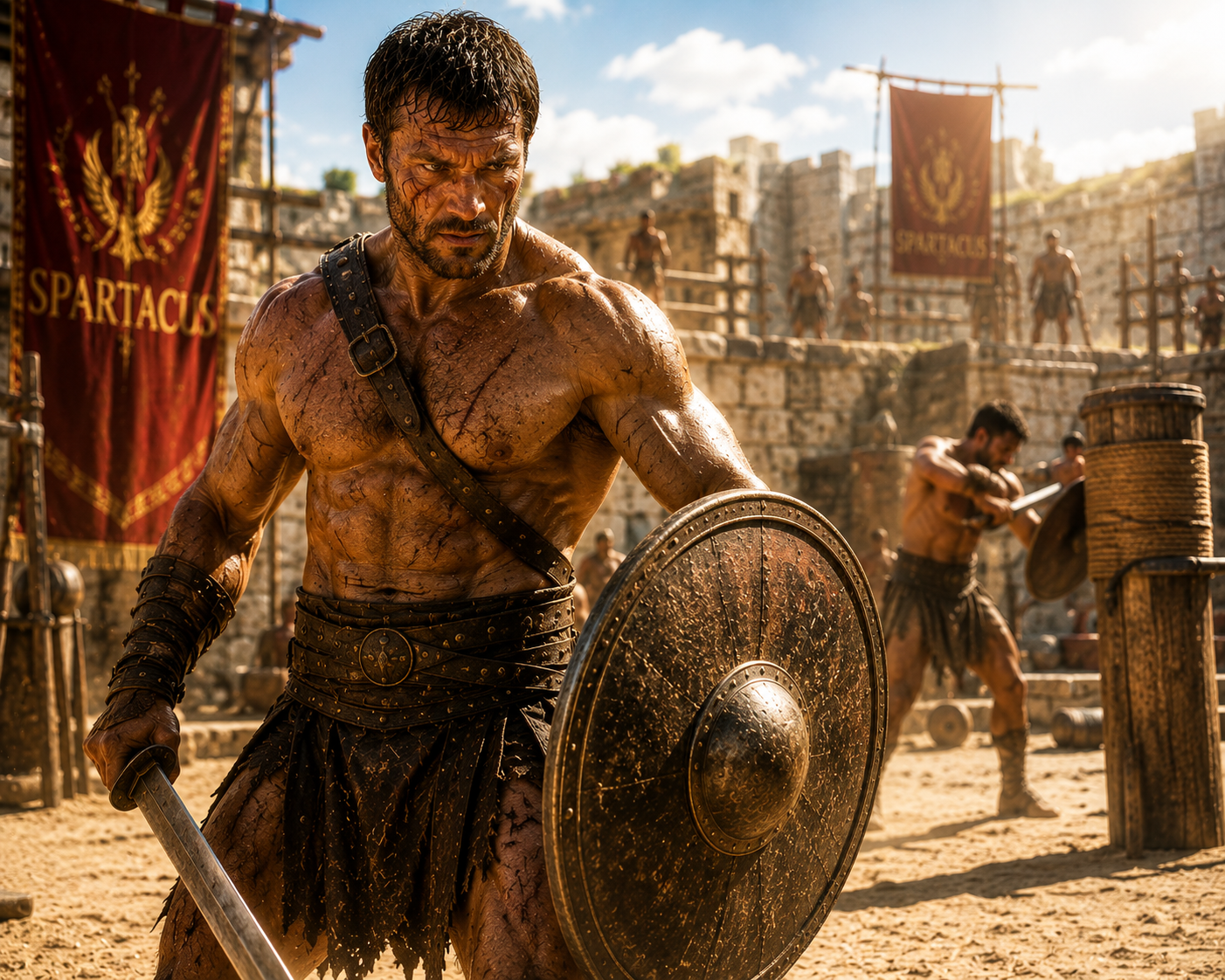
Similar tools.
Different encounters.
Both have a sword and shield. Exact dimensions, condition and familiarity matter; the names of the weapons do not settle the contest.
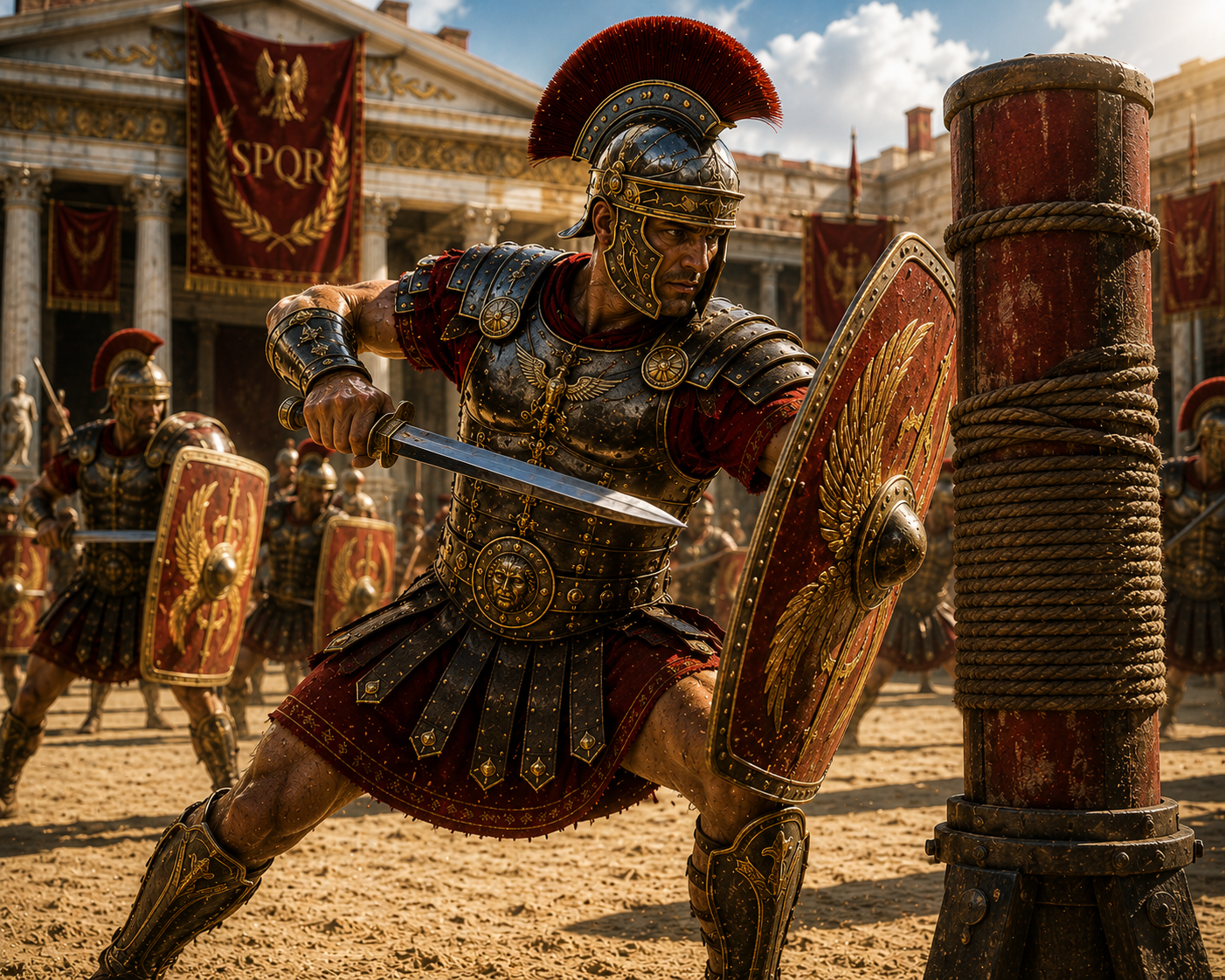
Reputation is
not a measurement.
Spartacus’s military leadership does not tell us precisely how he would fare in this duel. A guardsman’s institutional status does not establish superiority in single combat either.
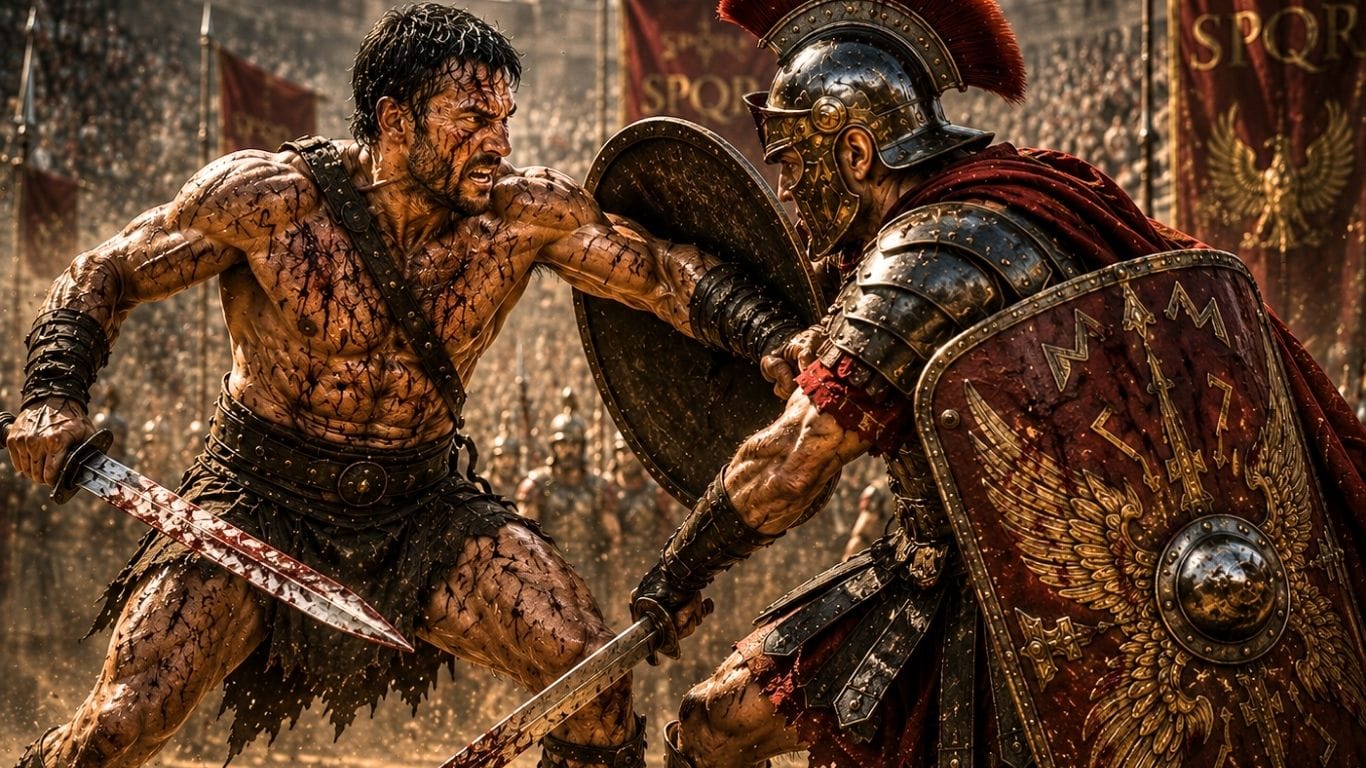
Hardship tells
only part of the story.
Campaigning and training may be relevant, but we lack comparable measures for these two men. We assume both arrive fit, rested and uninjured.
Both have
something to lose.
Freedom provides the emotional force of Spartacus’s story. It cannot be converted into proof that he would outlast a soldier who also wants to survive.
Control.
Then a turning point.
A fictional Spartacus-winning sequence. This narrative does not prove he is the likelier winner.
The guard
holds his ground.
Shield raised, the guardsman advances. Spartacus gives ground as the first exchange ends without a decisive opening.
The guard’s protection complicates every attack. Spartacus changes his rhythm. In this imagined version, the next exchange becomes the one that matters.
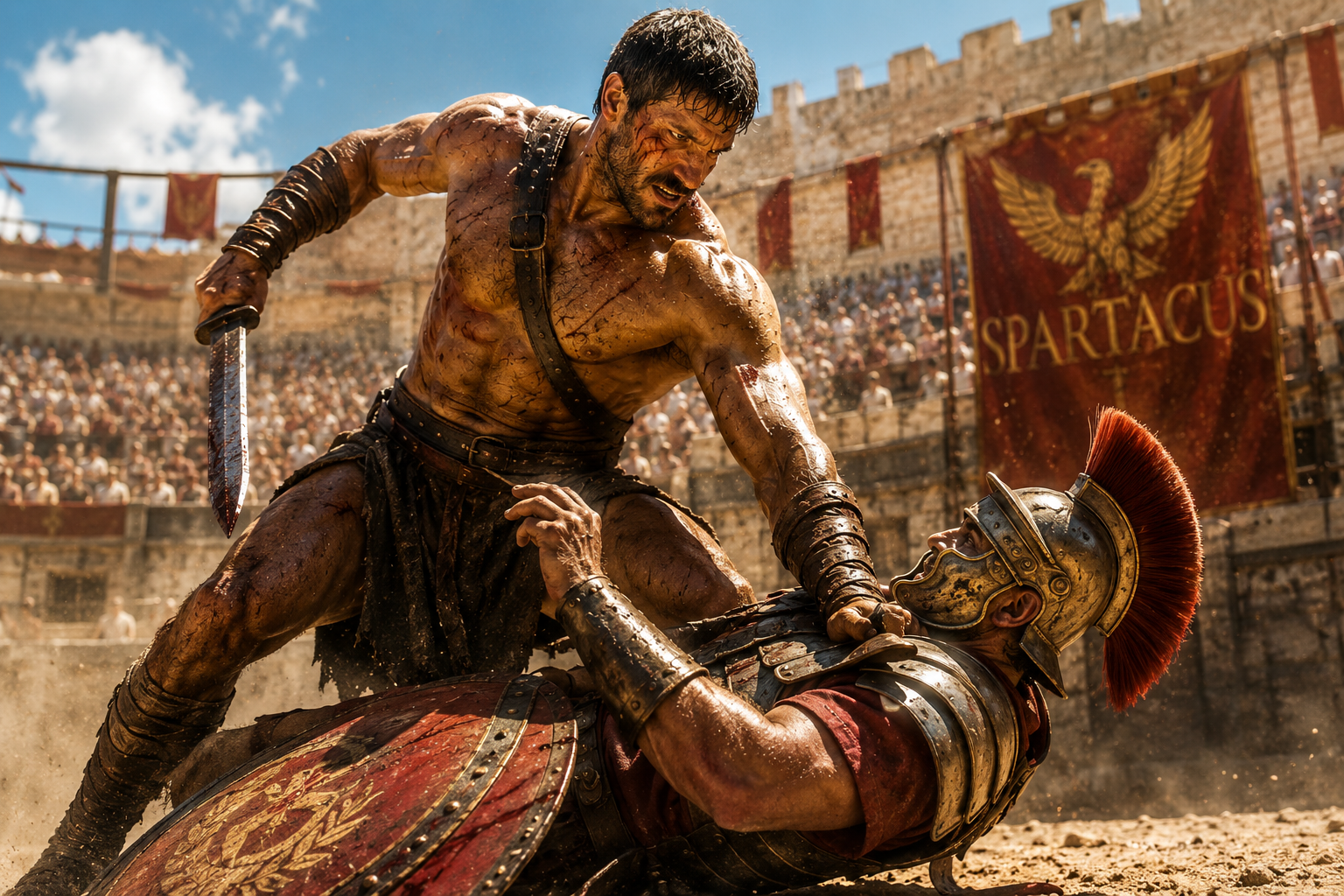
A narrow opening.
A different ending.
The guardsman recovers a moment too late. Spartacus seizes the initiative and the contest ends with the Roman unable to continue.
Spartacus wins this story. Another sequence could favour the guardsman. Neither outcome is a historical record or the output of a tested model.
Our story: Spartacus.
The evidence: uncertain.
We retain Spartacus’s narrow victory as the cinematic ending. The comparison itself cannot establish him as the probable winner: the selected armour favours the Praetorian, while individual skill remains largely unknown.
What if both wear the same armour?
That removes the explicit protection advantage. The comparison would depend more heavily on individual abilities we cannot measure from the surviving evidence.
What if this is a formation battle?
A duel and a unit engagement are different questions. Numbers, command, coordination and the wider situation would need their own scenario.
Did Spartacus fight the imperial Praetorian Guard?
This encounter is deliberately cross-era. Spartacus’s revolt ended in 71 BC; the imperial Guard selected here belongs to the later system associated with Augustus and his successors.
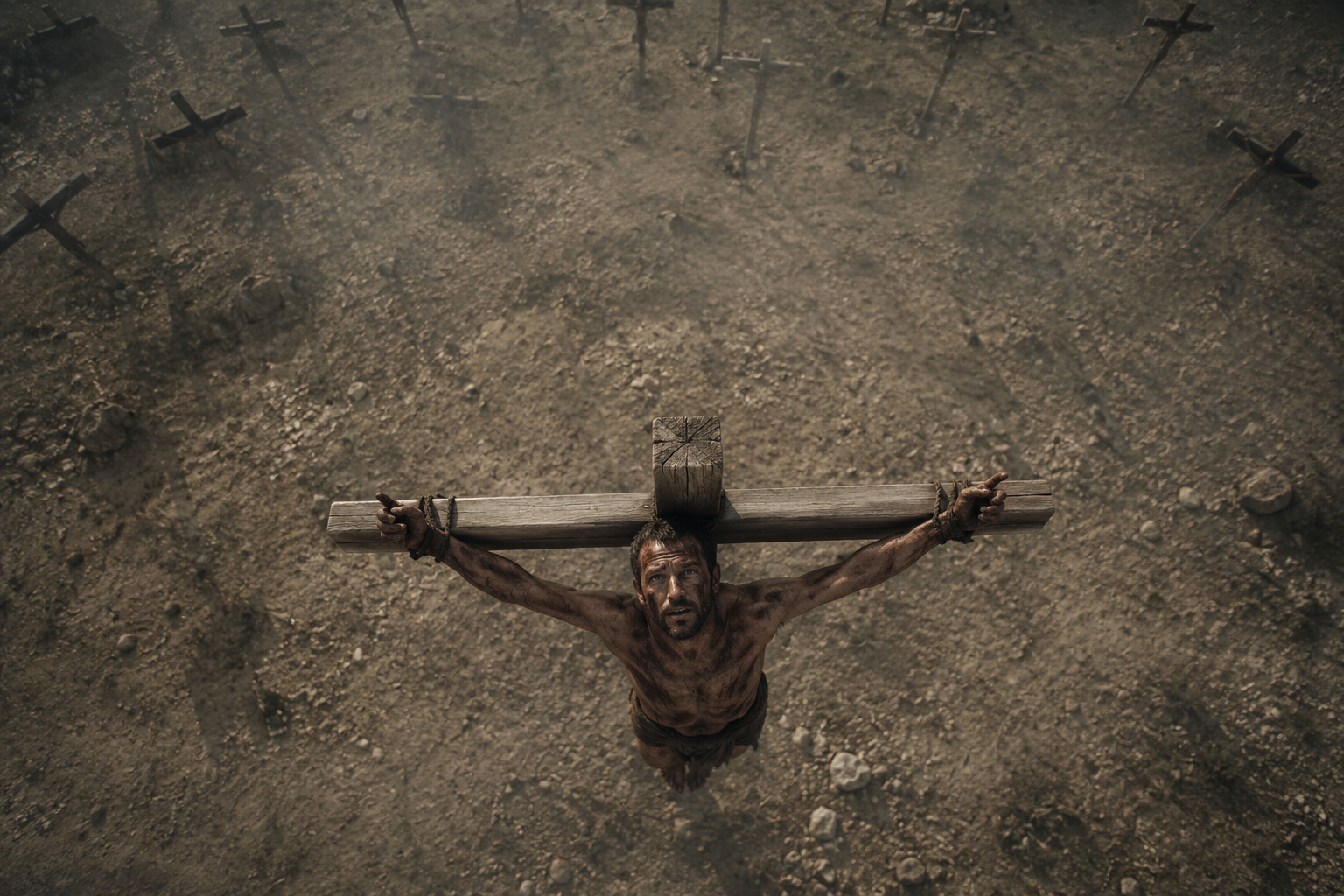
Rome won the war.
Spartacus became a legend.
The real revolt ended in defeat in 71 BC. Appian reports that Spartacus’s body was not found and that 6,000 captives were crucified along the road from Capua to Rome. Our fictional duel does not alter that ending.
The rebellion ended. Its story endured.
- Appian on Spartacus, translated at Livius — ancient narrative of the revolt and its defeat; written long after the events.
- Sandra Bingham: Praetorian Cohorts — scholarly reference on the imperial institution and its origins.
Historical sources establish context, not this duel’s winner. The portraits, night-before scene, equipment assignments and battle sequence are illustrative or hypothetical.