

Could 30 unarmed men beat a Bengal tiger? Explore strength, teamwork and what happens when the tiger has a way out in its own forest.
Thirty men. One Bengal tiger.
Thirty strong, unarmed men could overpower a Bengal tiger if enough of them worked together and the animal had no way out. In a central Indian forest clearing, though, the tiger has another option: escape. The question is whether the men can turn their numbers into a sustained hold before the tiger breaks contact.
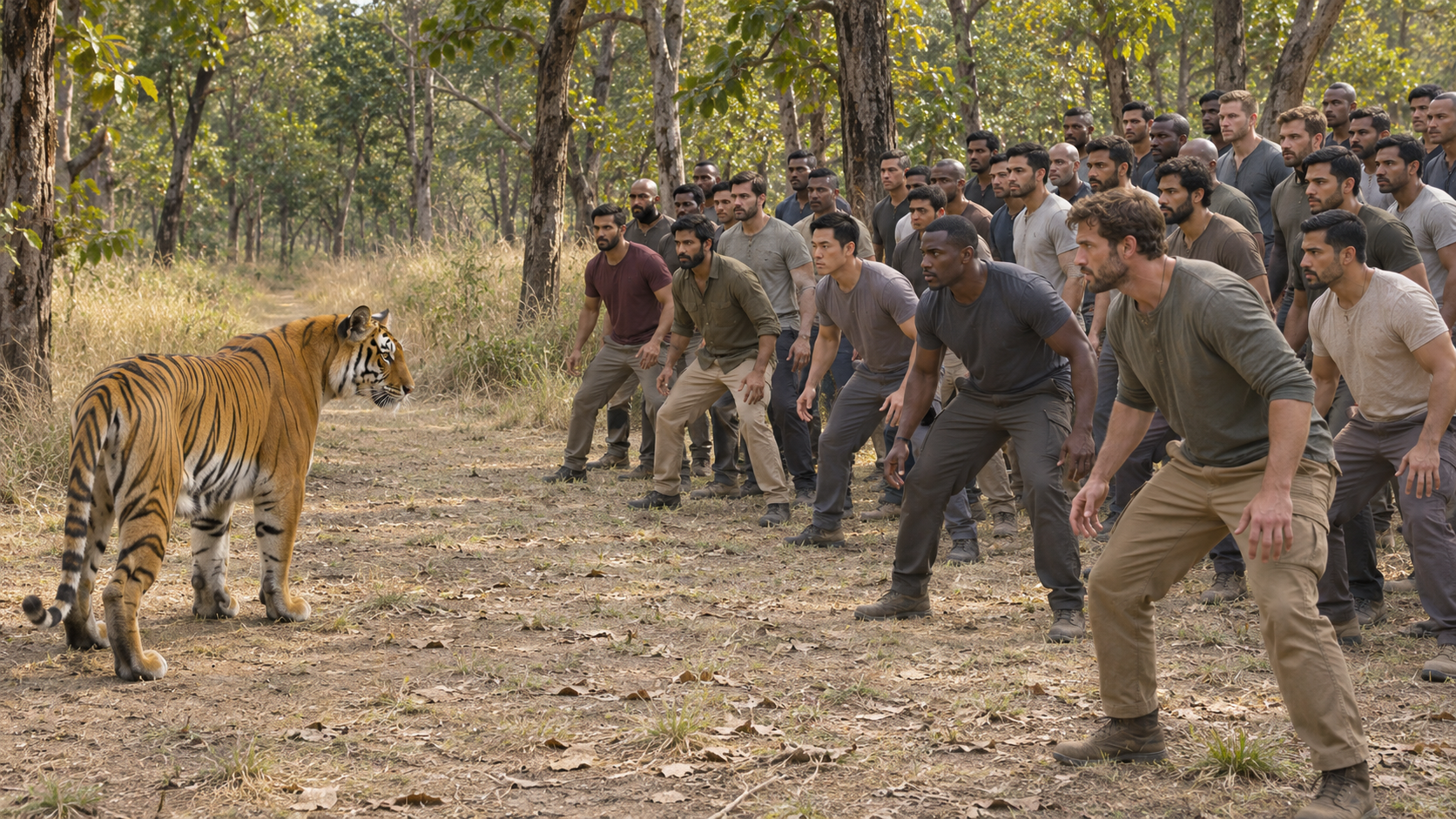
Why we chose tiger territory
Thirty strong, physically fit men in their thirties meet a healthy adult male Bengal tiger in daylight. They can punch, kick or grapple. The men have room to see each other and move together in the clearing. The tiger has the surrounding trees and tall grass, with an open route back into cover. That exit is deliberate. The forced-fight verdict below considers what changes if the route closes.
Researchers studying attacks around the Tadoba–Andhari Tiger Reserve in central India found that the chance of an attack declined with distance from forests and villages. Their work helps ground the setting of this thought experiment. See the research sources.
What 2,700 kg really buys you
The weights are choices for this scenario. We’re comparing the ways each side can apply force.
| Factor | Thirty men | Bengal tiger |
|---|---|---|
| Scenario mass | 90 kg each, 2,700 kg combined | 220 kg |
| Close-range strength | Several people can grip and apply force together | Explosive movement, powerful forelimbs, claws and jaws |
| What decides it | Whether enough men commit and keep their grip | Whether it can break contact and reach cover |
One man faces an animal roughly two and a half times his mass. The group outweighs the tiger more than twelve to one, but only a few men can get close at the same time. The rest can contribute only if they’re willing and able to join the struggle.
One possible encounter
This is a fictional sequence. The images follow one version of the encounter from first contact to escape.
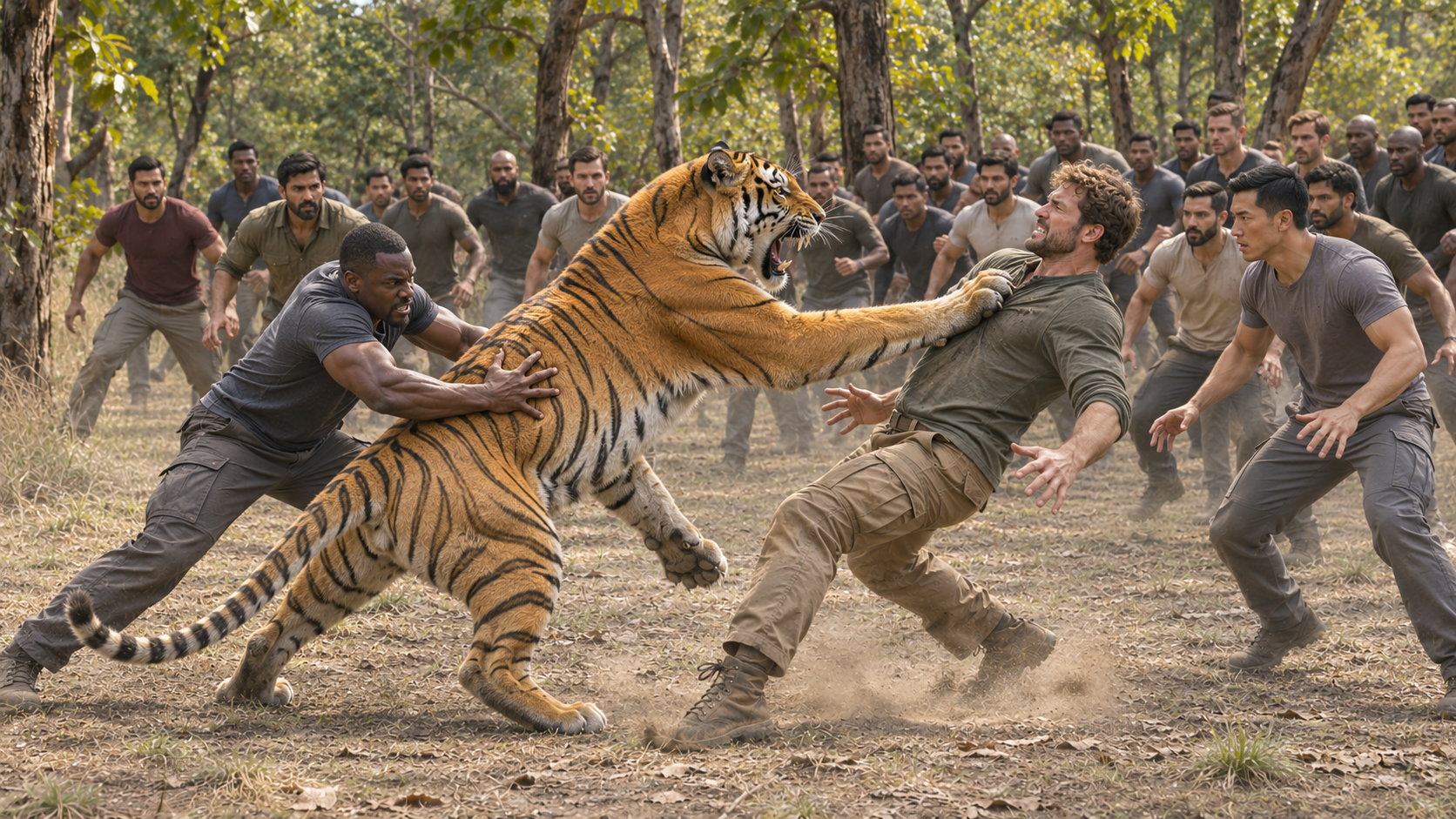
First contact
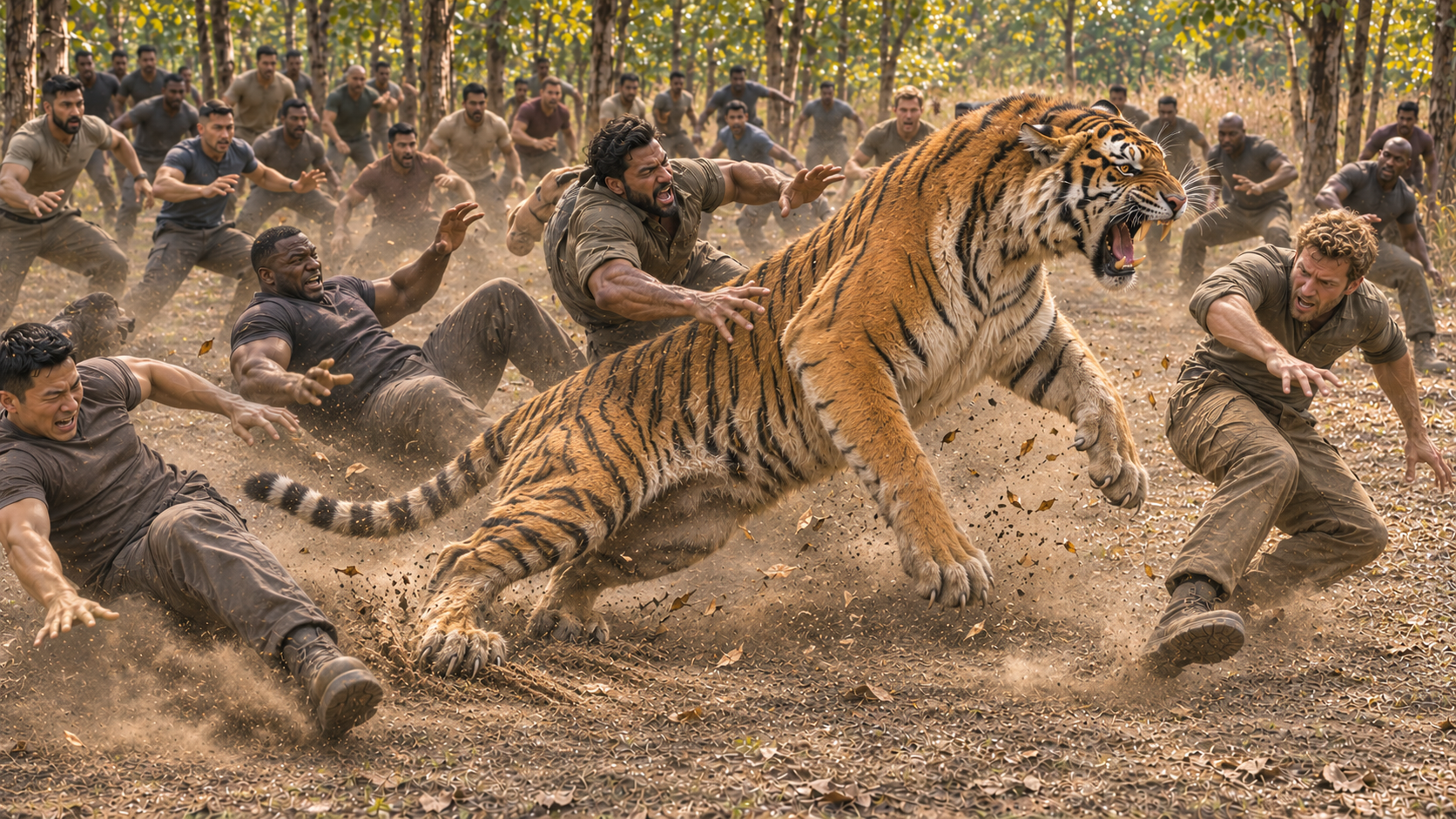
The first man is knocked backwards before he can get a grip. Another reaches the tiger’s flank. Behind them, some men step forward while others hesitate.
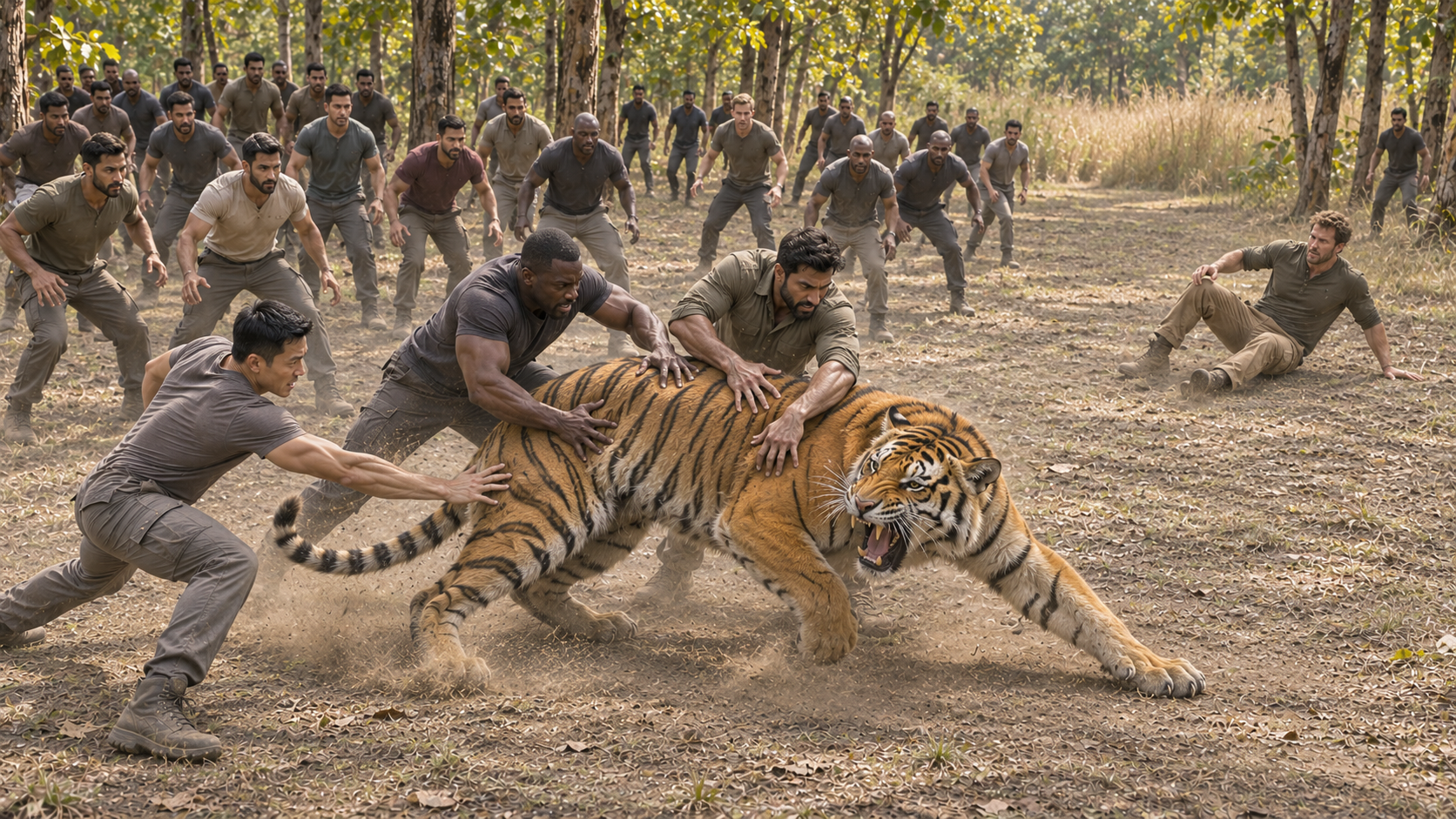
The struggle
Several men get their hands on the tiger, but it keeps moving. They have to commit more people before they can slow it down.
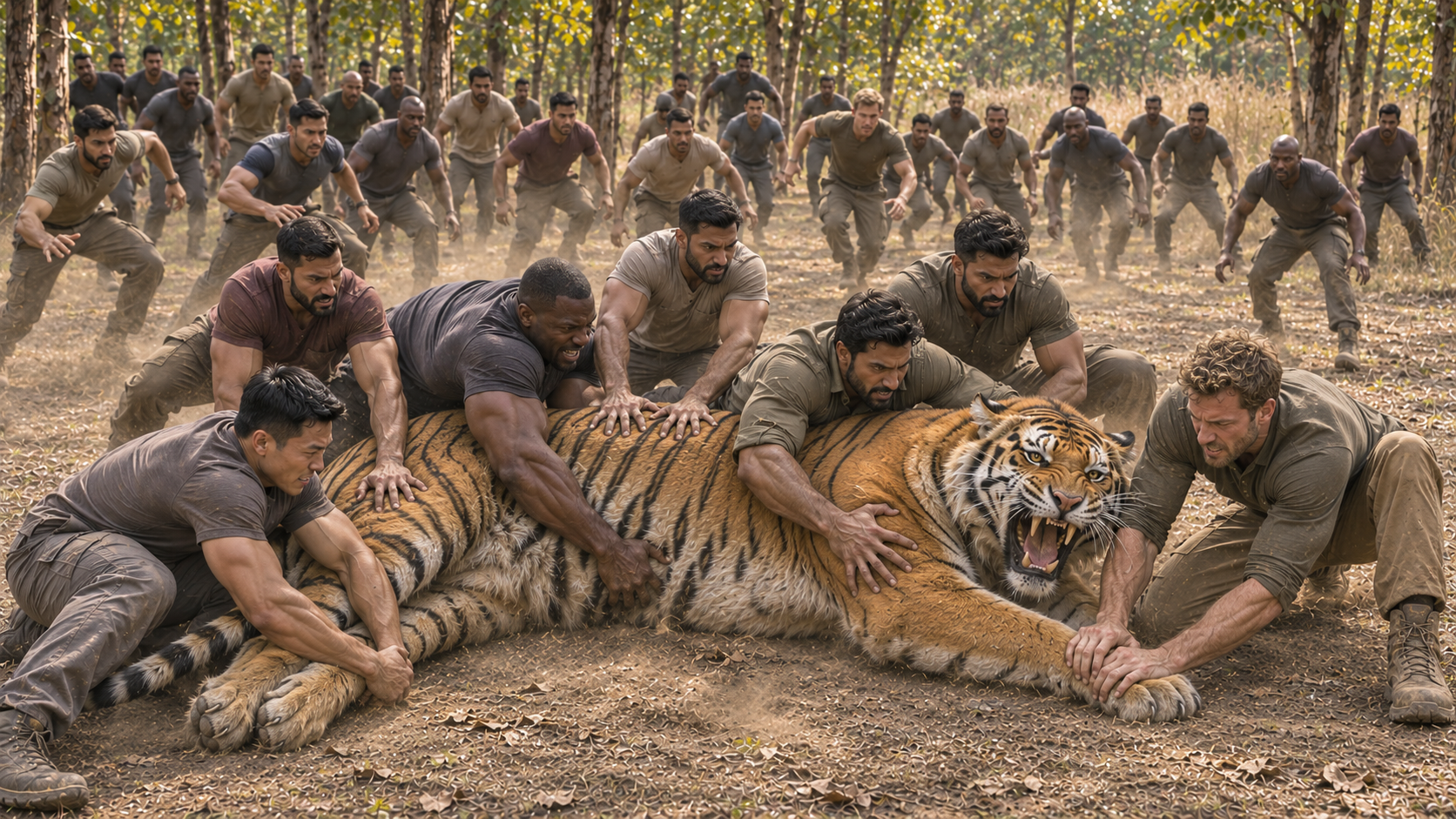
The pin
For a moment the men get the tiger onto its side. Their numbers finally count, but they have to keep applying force while the animal struggles.
The pin breaks
The tiger heaves upright and several men lose their grip at once. The group’s brief hold collapses and a gap opens towards the grass.
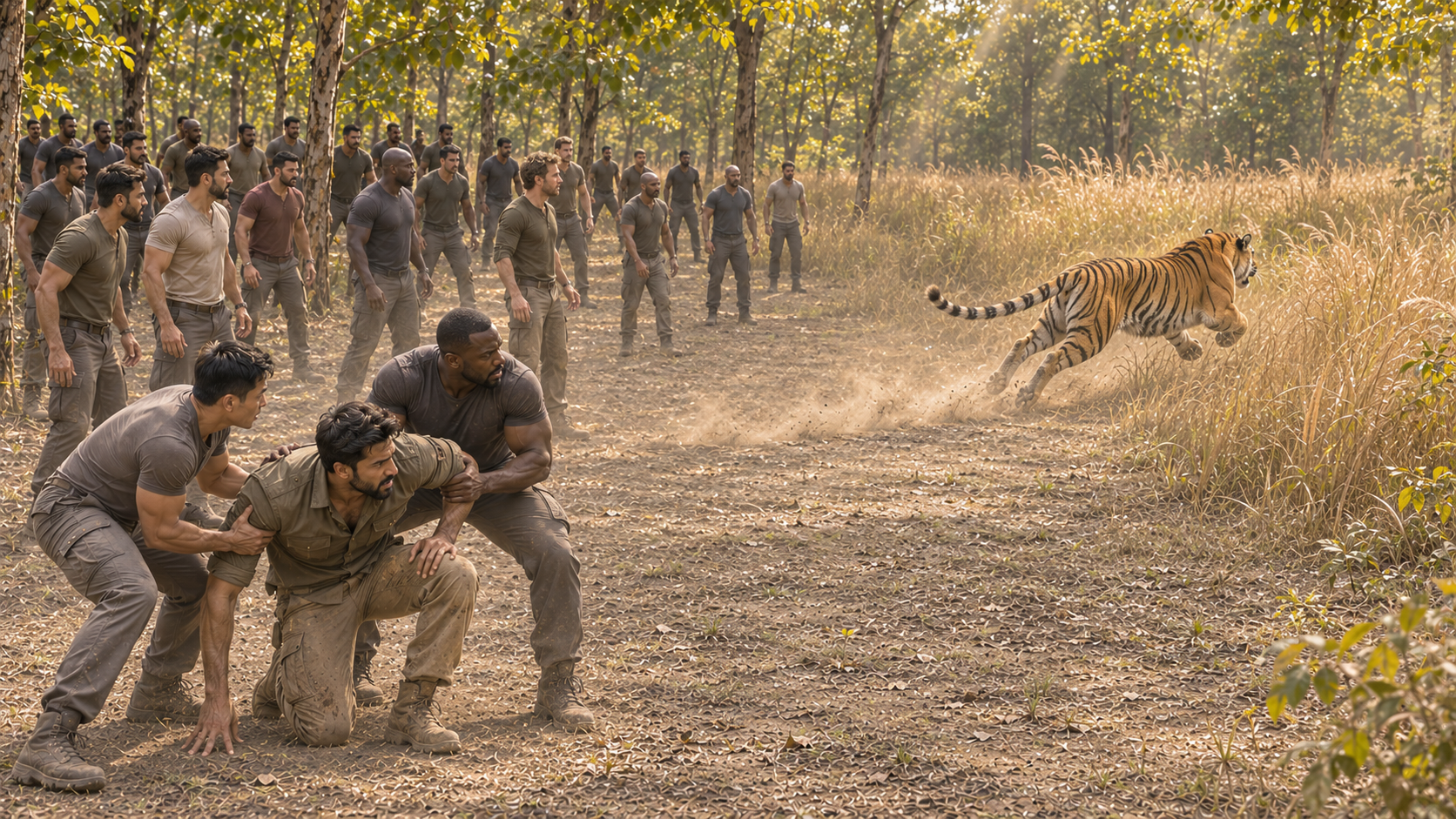
Into the grass
The tiger takes the gap. The men let it go and help their teammates. In this telling, two men are seriously hurt and all thirty survive.
In the clearing, I’d favour escape
With a route into cover, the tiger can end the encounter before the group secures a lasting hold. If escape is impossible, I’d give the men a conditional edge, provided enough of them stay coordinated after the first injuries. They could win and still suffer severe or fatal injuries. There’s no credible basis for a death toll or win percentage.
What if the men give out first?
Here the group runs out of the will and energy to continue. The tiger walks away. All thirty men survive in this fictional version.
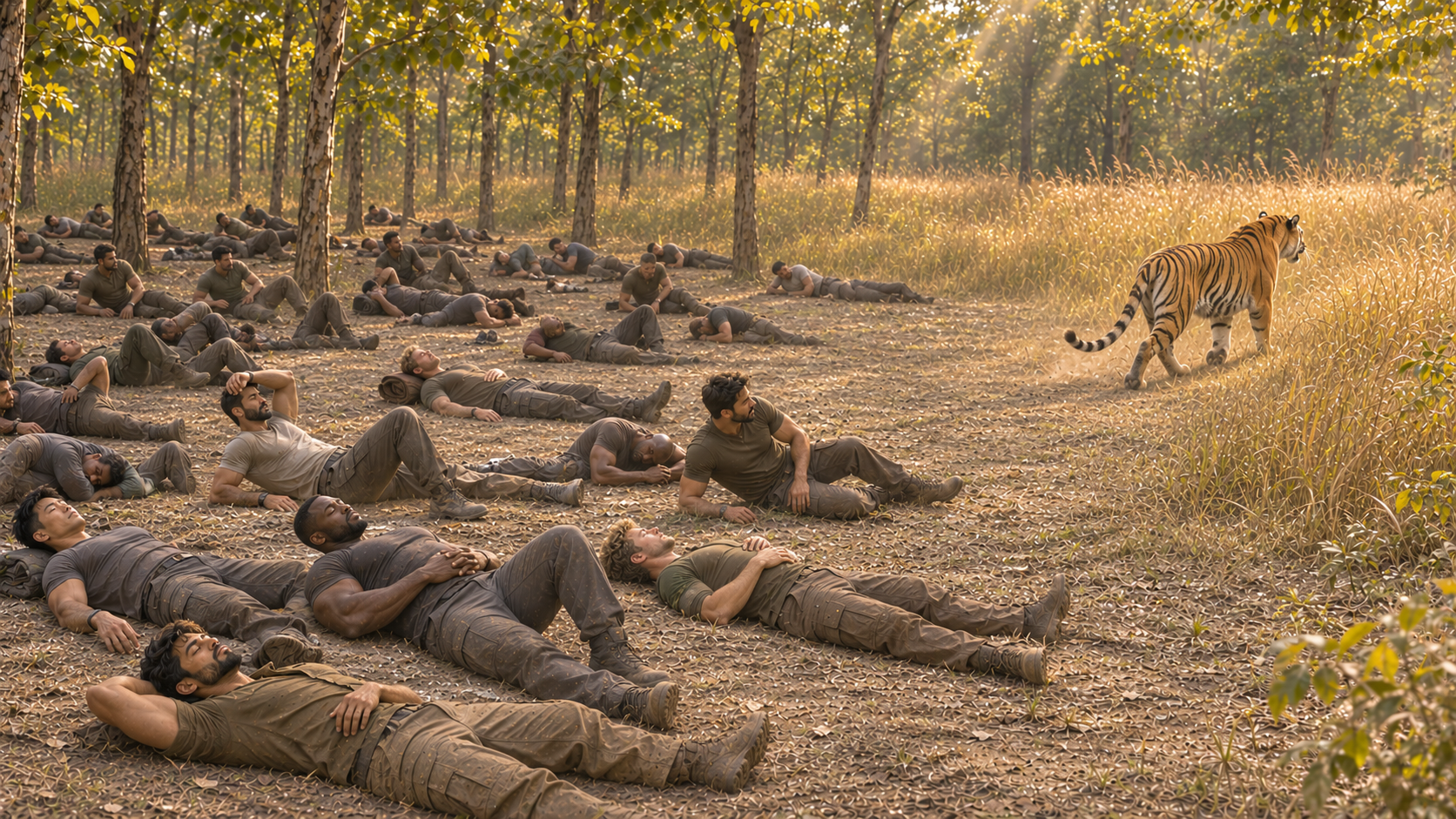
What could change the outcome?
Would a very hungry tiger attack thirty men?
It could engage, particularly if someone became isolated near cover. Given thirty adults together in plain sight and an open exit, I’d still expect withdrawal to be more plausible. That’s a judgement about this setup. If a crowd blocks the exit, a charge could be an attempt to get clear. A tigress defending cubs would have a different reason to stand her ground.
Would thirty men have the guts to fight?
Some might rush in to help a teammate. Others might hesitate or focus on getting him out. A field study around Chitwan National Park recorded two tiger attacks in which companions rescued the victim. People can step in under pressure, but whether enough of these men would commit together remains the biggest unknown.
Can one swipe knock a man down?
Yes, it’s plausible. In a forensic case report, witnesses described a Bengal tiger knocking a handler unconscious with a paw strike. Other tigers then joined the attack, so the first strike can’t account for the final injuries on its own. In our scenario one clean swipe can change how willing the next men are to move in.
Does the tiger have a weak spot?
Its eyes are vulnerable, but they’re a small, moving target close to its jaws. The men’s more plausible advantage is the ability to apply force together. Getting a hold and keeping it while the tiger twists are two different challenges.
How long could the tiger fight before tiring?
There’s no reliable duration for this matchup. Research that used a collar to measure activity and estimate energy expenditure in one young female tiger did not measure sustained fighting. The men might benefit from having fresh people available, but only if they can take over without losing their hold.
How many men would be seriously injured?
Two serious injuries and no deaths is the outcome chosen for the illustrated escape. The Tadoba–Andhari study recorded 103 tiger attacks and 29 leopard attacks, with 71 deaths across both species combined. Those records show how serious attacks can be. They don’t tell us how many people would be hurt in a single encounter with this group.
Sources and further reading
- Dhanwatey and colleagues on large carnivore attacks in central India — setting and documented incidents.
- Silwal and colleagues on wildlife attacks in Chitwan National Park — records of companions intervening.
- Perrone and colleagues’ forensic case report — the reported paw strike in a captive Bengal tiger incident.
- Tiger activity and energy expenditure study — collar data from one subadult female in India.
- India’s National Tiger Conservation Authority — context on human–tiger conflict.