
The Scenario
Before we enter the Amazon, we need to establish the rules. This is not an average person facing an average snake. Both combatants are operating close to their physical peak, and the battle takes place in the environment where an anaconda is at its most dangerous.
- Height: 6ft (183cm)
- Weight: 95kg (210lbs)
- Condition: Athletic & powerful
- Fitness: Excellent
- Weapons: None
- Awareness: Knows the snake is nearby
- Species: Green Anaconda
- Length: 20ft (6m)
- Weight: ~120kg (265lbs)
- Condition: Healthy adult female
- Weapon: Extreme constriction power
- Advantage: Home territory
- Location: Amazon swamp
- Water: Knee-to-waist deep
- Terrain: Muddy footing
- Visibility: Dense vegetation
- Help: None
- Victory: One can no longer continue
Man vs Anaconda
A powerful, athletic man enters the Amazon swamp. Waiting in the water is one of nature’s most terrifying constrictors. This is a fight between human strength, survival instinct and raw natural power.
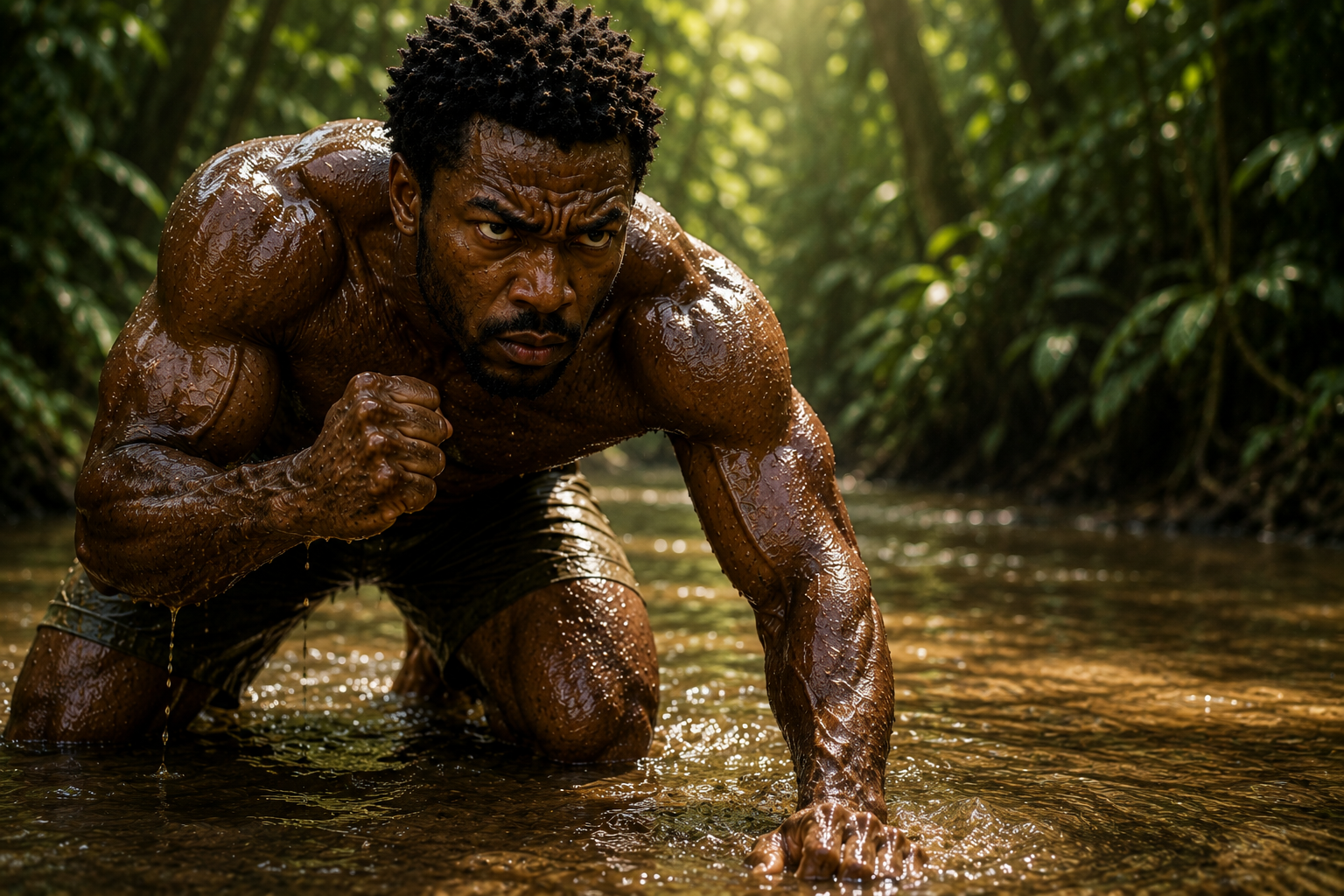
- 6ft tall athletic build
- Strong upper body and grip strength
- Excellent fitness and survival instinct
- Can adapt tactics under pressure
- Must avoid full constriction at all costs
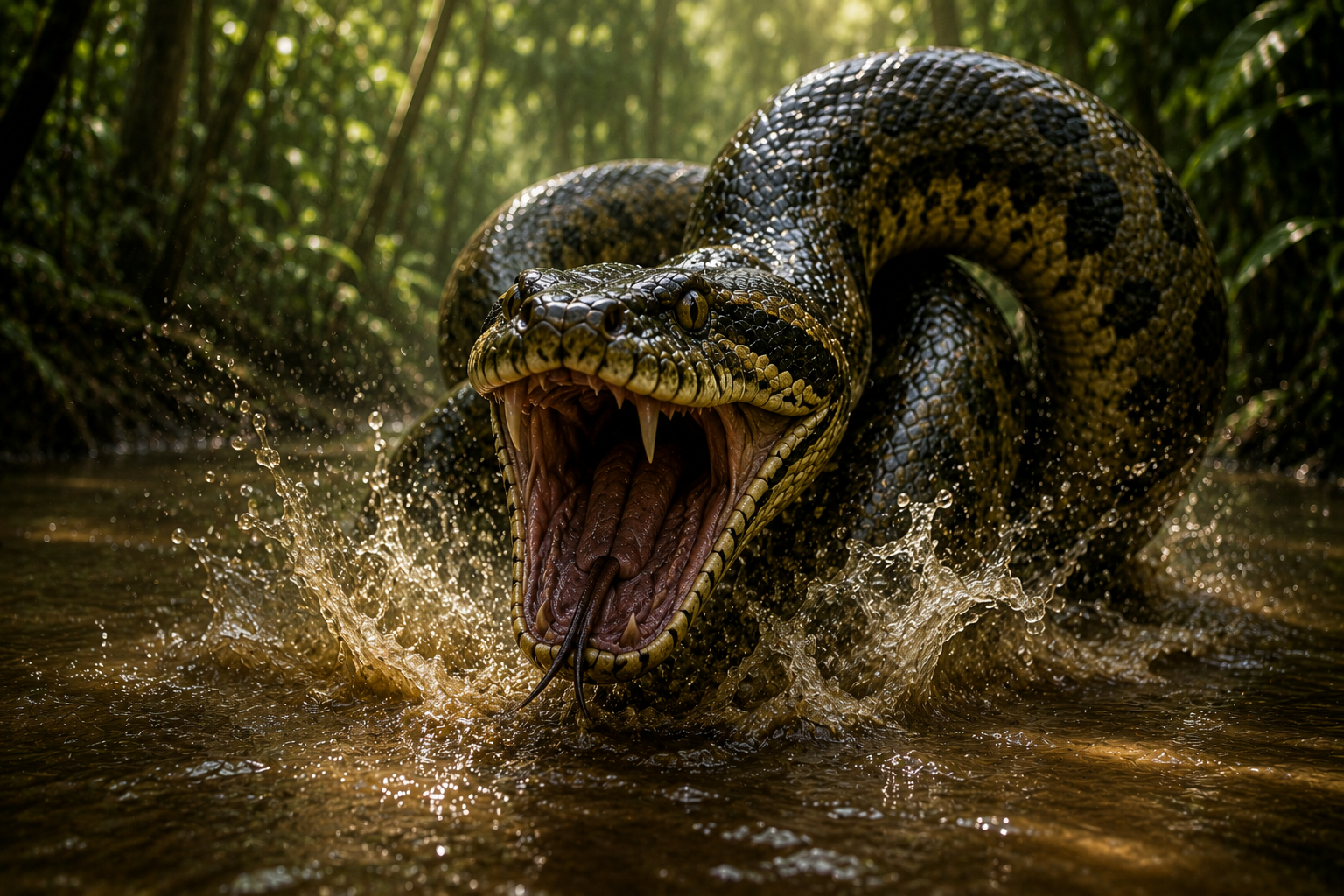
- Massive constricting power
- Perfectly adapted to swamp water
- Explosive ambush strike
- Can use its whole body as a weapon
- Most dangerous once it secures a coil
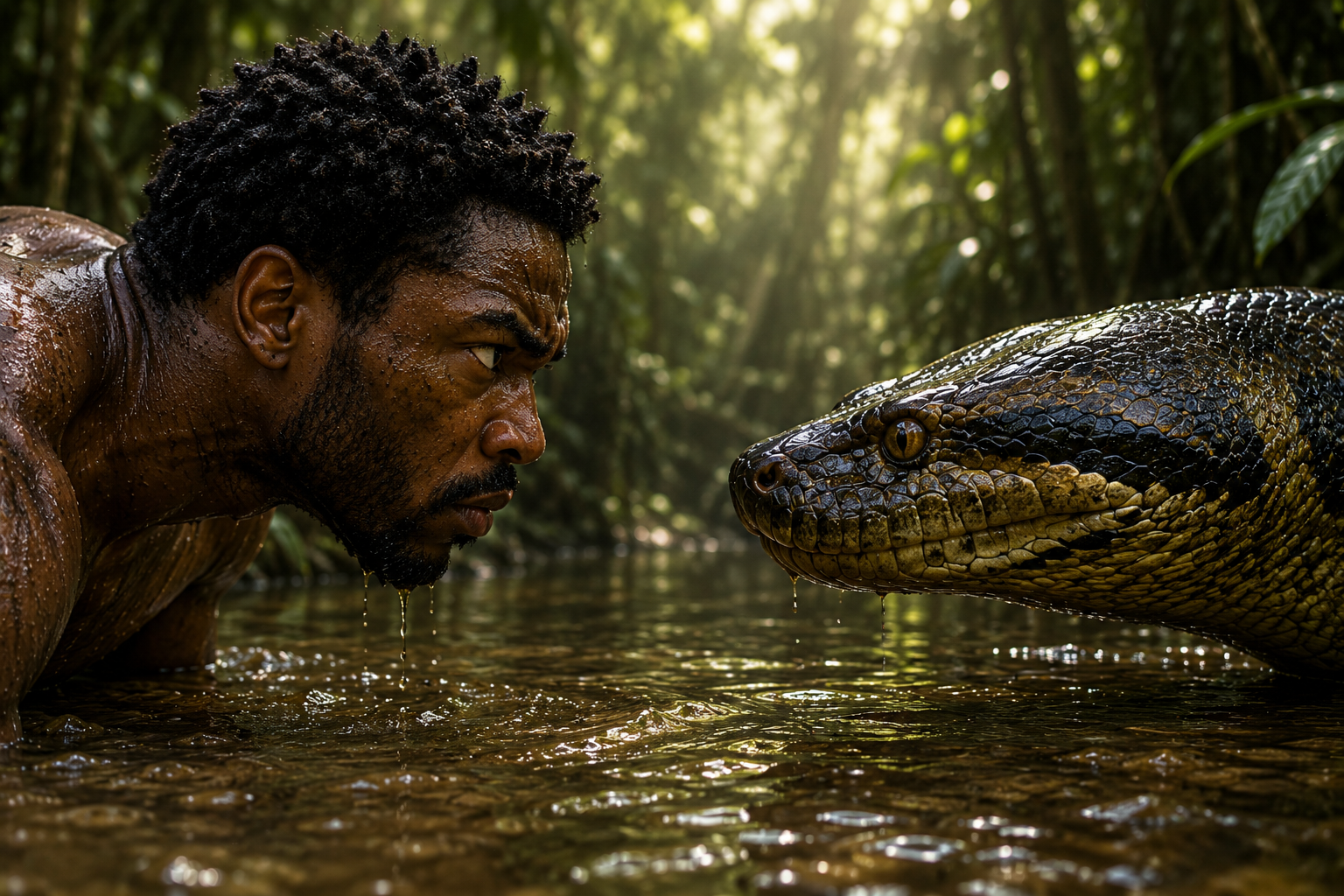
The Face Off
The swamp falls silent. The man locks eyes with the anaconda just inches above the waterline. One wrong movement could trigger the strike. One successful coil could end the contest. In this battleground, strength matters — but timing, awareness and positioning may matter even more.
Size & Power
This opening round immediately highlights the danger of the matchup. A physically strong 6ft man has impressive power by human standards, but he is facing one of the heaviest snakes on Earth in an environment that favours the predator.
A large green anaconda can weigh more than the man himself, and unlike a human, almost its entire body is functional muscle. In shallow water, that weight becomes even more dangerous because the swamp supports the snake while making human movement slower and less stable.
The man has strength, athleticism and awareness, but the anaconda has mass, leverage and a body built for crushing control. If the snake gets close enough to wrap even part of its body around him, the physical contest changes instantly.
On dry land, this round would be closer. In shallow water, the anaconda’s size and raw power give it the early advantage.
Weapons
Humans possess incredible strength, intelligence and determination, but unlike many predators, they have no natural weapons. Bare-handed, the man enters this fight relying entirely on his fists, grip strength and ability to improvise.
The anaconda is a very different opponent. Although non-venomous, it is perfectly equipped for close-quarters combat. Dozens of sharp, backward-curving teeth are designed to seize and hold struggling prey while its muscular body wraps around the target with astonishing speed.
Contrary to popular belief, anacondas do not usually crush bones. Instead, they tighten their coils every time their prey exhales, making it increasingly difficult to breathe and restricting blood circulation. Once a full constriction is achieved, escaping becomes exceptionally difficult.
The man’s only realistic defence is to avoid that first successful wrap. If he can keep moving and maintain distance, he has a fighting chance. If the snake secures multiple coils around his torso, the balance of the contest changes dramatically.
In terms of natural weaponry, the advantage is clear. The anaconda has evolved over millions of years to overpower powerful animals, and its entire body functions as one devastating weapon.
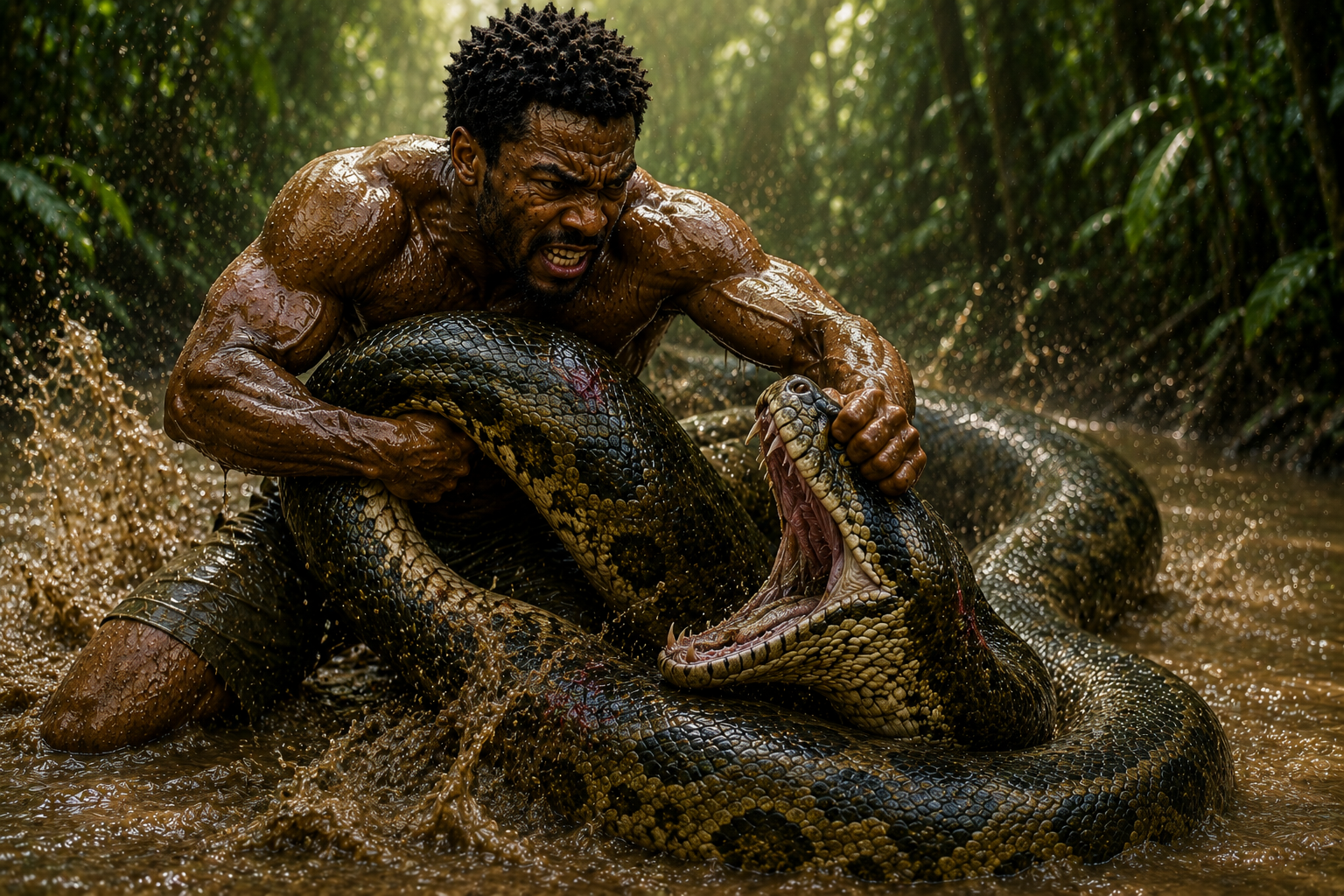
Intelligence & Adaptability
This is where the contest begins to change. While the anaconda possesses incredible natural weaponry, the human brings something that has allowed our species to survive against far larger predators for thousands of years: intelligence.
An athletic, experienced man can assess danger, adapt his tactics and exploit opportunities as the fight unfolds. He understands leverage, balance and timing. Rather than relying on instinct alone, he can react to the snake’s movements and make split-second decisions that improve his chances of survival.
If the anaconda’s first ambush fails, the advantage begins to shift. Every second the man remains free gives him another opportunity to attack the snake’s vulnerable head, keep its jaws at a distance or use the surrounding terrain to break contact.
Unlike most prey animals, a determined human does not simply panic when attacked. Training, problem-solving and resilience can make the difference between becoming trapped and finding a way to escape.
The anaconda remains an incredibly dangerous opponent, but if the fight becomes a contest of adaptation rather than instinct, the man begins to close the gap.
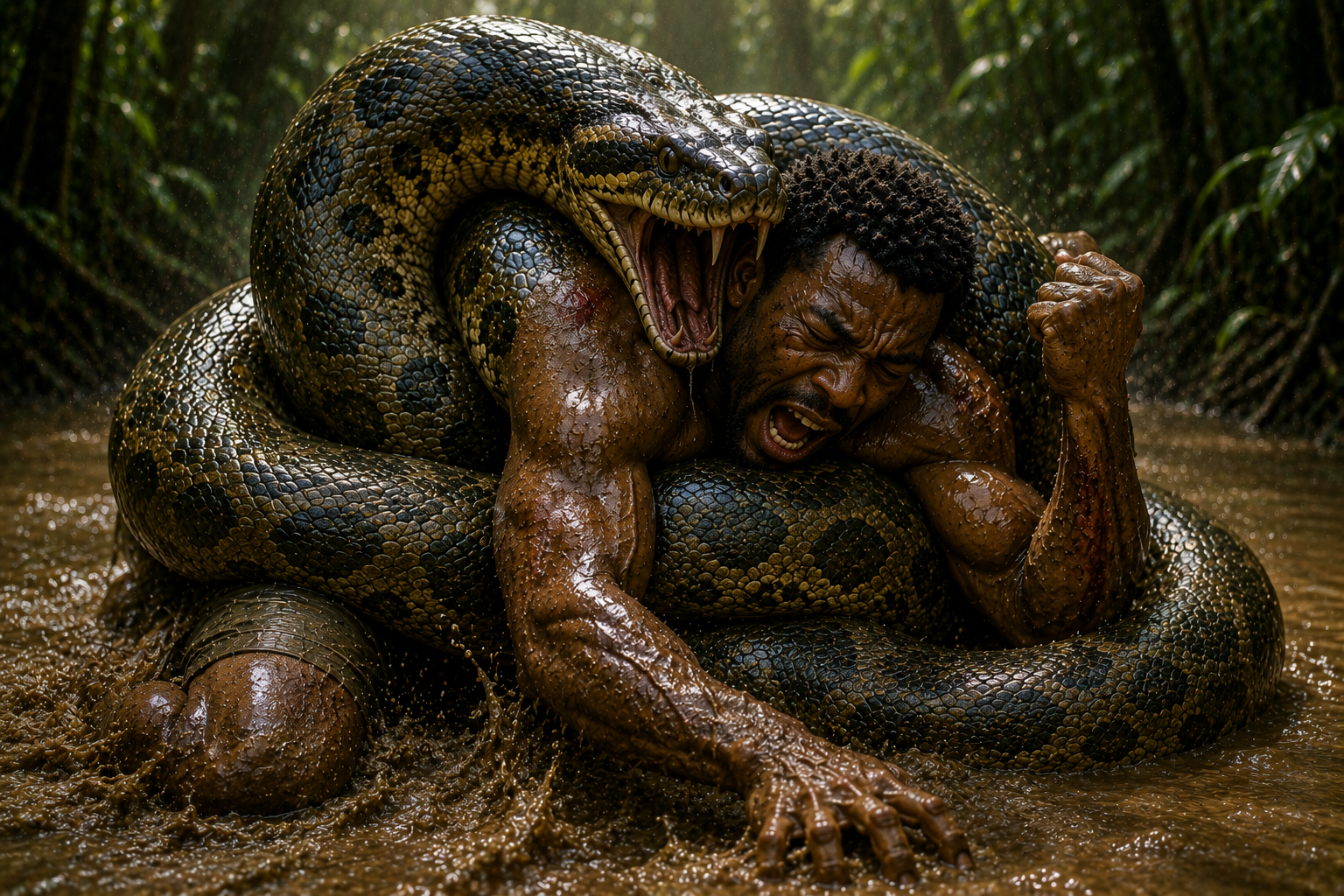
Escape & Survival
This is where the battle becomes a desperate fight for survival. The anaconda has finally managed to gain a partial advantage, wrapping sections of its powerful body around the man’s legs and torso. For many animals, this would already mean the fight is over.
Humans, however, are remarkably resilient under pressure. A fit, determined person can continue thinking, adapting and fighting even in life-threatening situations. Every second before the snake achieves a full constriction presents another opportunity to break free.
The man’s greatest asset is his refusal to give up. By attacking the snake’s head, using leverage against its coils and exploiting the uneven swamp terrain, he may create just enough space to escape before the pressure becomes overwhelming.
Wildlife experts often point out that constrictors rely on securing complete control. If that control is broken early, the attack can fail. The man doesn’t need to overpower the snake—he simply needs to prevent it from completing its hold.
Although the anaconda appears to be winning in this moment, the human’s determination, problem-solving ability and instinct to survive keep him in the contest. Against the odds, he manages to stay alive and force one final showdown.
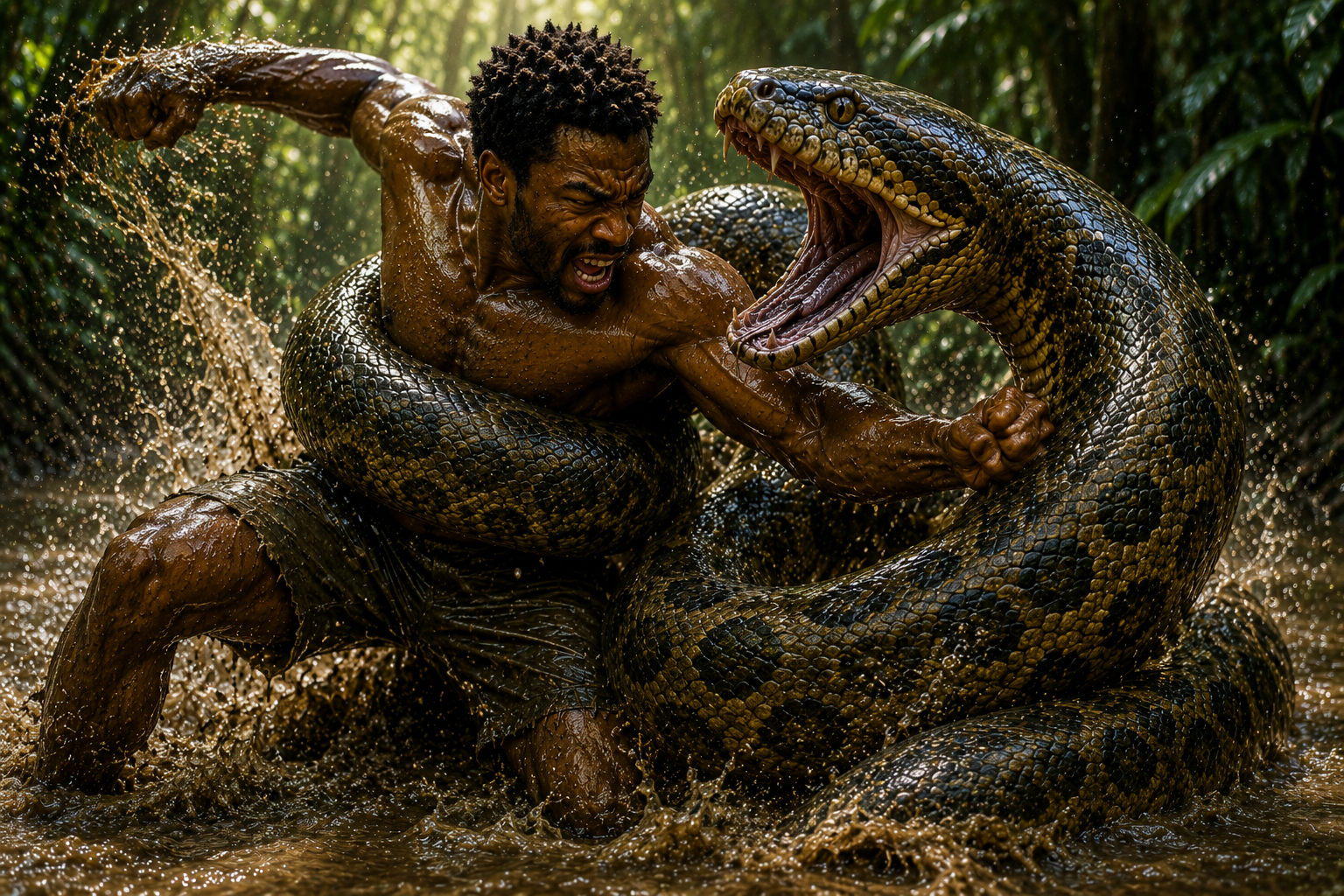
The Fight
The swamp erupts into chaos as the final battle begins. Water explodes in every direction as the athletic man and the enormous green anaconda finally commit to an all-out fight. This is no longer about individual advantages—it’s about who can impose their strengths before making a fatal mistake.
The man immediately uses his greatest assets: mobility, awareness and determination. He keeps moving through the shallow water, attempting to stay out of range of the snake’s powerful strike while looking for opportunities to attack the head or force the anaconda onto less favourable ground.
The anaconda remains patient. Rather than chasing, it waits for the right moment. Every movement is calculated. Its goal is simple: secure a grip, wrap a coil and begin tightening. In water, the snake’s enormous weight is supported naturally, allowing it to move with surprising speed and efficiency.
Several times the man breaks free, using strength and quick thinking to prevent the snake from establishing a full constriction. These moments demonstrate exactly why humans have survived against dangerous predators throughout history. Intelligence and adaptability keep him in the fight far longer than most animals could hope to manage.
But battles of attrition favour the anaconda. As the struggle continues, the snake finally creates the opening it has been waiting for. One powerful strike is followed by multiple coils wrapping around the man’s torso. Every movement becomes harder. Every breath becomes more difficult. The longer the hold continues, the greater the advantage swings towards the predator.
The man fights desperately to escape, attacking the snake’s head and trying to force space between the coils. In some simulations he succeeds. In others, the constriction tightens just enough to prevent an effective escape.
Across repeated encounters, the outcome remains remarkably close. However, because the battle takes place in shallow Amazon water—where the anaconda is perfectly adapted to fight—the snake holds a slight statistical advantage. The man has the intelligence to survive many encounters, but the anaconda only needs one successful constriction to finish the contest.
What Happens When They Actually Fight?
The Amazon swamp is eerily quiet. Knee-deep water ripples around the man’s legs as he scans the dense vegetation. He knows the anaconda is somewhere nearby. The snake knows exactly where he is.
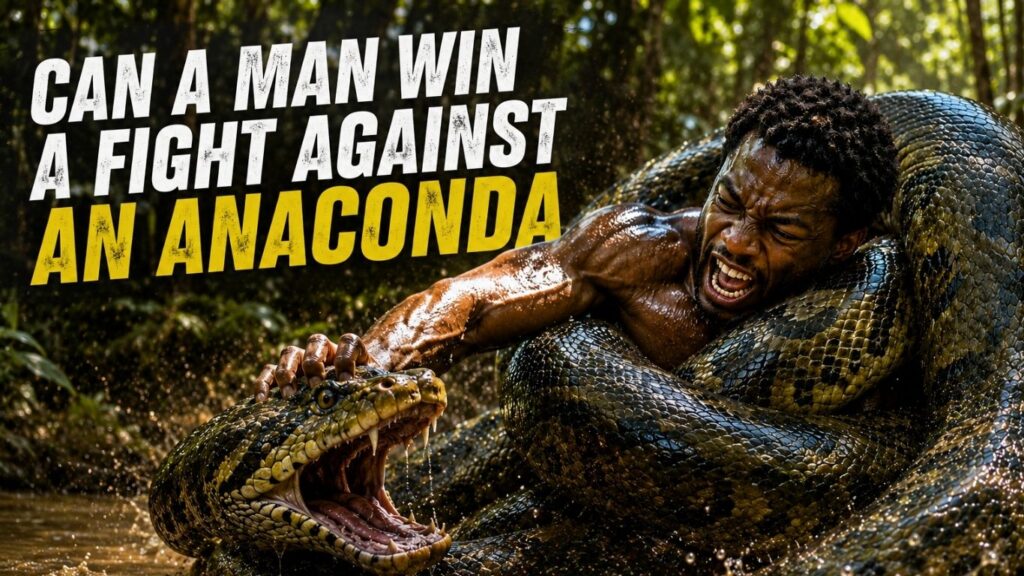
Without warning, the surface of the water explodes. The green anaconda launches forward with surprising speed, its jaws clamping onto the man’s forearm. Almost instantly, thick muscular coils begin wrapping around his legs and waist. This is precisely how anacondas hunt in the wild—using the water to hide their approach before overpowering their prey through constriction.
The man reacts immediately. Rather than panicking, he twists his body, driving his free hand towards the snake’s head while desperately trying to prevent additional coils from locking into place. His athletic build and determination buy him precious seconds, allowing him to stay upright instead of being dragged fully into the water.
The struggle becomes brutal. Water churns into mud as both combatants fight for control. Every time the man breaks part of the snake’s grip, the anaconda readjusts its body, searching for a tighter hold. Neither side is able to dominate for long.
Several times the man appears to gain the advantage. He manages to force the snake’s head away and momentarily loosens the pressure around his torso. Against a smaller constrictor, that might be enough to escape completely.
But this is a fully grown green anaconda fighting in its natural environment. Supported by the shallow water, the enormous snake conserves energy while gradually improving its position. Each movement becomes more difficult for the man as the coils tighten with every attempt to break free.
Still refusing to surrender, the man attacks the snake’s head and neck, trying to create just enough space to escape. In many simulations, this determination is enough to survive. In others, the snake manages to secure a complete constriction before the man can break contact.
After analysing the encounter repeatedly, one conclusion becomes clear. Intelligence, strength and athleticism allow the man to remain competitive throughout the fight, but the battleground heavily favours the anaconda. In shallow Amazon water, where the snake is perfectly adapted to ambush and constrict large animals, it holds a narrow but significant edge.
Who Wins?
This is one of the closest matchups on WhoCouldWin because the result depends almost entirely on one moment: can the man prevent the anaconda from securing a full constriction?
The Decision
The athletic man has real advantages. He is strong, intelligent, aware of the threat and capable of adapting under pressure. If he avoids the first full wrap, attacks the snake’s head and keeps his footing, he has a genuine chance of escaping or forcing the anaconda to release.
But the battleground matters. In shallow Amazon water, the green anaconda is operating in the environment where it is most dangerous. The water supports its enormous weight, helps it move efficiently and makes it harder for the man to stay balanced.
The anaconda does not need to win every exchange. It only needs one successful bite, one secured coil and enough time to tighten its hold. Once that happens, even a powerful human would be in serious trouble.
Across repeated simulations, the man survives many encounters. But in this specific setting, the anaconda’s ambush ability, constriction power and environmental advantage give it the narrowest of victories.
Who Do You Think Wins?
Our simulation gives the Green Anaconda a slight edge thanks to its immense constriction power and its advantage of fighting in shallow Amazon water.
But that’s only one possible outcome. Would a fit, athletic man use intelligence, strength and determination to survive… or would one successful constriction be enough for nature’s giant predator to prevail?
Now it’s your turn to decide. Cast your vote below and see whether the WhoCouldWin community agrees with our verdict.
Anaconda Facts
🐍 They Don’t Crush Bones
Despite what Hollywood often shows, green anacondas don’t normally kill by breaking bones. Instead, they tighten their coils around prey, restricting blood flow and making it increasingly difficult to breathe.
🌎 Water Is Their Superpower
Green anacondas spend most of their lives in rivers, swamps and flooded forests. Water supports their enormous weight, allowing these massive snakes to move with surprising speed despite their size.
🦌 They Hunt Huge Animals
Adult green anacondas have been recorded preying on capybaras, deer, caiman, wild pigs and even jaguars. Their diet includes some of the largest animals found in the Amazon.
📏 Females Are The Giants
Female green anacondas are dramatically larger than males. A large female can exceed 6 metres (20 feet) and weigh over 100 kg, making her one of the heaviest snakes on Earth.
Have Anacondas Really Attacked Humans?
Yes—but confirmed attacks are extremely rare. Herpetologists have documented a small number of genuine predatory strikes on humans during field research in South America. In one well-known case, researcher Jesús Rivas documented attacks on members of his research team while studying green anacondas in Venezuela. These incidents demonstrated that large anacondas are capable of viewing humans as potential prey under exceptional circumstances, although the attacks were interrupted before becoming fatal.
However, despite decades of stories and Hollywood films, there are no verified scientific records of a wild green anaconda killing and consuming a human. Wildlife organisations consistently describe attacks on people as exceptionally uncommon, with anacondas naturally preferring prey such as fish, birds, capybaras, caiman and other mammals.
That’s exactly why this WhoCouldWin scenario is so fascinating. A powerful, athletic human certainly has a chance of surviving—but in the anaconda’s own watery domain, even a fit person would be facing one of the most formidable ambush predators on the planet.
✅ Reality Check
Every WhoCouldWin verdict is checked against real-world evidence before we publish.
✔ Predatory attacks have happened
Researchers, including Jesús Rivas, have documented rare predatory attacks by green anacondas on humans during field studies in Venezuela. Fatal attacks remain exceptionally uncommon.
📚 Source: ResearchGate – Predatory Attack of a Green Anaconda on an Adult Human
✔ No confirmed human kills
Despite decades of stories and films, there are no verified scientific records of a wild green anaconda killing and consuming a human.
📚 Source: Smithsonian National Zoo – Green Anaconda
✔ They don’t crush bones
Green anacondas kill by constriction, restricting blood flow and breathing, not by crushing bones as many films suggest.
📚 Source: Smithsonian National Zoo
✔ Water changes everything
Green anacondas are ambush predators specially adapted to rivers, marshes and swamps. Water supports their massive body, allowing them to move far more effectively than they can on land.
📚 Source: University of Michigan – Animal Diversity Web
Verdict Confidence
🟢 High (90%)
This simulation is based on documented information regarding:
✔ Human physiology
✔ Green anaconda behaviour
✔ Constriction mechanics
✔ Habitat
✔ Hunting strategy
✔ Real field observations
━━━━━━━━━━━━━━━━━━━━━━━━━━━━ ✅ WHOCOULDWIN REALITY CHECK Hollywood Myths Removed Evidence Reviewed Expert Sources Consulted Confidence Rating: HIGH ━━━━━━━━━━━━━━━━━━━━━━━━━━━━