

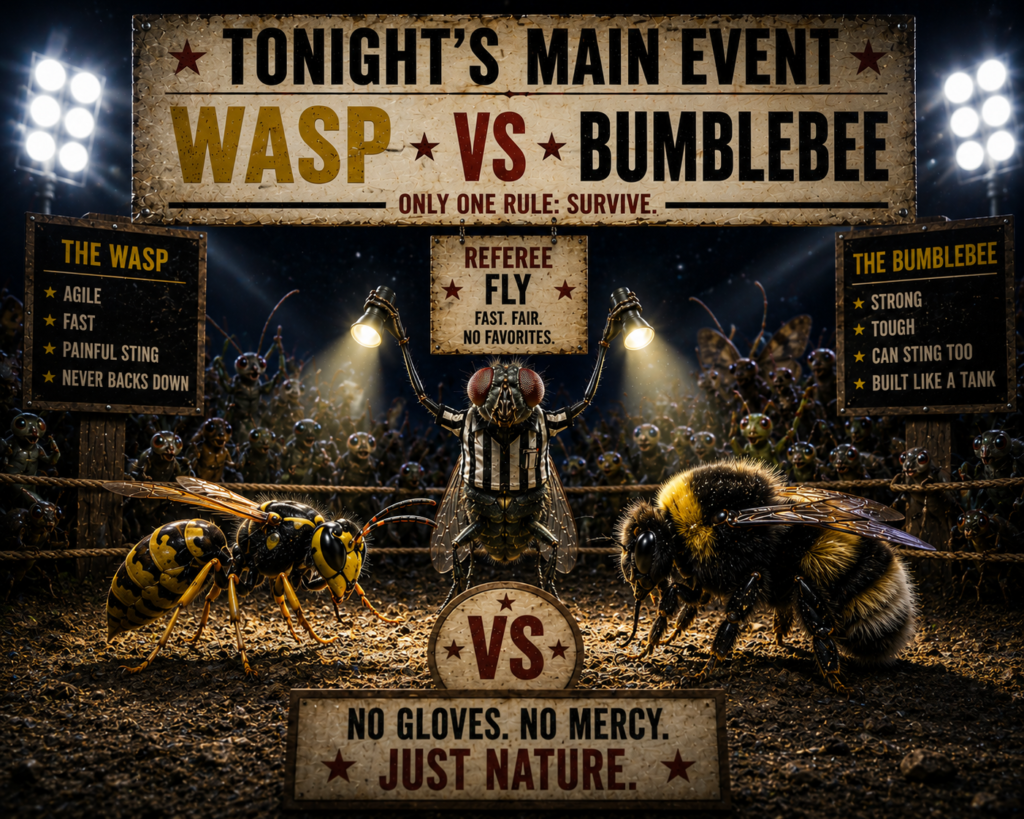
Wasp vs Bumblebee
One is a lightning-fast predator armed with aggression and a painful sting. The other is a fuzzy powerhouse built for endurance, strength and resilience. Before they enter the arena, let’s meet the contenders.
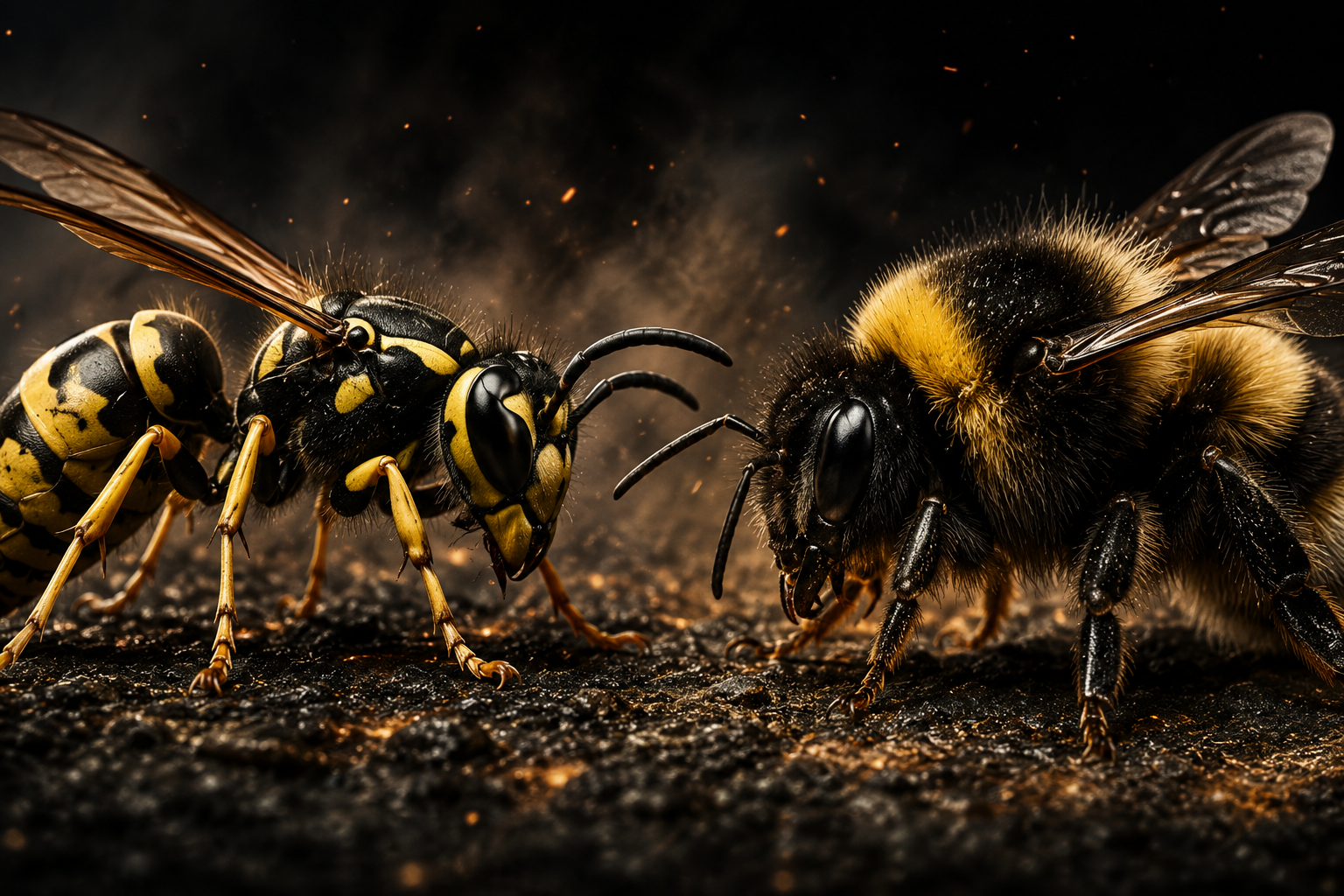
- Lightning-fast reactions
- Highly aggressive fighter
- Painful repeat stings
- Excellent aerial manoeuvrability
- Never backs down from a challenge
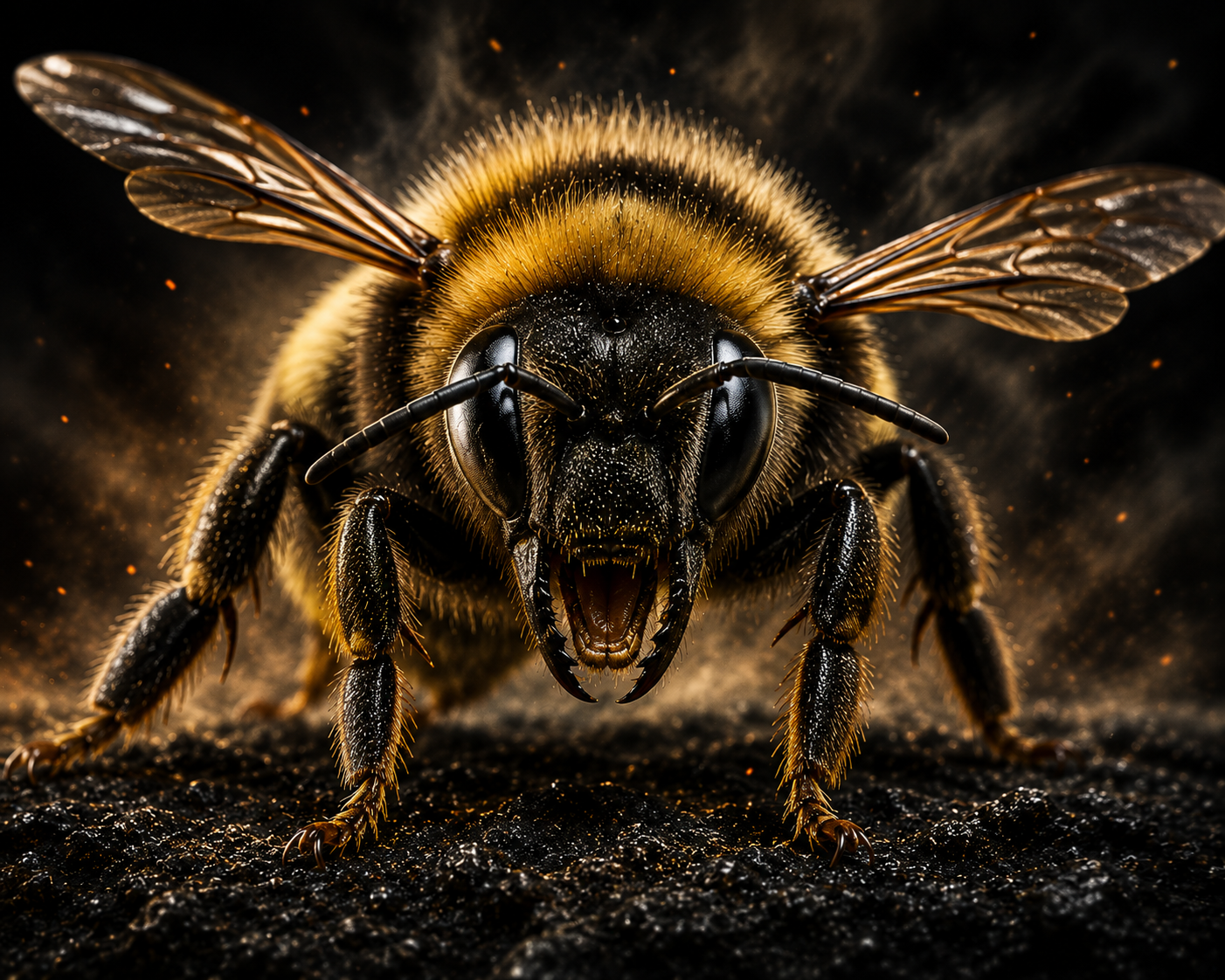
- Heavier and more powerful build
- Dense protective fur
- Can sting when threatened
- Exceptional toughness
- Built to absorb punishment
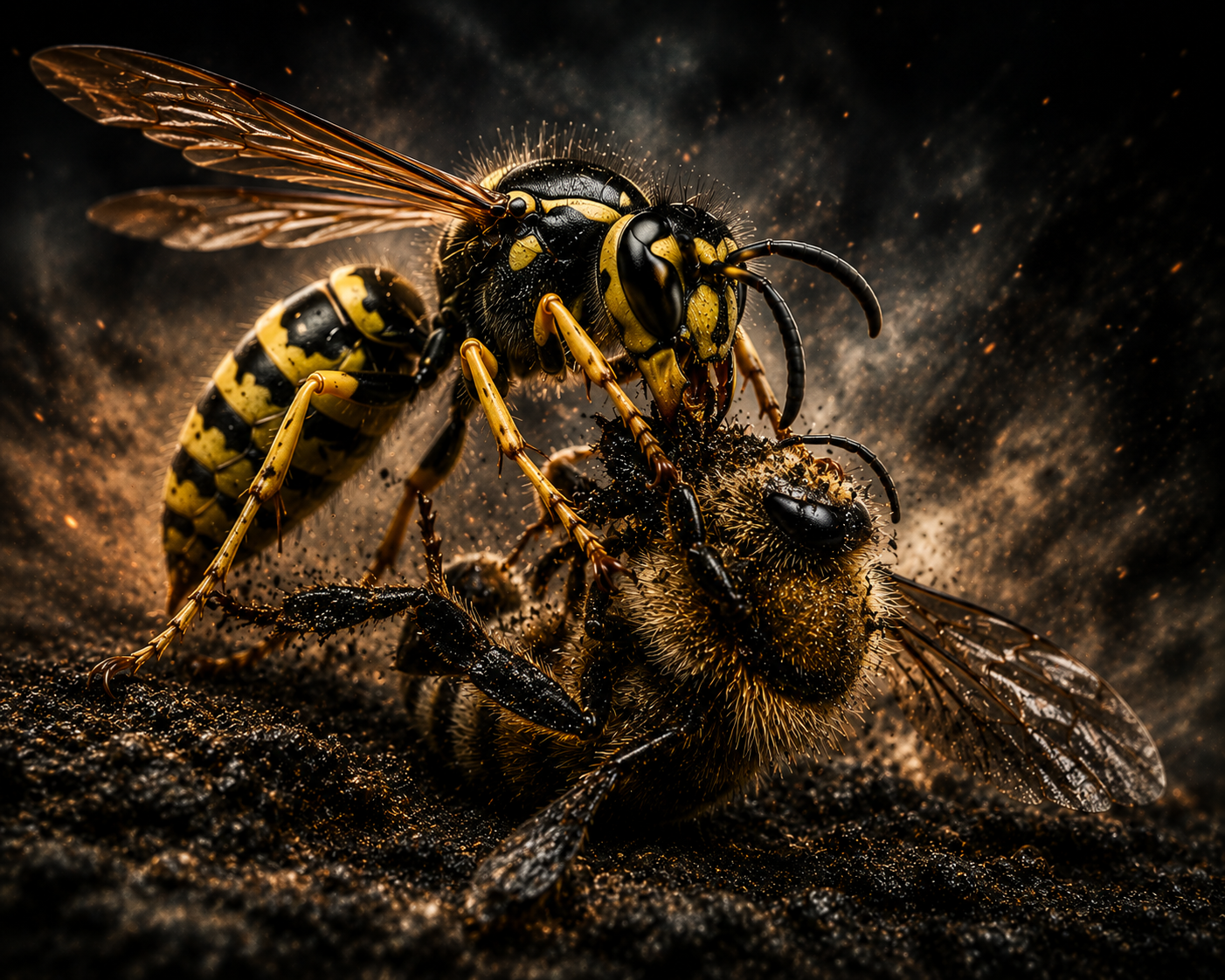
The Face Off
The arena falls silent. The wasp buzzes with nervous energy, darting from side to side looking for an opening. Across the ring stands the bumblebee, larger, heavier and seemingly unfazed by the tension. One relies on speed. The other relies on durability. Only one leaves the arena victorious.
Who Has The Edge?
One is built for speed and relentless aggression. The other is heavier, tougher and capable of absorbing punishment. Before the fight begins, let’s compare the stats.
Size & Strength
The opening round belongs to the bumblebee. While both insects may appear similar at first glance, the bumblebee is typically larger, heavier and far more robust than its wasp opponent.
Built like a tiny flying tank, the bumblebee carries a thick layer of protective fur and a broader frame. That extra mass gives it greater physical strength and allows it to absorb punishment that would seriously trouble smaller insects.
The wasp certainly isn’t weak, but its advantages lie elsewhere. It sacrifices bulk for speed, agility and precision. In a straight comparison of size and raw physical power, however, the bumblebee clearly holds the edge.
If this fight became a test of pushing power or physical resilience, the heavier insect would be extremely difficult to move. The bumblebee enters the contest looking every bit the heavyweight contender.
Weapons
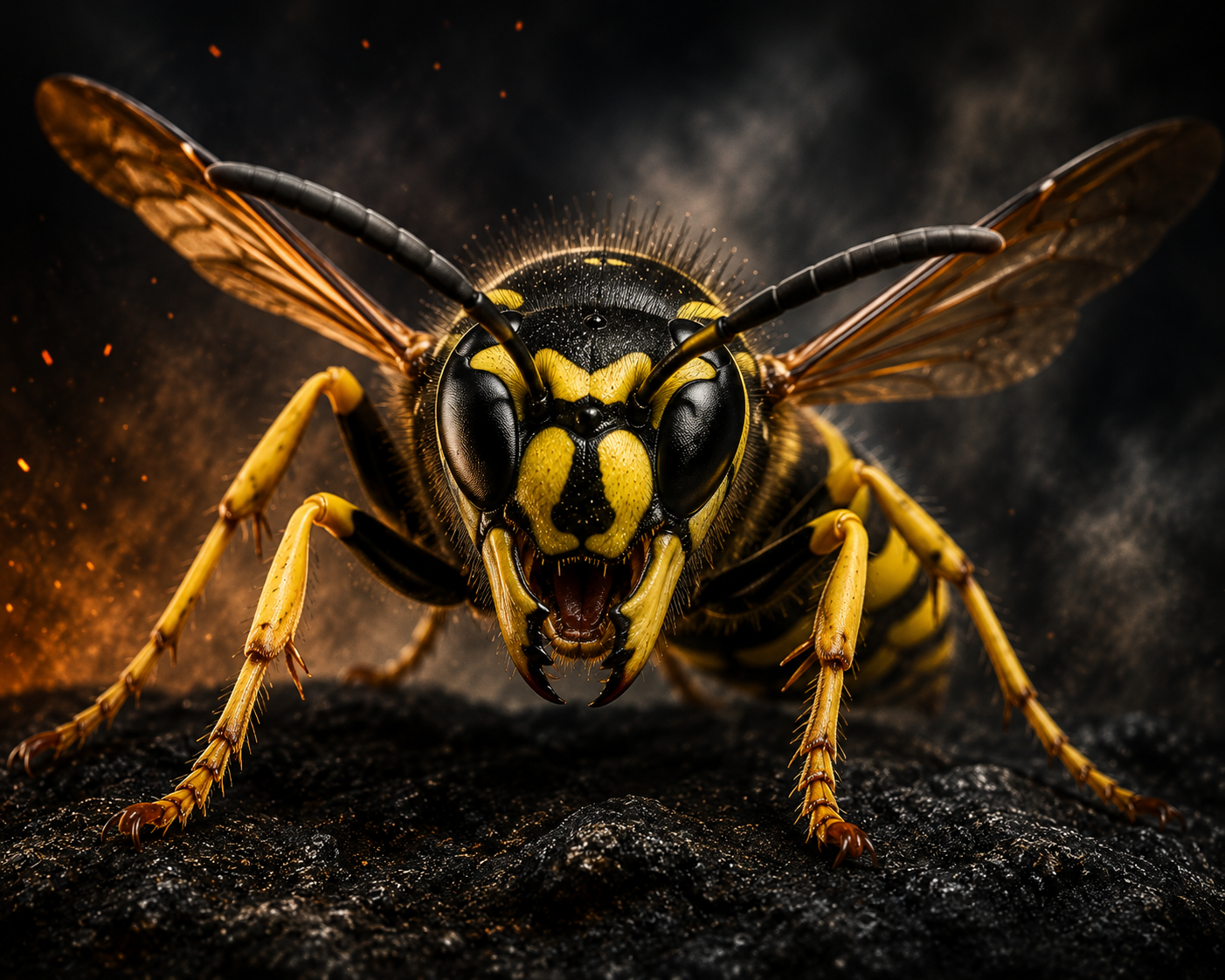
If Round 1 belonged to the bumblebee, Round 2 firmly swings in favour of the wasp. While both insects possess stingers, they are very different weapons.
The bumblebee’s sting is primarily defensive. It is designed to protect the colony and deter threats. The wasp, on the other hand, is built for aggression. Its sting can be deployed repeatedly and is often used to attack, hunt and dominate smaller insects.
Unlike honeybees, wasps do not lose their stinger after attacking. This allows them to strike again and again if an opportunity presents itself. Combined with their speed and fearless nature, they become one of the insect world’s most effective fighters.
The bumblebee may be larger, but every time the two insects engage, the wasp carries the more dangerous weapon. One clean strike can change the momentum of the entire fight.
When it comes to offensive capability, precision and lethality, the wasp takes this round without much argument.
Speed & Agility
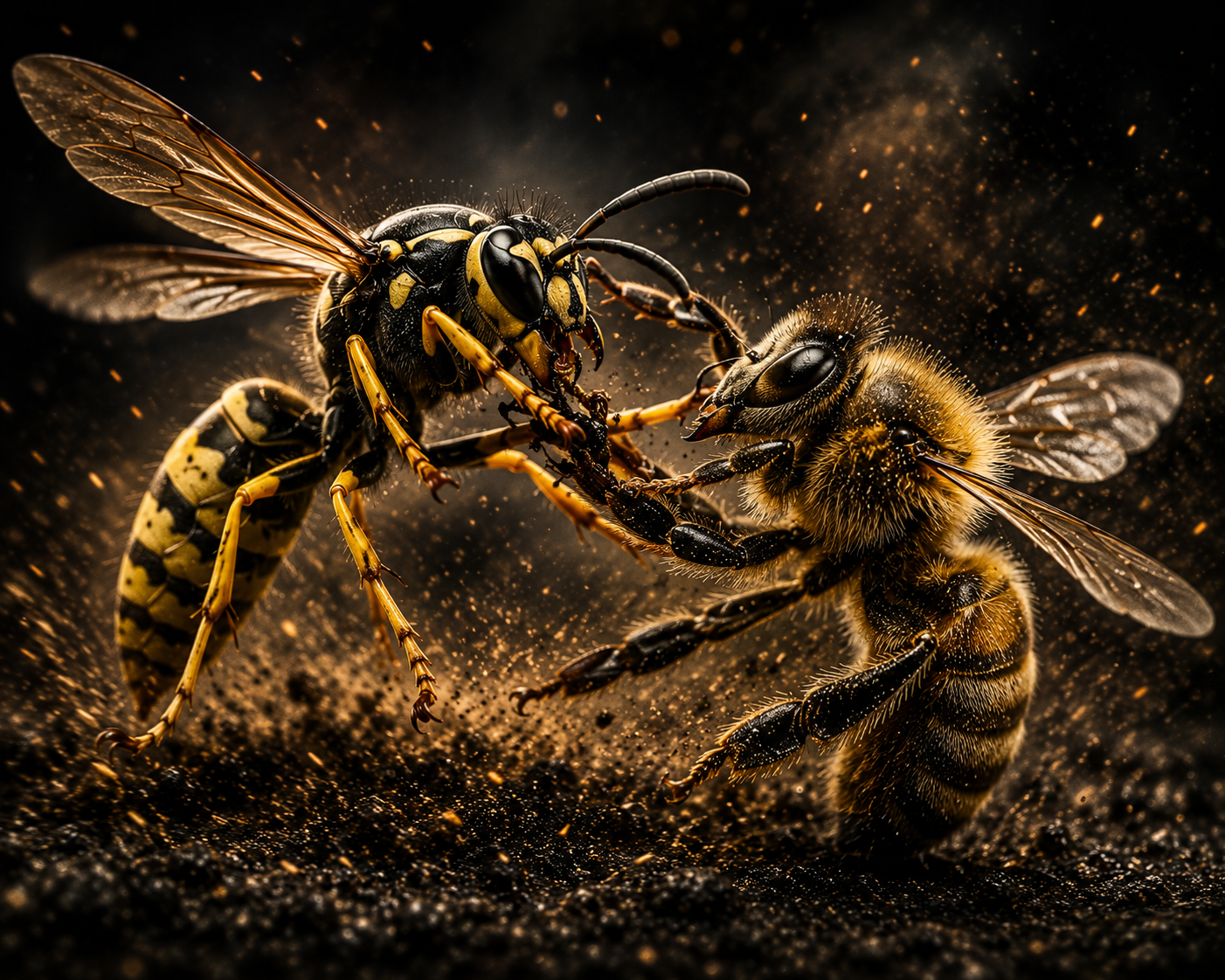
This is where the fight starts to tilt heavily in the wasp’s favour. While the bumblebee enjoys advantages in size and durability, it simply cannot match the wasp’s speed in the air.
Wasps are among nature’s most agile flying hunters. They can change direction in an instant, accelerate rapidly and attack from angles that larger insects struggle to defend against. Every movement is precise, efficient and designed for combat.
The bumblebee remains a capable flyer, but its heavier body works against it in a contest of pure agility. It cannot dart, weave and reposition with the same speed as its smaller opponent.
As the exchanges become faster, the wasp begins dictating the pace of the battle. It chooses when to engage, when to retreat and where the next attack will come from. The bumblebee spends more time reacting than controlling the fight.
In a battle where fractions of a second matter, speed becomes a weapon all by itself. The wasp’s superior mobility allows it to create opportunities that the bumblebee simply cannot match.
Toughness & Endurance
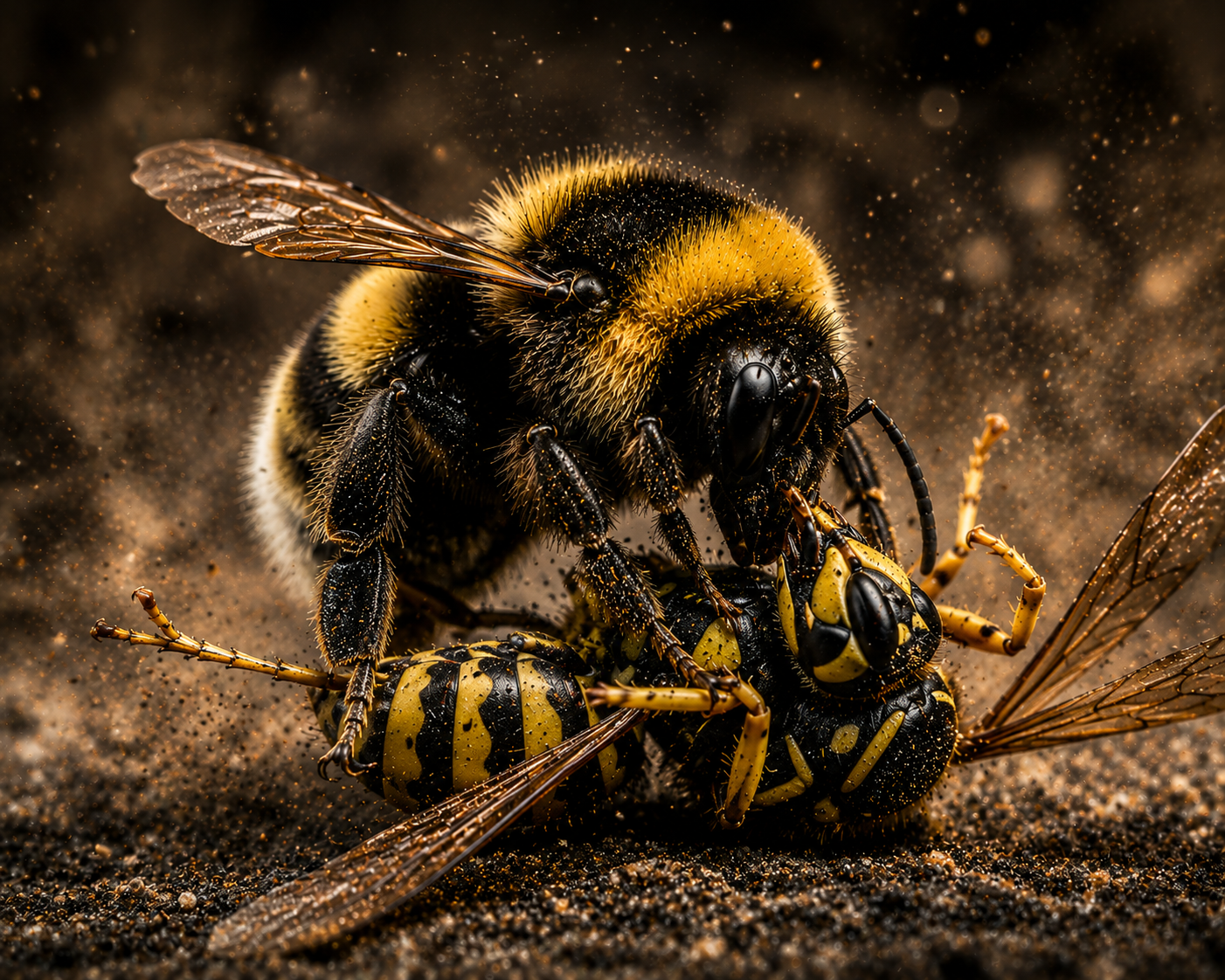
The wasp may be faster and more aggressive, but this round belongs to the bumblebee. Throughout the animal kingdom, size often brings resilience, and the bumblebee is built to absorb punishment.
Its thick coat of dense hairs provides more than just insulation. It offers a degree of protection that the wasp simply doesn’t possess. Combined with a broader body and heavier frame, the bumblebee can continue fighting through attacks that might seriously trouble its rival.
The wasp excels at quick strikes and hit-and-run tactics, but every battle eventually becomes a test of endurance. The longer the contest continues, the more the bumblebee’s physical advantages begin to matter.
In close quarters, the larger insect can use its weight and strength to dominate exchanges. Even when the wasp lands successful attacks, the bumblebee often remains in the fight, refusing to back down.
When the dust settles, the evidence points in one direction. The bumblebee is simply the tougher combatant. It absorbs punishment, keeps moving forward and drags the contest into deep waters.
The Fight
The arena falls silent as the two insects finally meet in combat. The bumblebee enters with greater size, strength and durability. The wasp arrives with superior speed, aggression and one of nature’s most effective weapons.
The opening exchanges are chaotic. The wasp darts forward, striking and retreating before the bumblebee can fully react. Its agility allows it to attack from different angles, constantly forcing the larger insect to defend rather than dictate the pace.
To its credit, the bumblebee refuses to fold. Several times it uses its greater mass to force close-range exchanges, turning the fight into a physical contest where its strength becomes a factor. The wasp quickly discovers that bringing down the heavier insect is far more difficult than expected.
As the battle continues, however, the wasp’s greatest advantage begins to shine through. It controls distance. It controls tempo. Most importantly, it controls when the two insects engage. Every successful strike chips away at the bumblebee’s resistance.
Eventually, speed proves to be the deciding factor. The bumblebee remains dangerous throughout the contest, but the wasp’s relentless mobility allows it to avoid prolonged grappling exchanges and repeatedly exploit openings.
After a hard-fought battle, the referee fly separates the combatants. The scorecards are collected. The crowd buzzes with anticipation.
The decision is close, but the wasp’s superior speed, aggression and offensive toolkit earn it the narrow victory.
What Happens When They Actually Fight?
The crowd buzzes with anticipation as the wasp and bumblebee leave their corners and enter the centre of the arena. Under the floodlights, the size difference is immediately obvious. The bumblebee looks heavier, broader and more powerful. The wasp looks faster, leaner and ready for war.
The referee fly signals the start of the contest.
Instantly the wasp takes to the air. It circles at incredible speed, probing for weaknesses. The bumblebee remains calm, refusing to chase. Instead it waits for the smaller fighter to commit.
The first attack comes quickly. The wasp darts forward and lands a sharp strike before disappearing out of range. The crowd erupts. Again and again the pattern repeats itself. Attack. Retreat. Attack. Retreat.
But the bumblebee is far from helpless. During one exchange it catches the wasp and uses its greater size to force a close-range struggle. For a few tense moments the heavier insect appears to have the upper hand. Dust fills the air as the two combatants wrestle for position.
The wasp escapes at the last second.
As the battle continues, the pace begins to favour the smaller fighter. The bumblebee’s durability keeps it competitive, but each engagement costs energy. Meanwhile the wasp remains elusive, constantly moving and refusing to stay within reach for long.
Minutes later the decisive moment arrives. The wasp spots an opening and launches one final lightning-fast attack. The strike lands cleanly before the bumblebee can react. The larger insect tries to respond but cannot close the distance.
The crowd knows the fight is over.
The bumblebee’s toughness and strength earned it several strong moments throughout the contest, but over the course of the battle the wasp’s superior speed and offensive pressure prove decisive.
Who Wins The Fight?
After comparing size, weapons, speed, durability and running a full battle simulation, the result is surprisingly close. Both insects possess genuine advantages, but only one consistently comes out on top.
The Decision
The bumblebee deserves enormous credit. It is larger, heavier and significantly tougher than its rival. In many encounters its durability allows it to absorb attacks and drag the fight into a physical contest where its superior strength becomes a major factor.
However, over multiple simulations the wasp’s advantages prove slightly more important. Its ability to move faster, strike repeatedly and dictate the pace of the battle gives it more paths to victory.
The bumblebee wins when it manages to force close-range exchanges and use its greater mass to overwhelm the wasp. The wasp wins when it keeps moving, avoids prolonged contact and exploits openings with precision attacks.
In the end, the contest comes down to speed versus toughness. While the bumblebee makes the wasp work for every victory, the smaller insect’s mobility and aggression earn it the narrow edge.
Who Wins This Fight?
The experts have spoken. The battle has been simulated. The scorecards are in. But this is where things get interesting. Do you agree that the wasp’s speed and aggression are enough to overcome the bumblebee’s size and toughness?
Cast your vote below and see whether the WhoCouldWin community agrees with the verdict.
Bees And Wasps Really Do Fight
While this article is a fictional battle scenario, bees and wasps are no strangers to real combat. Across gardens, forests and fields around the world, these insects regularly clash over territory, food and survival.
Wasps Hunt Other Insects
Many species of wasp are active predators. They regularly hunt flies, caterpillars and other insects, using their speed and powerful jaws to overpower prey.
Bees Can Overheat Their Enemies
Some species of honeybee have developed a remarkable defence against invading hornets. Hundreds of bees surround the attacker and vibrate their muscles, creating enough heat to cook the intruder alive.
Not All Stings Are Equal
Unlike many bees, most wasps can sting repeatedly. This gives them a significant advantage in prolonged confrontations and is one reason they are feared by so many insects.
Real-Life Insect Wars
In nature, wasps frequently raid bee colonies looking for food, larvae and opportunities to exploit weaker hives. Honeybees have evolved sophisticated defensive tactics to repel these attacks, including coordinated swarming and heat-ball attacks.
One of the most dramatic examples involves giant Asian hornets, sometimes nicknamed “murder hornets.” A single hornet can kill dozens of bees, while a coordinated attack by multiple hornets can devastate an entire hive. In response, some bee species have evolved specialised countermeasures specifically designed to defeat them.
These encounters show that insect warfare is far more complex than most people realise. Speed, numbers, intelligence, teamwork and resilience all play a role in determining which side survives.
So while our one-on-one battle gave the narrow victory to the wasp, the truth is that nature rarely plays by simple rules. Sometimes the smaller fighter wins. Sometimes the tougher fighter prevails. And sometimes an entire swarm changes the outcome.