

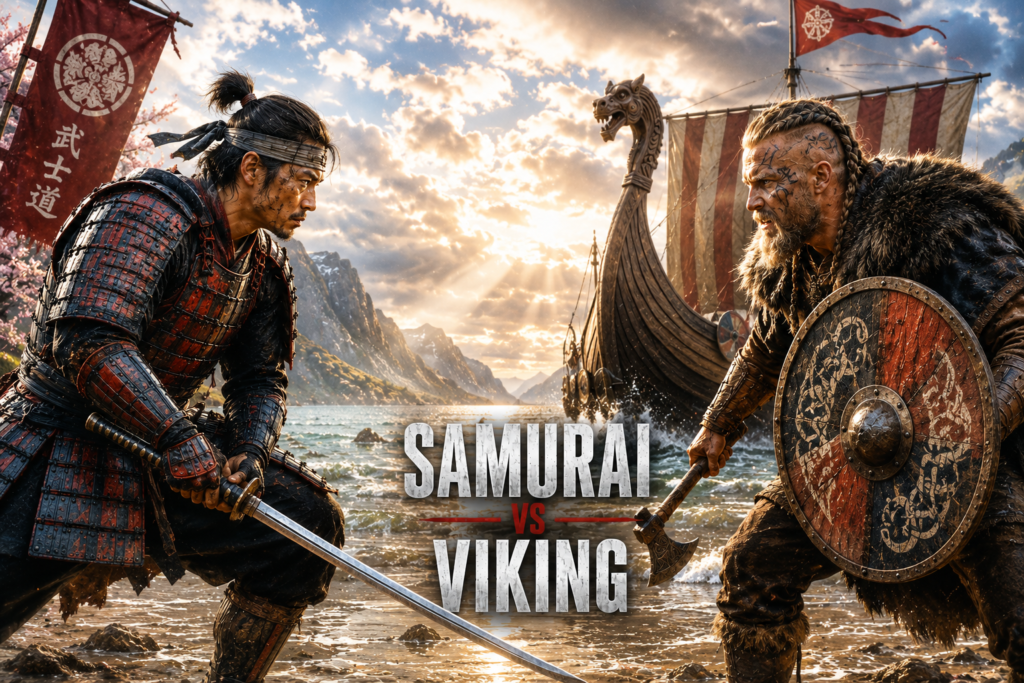
The Challengers
Precision meets brutality in one of history’s most debated warrior matchups.
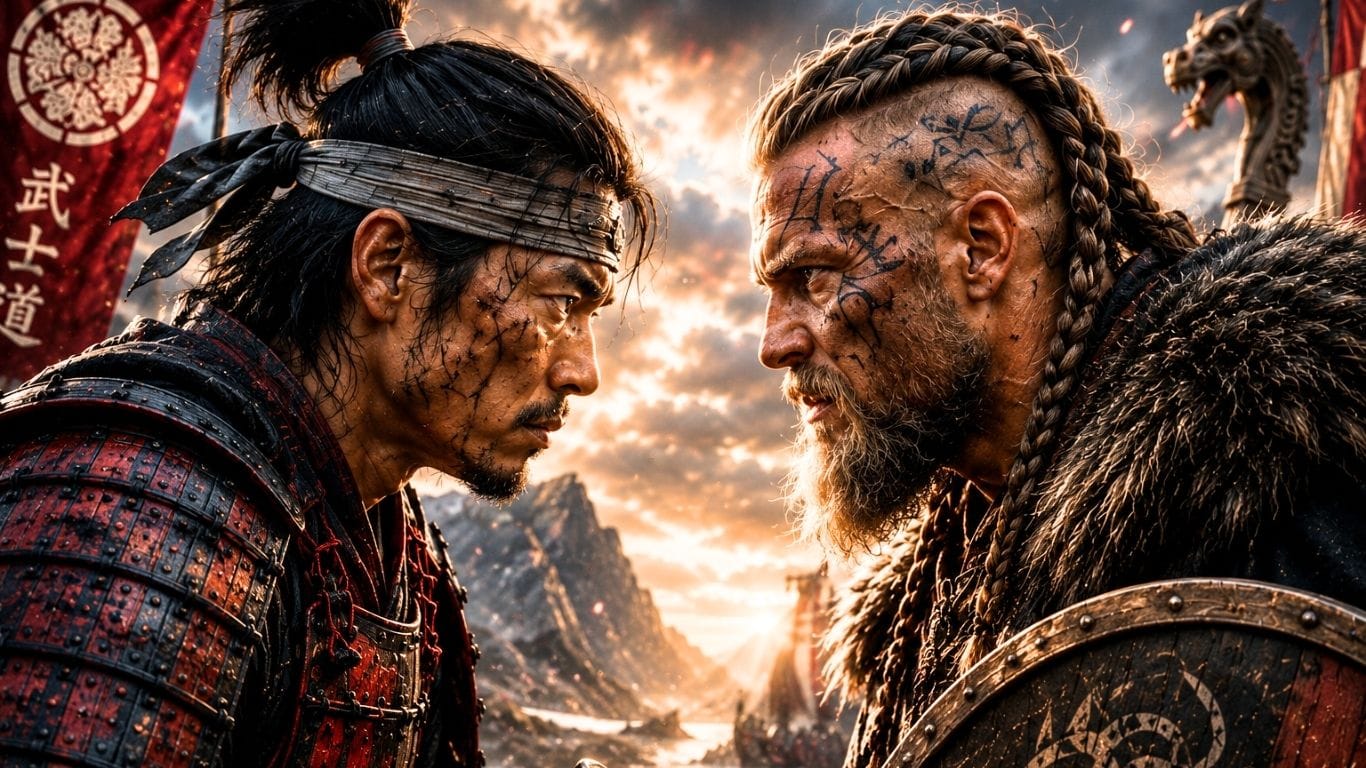
The Samurai
The Samurai were Japan’s elite warrior class, serving powerful lords for centuries. Although famous for the katana, they were highly trained professional soldiers skilled in archery, spears, horsemanship and battlefield tactics. Their training often began in childhood and continued throughout their lives.
Samurai armour was designed to provide excellent protection while retaining mobility. Discipline, patience and technical mastery defined their approach to combat. A skilled Samurai sought to exploit mistakes rather than overwhelm opponents through brute force.
The Viking
The Vikings were among the most feared warriors of the early medieval world. Operating across Europe, they combined raiding, exploration and warfare with remarkable toughness and adaptability. Contrary to popular belief, the spear was often their primary battlefield weapon, supported by axes, swords and shields.
Viking combat emphasized aggression, resilience and close-quarters violence. Many warriors gained real-world combat experience through raids and campaigns across multiple countries, climates and battlefields.
The Matchup
This battle pits two legendary warrior cultures against one another. The Samurai brings precision, discipline and centuries of martial refinement. The Viking relies on aggression, shield mastery and hard-earned battlefield experience. One fights with patience and technique. The other with power and relentless pressure. Neither warrior would find an easy victory here.
Imagine two of history’s most iconic warriors standing face to face for the very first time.
On one side is the Samurai, a disciplined master of martial skill, precision and lifelong training. On the other stands the Viking, a battle-hardened warrior renowned for his ferocity, toughness and relentless aggression.
Both earned fearsome reputations in their own worlds. Both were products of warrior cultures that valued courage, honour and victory. Yet they developed thousands of miles apart and never met on a real battlefield.
If fate had somehow brought them together, who would walk away victorious?
Would the Samurai’s refined technique and deadly katana prove too much to overcome, or would the Viking’s shield, axe and brutal combat experience overwhelm his opponent?
Let’s find out.
Tale Of The Tape
Two legendary warrior cultures. One battlefield.
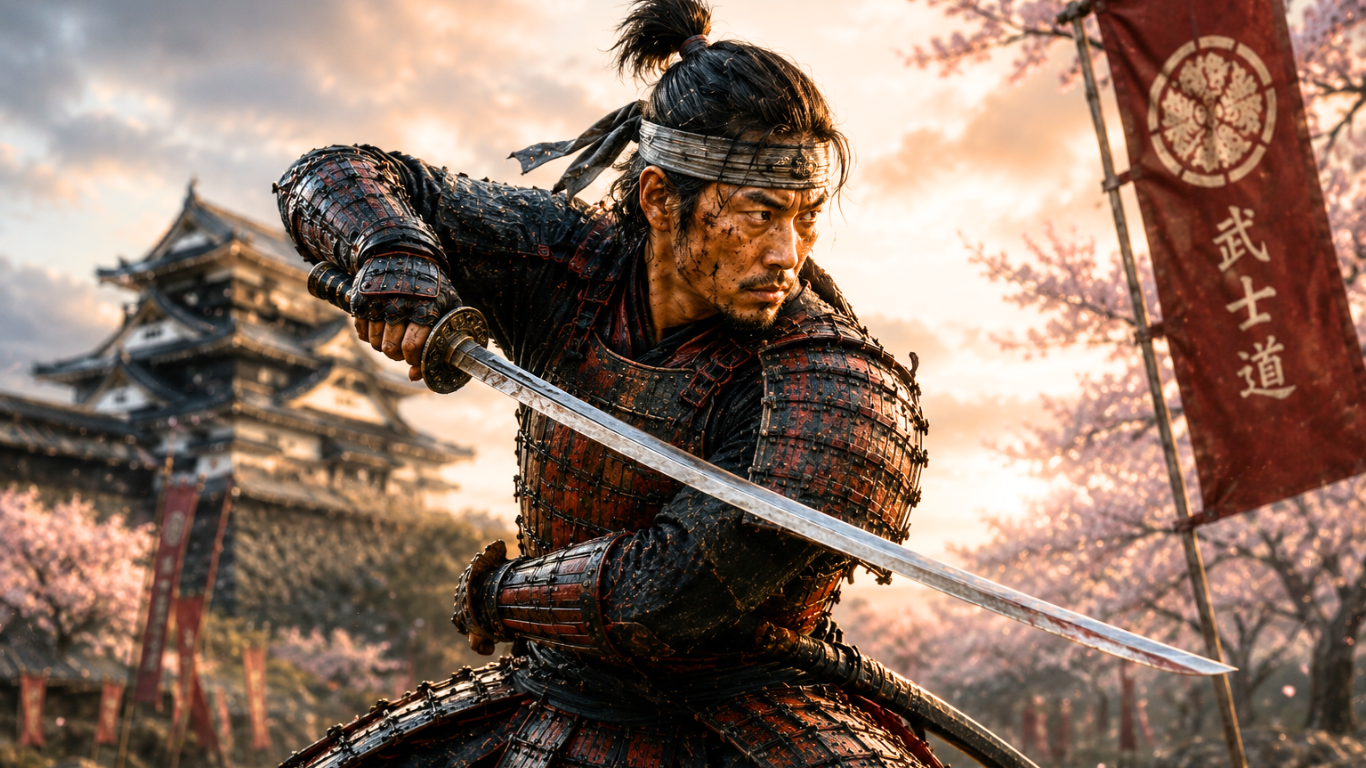
Samurai
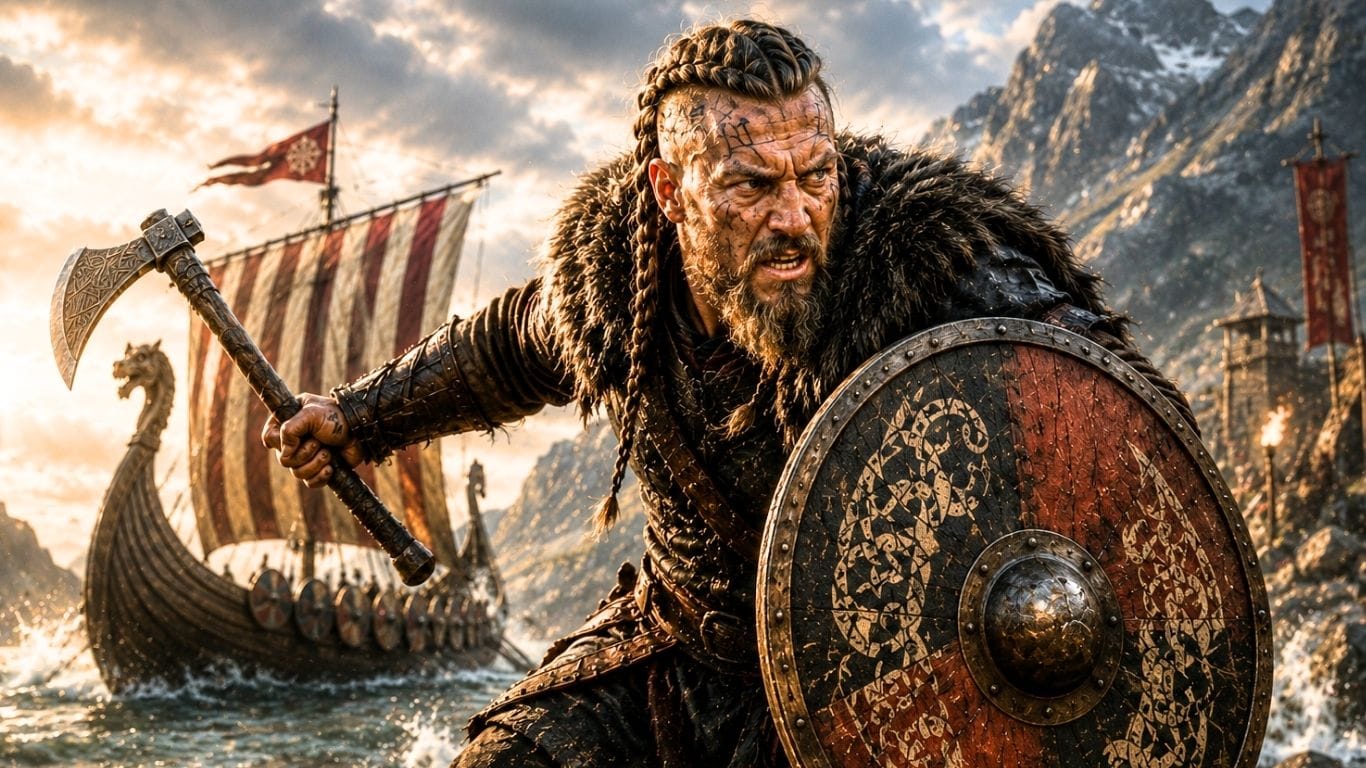
Viking
First Impressions
On paper, the Samurai appears to possess the technical advantage. His training, discipline and refined martial system make him one of history’s most respected warriors. The Viking, however, brings immense toughness, powerful shield work and a combat style built around surviving brutal close-quarters encounters. This is not a battle of civilisation versus barbarism. It is a clash between two highly effective warrior traditions that earned their reputations on real battlefields.
The Rounds
Five categories. Five opportunities to gain the advantage.
Weapons
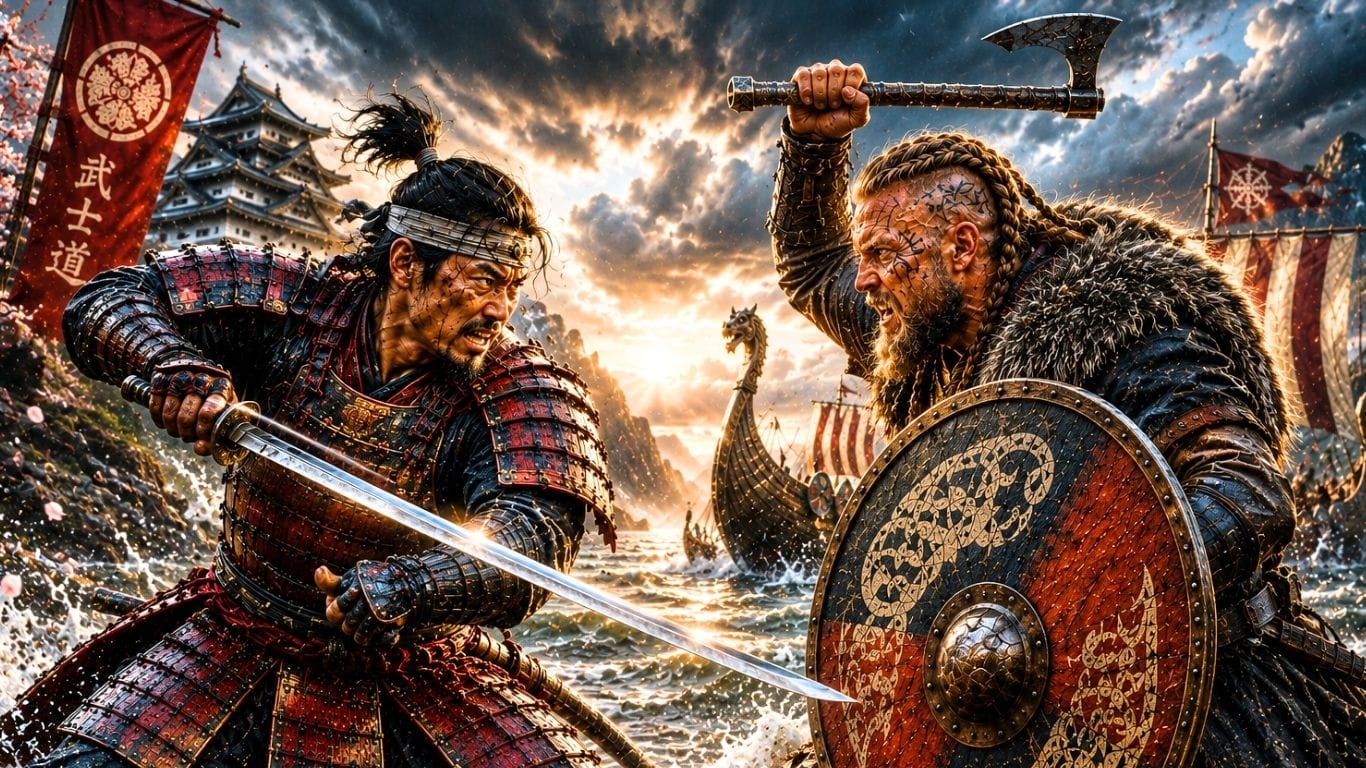
The Samurai’s katana is one of the most famous weapons in history, but popular culture often exaggerates its battlefield dominance. Historically, both Samurai and Vikings frequently relied on spears as primary weapons. However, in a one-on-one duel, the Samurai’s combination of katana, wakizashi and refined weapon training gives him a slight edge in versatility and precision.
Defence
The Viking’s round shield was one of the most effective defensive tools of the early medieval world. Unlike armour alone, a shield can actively block, deflect and control an opponent’s attacks. While Samurai armour provided excellent protection for its era, the Viking’s shield creates a major tactical advantage in close combat.
Training & Discipline
This is where the Samurai truly shines. Many Samurai trained from childhood in martial arts, strategy, horsemanship and weapon mastery. Their profession was warfare. Vikings certainly possessed immense combat experience, but Samurai culture placed a greater emphasis on formal martial training and disciplined technique.
Battlefield Experience
Both warrior cultures fought real wars and earned fearsome reputations. Vikings fought across Britain, Ireland, France, Eastern Europe and beyond. Samurai spent centuries engaged in clan warfare, civil wars and military campaigns. Neither side possesses a decisive advantage here, making this one of the closest rounds in the entire contest.
The Fight
The Samurai enters the battle with superior technical training and refined weapon skills, but the Viking’s shield dramatically changes the dynamics of the fight. Historical combat rarely resembled cinematic sword duels. The Viking’s ability to absorb attacks, close distance and create openings with shield work would make him extremely difficult to defeat. However, over multiple encounters, the Samurai’s discipline, timing and precision provide a slightly more reliable path to victory.
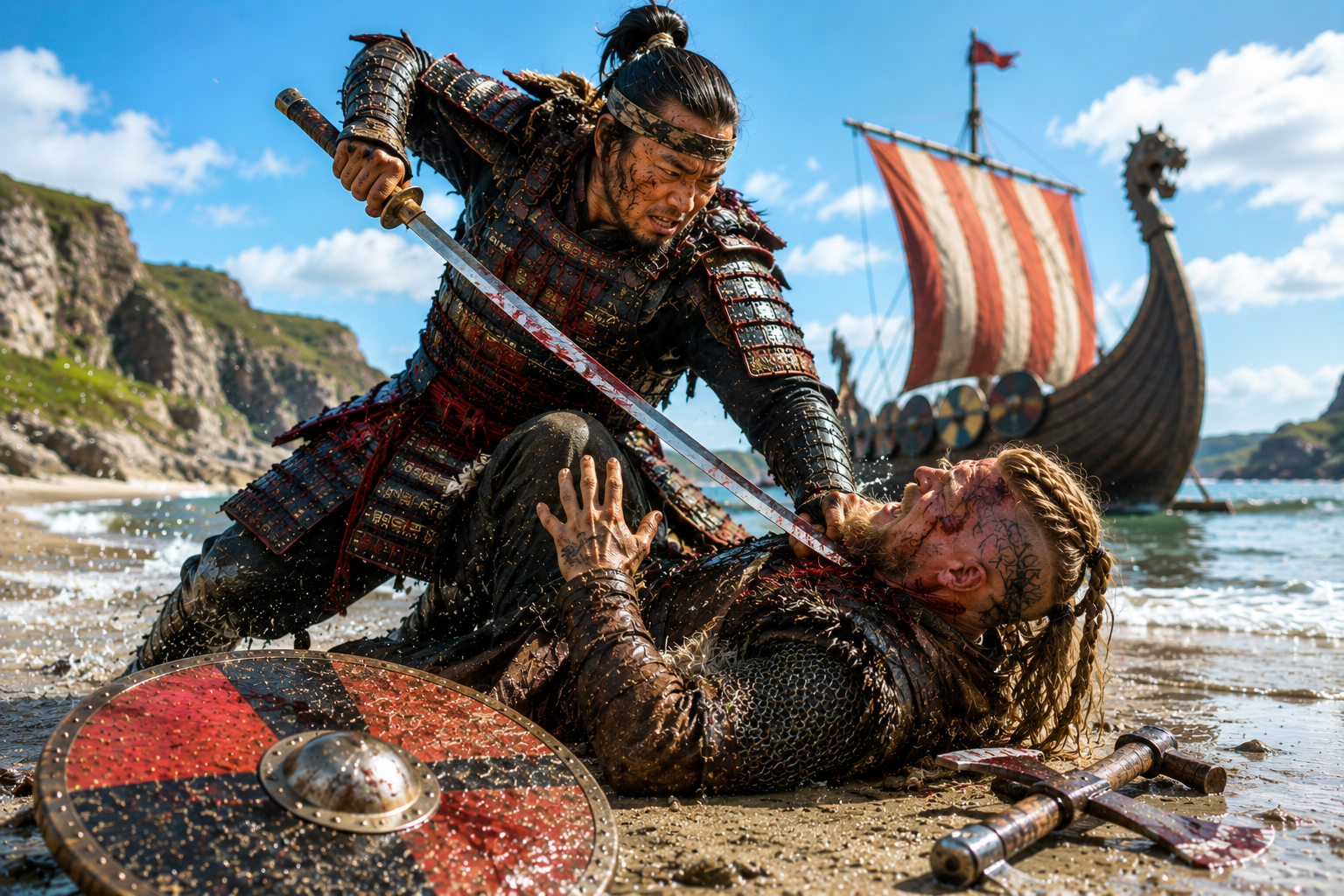
The tide crashes against the shoreline as two legendary warriors close the distance. The Viking advances first, shield forward and axe raised, determined to force a brutal close-quarters fight. The Samurai remains patient, measuring distance and searching for weaknesses.
The opening exchanges are violent. The Viking’s shield repeatedly absorbs katana strikes while powerful axe swings force the Samurai onto the defensive. More than once, the Samurai narrowly avoids a potentially fight-ending blow.
Minutes pass and neither warrior can gain complete control. The Viking’s aggression and shield work make him extremely difficult to stop. Every attack feels dangerous. Every mistake could be fatal.
Gradually, however, the Samurai’s greatest strength begins to emerge. Discipline. Rather than matching strength with strength, he waits for opportunities. Small cuts begin to accumulate. A strike to the arm. A slash across the leg. A wound to the shoulder.
The Viking continues to fight through the punishment, but his movements become slower. His attacks lose a fraction of their speed. His shield drops slightly lower with every exchange.
Then comes the decisive moment.
Attempting one final aggressive charge, the Viking commits fully to a powerful axe attack. The Samurai sidesteps at precisely the right moment. In a split second, years of training and battlefield experience come together. A perfectly timed counterstrike lands before the Viking can recover.
The Viking falls. The Samurai remains standing.
It is not an easy victory. It is not a dominant victory. It is the narrowest of margins between two of history’s most respected warrior traditions.
Final Verdict
The Viking’s shield, toughness and aggressive fighting style make this one of the closest battles on WhoCouldWin. However, the Samurai’s superior technical training, precision and ability to capitalise on mistakes provide a slightly more reliable path to victory across multiple encounters.
Could History Have Made This Fight Possible?
Almost certainly not. Vikings operated primarily between the 8th and 11th centuries in Northern Europe, while Samurai culture developed in Japan thousands of miles away. The two warrior traditions evolved independently and would never realistically have encountered one another. Yet if fate somehow brought them together on neutral ground, the result would likely be far closer than popular culture often suggests.
Did You Know?
Two fascinating facts from two legendary warrior cultures.
The Sword Wasn’t Always Their Main Weapon
Modern films often portray Samurai as elite swordsmen whose primary weapon was the katana.
In reality, many Samurai spent far more time training with bows and spears than swords. During large battles, weapons such as the yari (spear) and the longbow were often considered more important than the katana.
Most Vikings Never Owned A Sword
Hollywood often shows Vikings carrying expensive swords, but swords were luxury items during the Viking Age.
A well-made sword required large amounts of high-quality iron and expert craftsmanship. For many Viking warriors, spears and axes were far more common because they were cheaper and easier to produce.
Who Could Win?
Few matchups generate as much debate as Samurai versus Viking. Both warriors emerged from cultures built around warfare, courage and survival. Both earned reputations that have endured for centuries. Neither would be an easy opponent for the other.
The Viking brings tremendous strengths to the battlefield. His shield provides a significant defensive advantage, his toughness is legendary, and his aggressive fighting style constantly forces opponents onto the back foot. Many battles throughout history have been won by warriors who could simply absorb punishment and keep moving forward.
The Samurai, however, possesses something equally dangerous: exceptional discipline. Generations of formal martial training, refined technique and an ability to remain composed under pressure allow him to capitalise on small mistakes that less experienced warriors might miss.
In a single encounter, either warrior could emerge victorious. A well-timed axe strike, shield bash or lucky opening could easily swing the fight in the Viking’s favour. Yet when examining the evidence across multiple encounters, the Samurai appears to have the slightly more consistent path to victory.
Winner: Samurai
The Viking makes this one of the closest battles on WhoCouldWin so far, but the Samurai’s superior technical training, precision and ability to exploit opportunities give him a narrow edge. It is a hard-fought victory earned by skill rather than overwhelming superiority.
Community Vote
Our verdict gives the Samurai a narrow advantage, but what do you think? Cast your vote below and see how your opinion compares with the rest of the WhoCouldWin community.
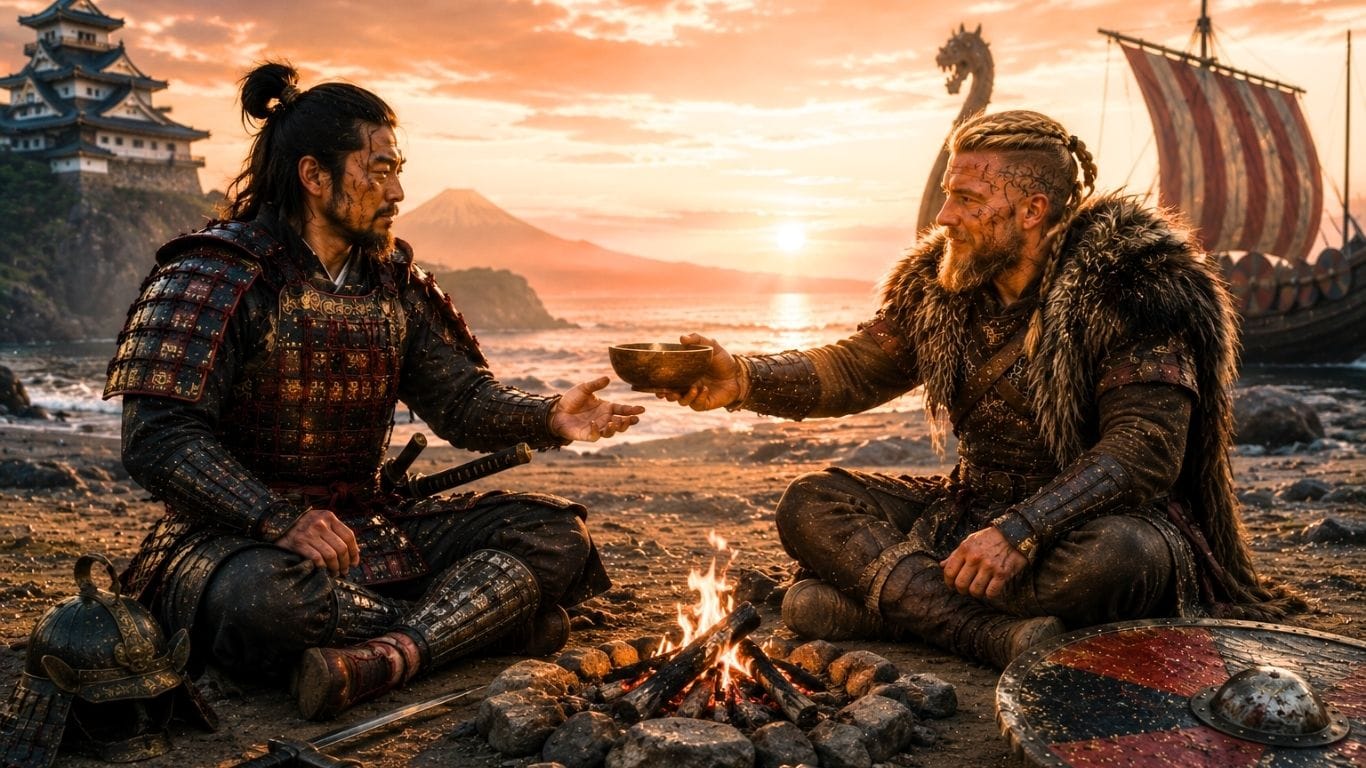
History never gave the Samurai and the Viking an opportunity to meet. They lived in different worlds, separated by thousands of miles and centuries of cultural development.
Had fate somehow brought them together, they may well have fought. Both belonged to warrior societies that valued courage, skill and reputation. Neither would have backed down from a challenge.
Yet perhaps there is another possibility.
After the battle is over and the weapons are laid aside, these two legendary warriors might have discovered they shared more in common than either realised. Loyalty to family. Dedication to mastery. Respect earned through action rather than words.
The purpose of WhoCouldWin is to explore who might emerge victorious. But sometimes the most interesting question is not who wins the fight, but what happens after it ends.